John Charet’s Top 100 Favorite Horror Films of All Time (2025 Edition)

-Introduction-

Last year around this time of year, I posted a blog entry regarding my Top 10 and 100 Favorite Horror Films of All-Time (read here and here). As for Halloween 2025, I have posted that big treat again, which comes in the form of my Top 100 Favorite Horror Films of All-Time. I have some new entries this time around 🙂 Now all of the films listed are not my only favorite horror films (I have an unlimited number), but this is a perfect start. I have decided to start with number 100 and work my way down to 01.

-The Opening Celebration-

First off, below are a few delightful links to check out 

Click here to watch the complete 1983 music video of late iconic singer Michael Jackson’s (a.k.a. The King of Pop) song Thriller

Click here to listen to a shortened version of the song

Have any of you dear readers out there heard of The Merkins? Check out their youtube channel here. They do horror parodies of songs and one of their running acts is The Slashstreet Boys (a spoof of The Backstreet Boys)  The band consists of LeatherfaceMichael MyersJason VoorheesFreddy Kruegger and Ghostface Below are three of my personal favorite parodies of theirs 

Click here to view their spoof of I Want It That Way entitled I’ll Kill You That Way

Click here to view their spoof of Larger than Life entitled Die By My Knife

Click here to view their spoof of Rock Your Body Right entitled Slashing Bodies

-A Few Words Before Reading-

Please be kind to the film at number 07 on this list because that one means a lot to me. Any comment expressing negativity towards number 07 will be deleted. So once again, please be polite 🙂

Now, without further ado, I present to you all:

-John Charet’t Top 100 Favorite Horror Films of All-Time-
(#100-01)

100.) The Spiral Staircase (1946) (Dir: Robert Siodmak)
99.) Blood and Black Lace (1964) (Dir: Mario Bava)
98.) Repulsion (1965) (Dir: Roman Polanski)
97.) The Exorcist (1973) (Dir: William Friedkin)
96.) The Changeling (1980) (Dir: Peter Medak)

95.) Jacob’s Ladder (1990) (Dir: Adrien Lyne)
94.) The Orphanage (2007) (Dir: J.A. Bayona)
93.) Halloween II (2009) (Dir: Rob Zombie)
92.) Under the Shadow (2016) (Dir: Babak Anvari)
91.) The Lighthouse (2019) (Dir: Robert Eggers)
90.) Dr. Jekyll and Mr. Hyde (1931) (Dir: Rouben Mamoulian)
89.) The Body Snatcher (1945) (Dir: Robert Wise)
88.) Rosemary’s Baby (1968) (Dir: Roman Polanski)
87.) Kwaidan (1964)(Dir: Masaki Kobayashi)
86.) The Texas Chain Saw Massacre (1974) (Dir: Tobe Hooper)
85.) Possession (1981) (Dir: Andrzej Zulawski)
84.) Henry: Portrait of a Serial Killer (1986) (Dir: John McNaughton)
83.) Dead Alive (1992) (Dir: Peter Jackson)
82.) The Descent (2005) (Dir: Neil Marshall)
81.) The Lords of Salem (2012) (Dir: Rob Zombie)
80.) Island of Lost Souls (1932) (Dir: Erle C. Kenton)
79.) Bluebeard (1944) (Dir: Edgar G. Ulmer)
78.) Horror of Dracula (1958) (Dir: Terence Fisher)
77.) Night of the Living Dead (1968) (Dir: George A. Romero)
76.) Kuroneko (1968) (Dir: Kaneto Shindo)
75.) God Told Me To (1976) (Dir: Larry Cohen)
74.) The Texas Chainsaw Massacre 2 (1986) (Dir: Tobe Hooper)
73.) Bram Stoker’s Dracula (1992) (Dir: Francis Ford Coppola)
72.) Shaun of the Dead (2004) (Dir: Edgar Wright)
71.) Annihilation (2018) (Dir: Alex Garland)
70.) Nope (2022) (Dir: Jordan Peele)

69.) The Leopard Man (1943) (Dir: Jacques Tourneur)
68.) Frankenstein Must Be Destroyed (1969) (Dir: Terence Fisher)

67.) Onibaba (1964) (Dir: Kaneto Shindo)
66.) Halloween (1978) (Dir: John Carpenter)
65.) Inferno (1980) (Dir: Dario Argento)
64.) Evil Dead II (1987) (Dir: Sam Raimi)
63.) Cemetery Man (1994) (Dir: Michele Soavi)
62.) Let the Right One In (2008) (Dir: Tomas Alfredson)
61.) Twixt (2011) (Dir: Francis Ford Coppola)
60.) Sinners (2025) (Dir: Ryan Coogler)
59.) Haxan (1922) (Dir: Benjamin Christensen)
58.) The Old Dark House (1932) (Dir: James Whale)
57.) Cat People (1942) (Dir: Jacques Tourneur)
56.) Psycho (1960) (Dir: Alfred Hitchcock)
55.) Dawn of the Dead (1978) (Dir: George A. Romero)
54.) The Fly (1986) (Dir: David Cronenberg)
53.) Cronos (1992) (Dir: Guillermo del Toro)
52.) Martyrs (2008) (Dir: Pascal Laughier)
51.) The Babadook (2014) (Dir: Jennifer Kent)
50.) Pearl (2022) (Dir: Ti West)
49.) The Phantom Carriage (1921) (Dir: Victor Sjostrom)
48.) I Walked with a Zombie (1943) (Dir: Jacques Tourneur)
47.) The Birds (1963) (Dir: Alfred Hitchcock)
46.) Kill, Baby… Kill! (1966) (Dir: Mario Bava)
45.) Suspiria (1977) (Dir: Dario Argento)
44.) Dead Ringers (1988) (Dir: David Cronenberg)
43.) Cure (1997) (Dir: Kiyoshi Kurosawa)
42.) Rec (2007) (Dir: Jaume Balaguero and Paco Plaza)
41.) Under the Skin (2013) (Dir: Jonathan Glazer)
40.) Nosferatu (2024) (Dir: Robert Eggers)

39.) The Fall of the House of Usher (1928) (Dir: Jean Epstein)
38.) Freaks (1932) (Dir: Tod Browning)
37.) Dead of Night (1945) (Dir: Alberto Cavalcanti, Charles Crichton, Basil Dearden and Robert Hamer)
(Anthology Film)
36.) Night of the Demon (1957) (Dir: Jacques Tourneur)
35.) The Innocents (1961) (Dir: Jack Clayton)
34.) The Tenant (1976) (Dir: Roman Polanski)
33.) Ringu (1998) (Dir: Hideo Nakata)
32.) Inside (2007) (Dir: Julien Maury and Alexandre Bustillo)
31.) The Haunting of Hill House (2018) (Dir: Mike Flanagan)
(Miniseries)
(Streaming)
30.) The Shrouds (2024) (Dir: David Cronenberg)
29.) The Cabinet of Dr. Caligari (1920) (Dir: Robert Wiene)
28.) Bride of Frankenstein (1935) (Dir: James Whale)
27.) The Uninvited (1944) (Dir: Lewis Allen)
26.) The Haunting (1963) (Dir: Robert Wise)
25.) Eraserhead (1977) (Dir: David Lynch)
24.) The Thing (1982) (Dir: John Carpenter)
23.) Audition (1999) (Dir: Takashi Miike)
22.) Pulse (2001) (Dir: Kiyoshi Kurosawa)
21.) Mother! (2017) (Dir: Darren Aronofsky)
20.) Angst (1983) (Dir: Gerald Kargl)
19.) Un Chien Andalou (1929) (Dir: Luis Bunuel)
(Short Cinema)
18.) The Black Cat (1934) (Dir: Edgar G. Ulmer)
17.) Isle of the Dead (1945) (Dir: Mark Robson)
16.) Peeping Tom (1960) (Dir: Michael Powell)
15.) Carrie (1976) (Dir: Brian De Palma)
14.) Videodrome (1983) (Dir: David Cronenberg)
13.) The Kingdom Trilogy (1994/1997/2022) (Dir: Lars Von Trier) 
(Danish Television)

12.) The Host (2006) (Dir: Bong Joon Ho)
11.) Climax (2018) (Dir: Gaspar Noe)
10.) Vampyr (1932) (Dir: Carl Theodor Dreyer)
09.) The Shining (1980) (Dir: Stanley Kubrick)
08.) Nosferatu (1922) (Dir: F.W. Murnau)
07.) Twin Peaks: Fire Walk with Me (1992) (Dir: David Lynch)
06.) The Devil’s Backbone (2001) (Dir: Guillermo del Toro)
05.) Midsommar (2019) (Dir: Ari Aster)
04.) The Seventh Victim (1943) (Dir: Mark Robson)
03.) Diabolique (1955) (Dir: Henri-Georges Clouzot)
02.) Eyes Without a Face (1960) (Dir: Georges Franju)
01.) Don’t Look Now (1973) (Dir: Nicolas Roeg)

Honorable Mentions: Frankenstein (1931), The Invisible Man (1933), What Ever Happened to Baby Jane? (1962), Hour of the Wolf (1968), Let’s Scare Jessica to Death (1971), The Wicker Man (1973) and The Entity (1982)

Click here to see my exact same ranking on Letterboxd

P.S. I just added two links from this year’s blog entry regarding my Top 10 Favorite Horror Films of All-Time – a Kim Newman commentary link on number 3 and a documentary link on number 4. Click here 

Anyway, I hope all of you enjoyed reading my Top 100 Favorite Horror Films of All-Time list and last, but not least 🙂

Have a Happy Halloween
. .
U

John Charet’s Official Top 10 Favorite Horror Films of All-Time

Before I go further, I want to say that I am sadly still without a laptop. Either way, I plan on doing a blog entry for Steve (a regular visitor to this site) in November.

With the exception of the note below, this blog entry was originally published on here last year on October 24, 2024.

Note: This Friday, which is October 31st (Halloween), I will be posting a blog entry regarding my Top 100 Favorite Horror Films of All Time, so this is not the only Halloween post I will be doing this year 

This blog entry is dedicated to what I consider to be an official version of my Top 10 Favorite Horror Films of All-Time. Aside from some different choices (see numbers 4,5 and 6) this year, every film on here from last years remains intact. I know I have said it before, but it bears repeating – all lists (including my own) are subjective. Nevertheless, please be kind to number 7 on this list because that one means a lot to me, so once again please be polite  Also, any comment expressing negativity at number 7 will be deleted. Now, without further ado, I present to you all:

-My Top 10 Favorite Horror Films of All-Time-
(#10-01)

10.) Vampyr (1932)
Dir: Carl Theodor Dreyer
Country: Germany/France
Color: Black and White

Danish director Carl Theodor Dreyer’s only horror film was dismissed by critics as one of his lesser works during it’s initial theatrical release in 1932. Fast-forwarding ninety-two years later in 2024, many critics now consider Vampyr to be (in the words of former Village Voice film critic J. Hoberman) Dreyer’s most radical film. Given everything that came before and after it in Dreyer’s oeuvre, Hoberman’s view can not be stated any better. Intentionally emphasizing atmosphere and imagery over plot, when it comes to horror films produced after the advent of soundVampyr stands out as quite possibly the only one to truly resemble that of a nightmare.

Since I could not find a youtube video link to an official theatrical trailer, click here to view a 90th anniversary trailer

Click here to view a youtube video link of British film critic Mark Kermode’s commentary on it as one of his BFI Player picks

Click here to watch the film on youtube

09.) The Shining (1980)
Dir: Stanley Kubrick
Country: United States/United Kingdom
Color: Color

Author Stephen King may have been greatly disappointed over director Stanley Kubrick’s adaptation of his 1977 bestselling novel, but this has not prevented The Shining from eventually becoming (and deservedly so) a quintessential example of cinematic horror. Along with other Kubrick films, The Shining has only improved with time. Not unlike Carl Theodor Dreyer’s VampyrThe Shining remains the only horror film within Kubrick’s oeuvre. Similar to the former, The Shining resembles the work of an idiosyncratic filmmaker. Here, we get now iconic scares ranging from the elevator of blood sequence to images of hacked up twins to the image of it’s lead actor Jack Nicholson exclaiming (through ad-libbing) Here’s Johnny!. As in all (or most) of Kubrick’s films since 1957’s Paths of GloryThe Shining has been open to all sorts of interpretations and neither one would be wrong.

Click here to view the film’s original theatrical trailer

08.) Nosferatu (1922)
Dir: F.W. Murnau
Country: Germany
Color: Black and White

German director F.W. Murnau’s unauthorized silent adaptation of author Bram Stoker’s 1897 novel Dracula also happens to be my personal favorite version of the source material. Whereas other versions romanticized the aforementioned title character, Nosferatu depicts the vampire (named Count Orlok in this film) as a truly hideous monster in every single way imaginable. All of his mannerisms are expressed perfectly by it’s lead actor Max Schreck. As a masterpiece of both German Expressionism and cinematic horror, Nosferatu is driven less by scares and more by it’s eerie atmosphere.

Since I can’t find an official theatrical trailer for it, click here to view this youtube video link of it’s 100 Anniversary trailer

Click here to watch the film on youtube

07.) Twin Peaks: Fire Walk with Me (1992)
Dir: David Lynch
Country: United States/France
Color: Color

Critically savaged upon it’s initial theatrical release back in 1992, Twin Peaks: Fire Walk with Me has since been reassessed as not only a misunderstood masterpiece, but also as one of director David Lynch’s major masterworks. As for myself, I will go one step further by citing Twin Peaks: Fire Walk with Me as the number one greatest American horror film of the 1990’s. A prequel to both the original series (1990-91) and 2017’s The ReturnTwin Peaks: Fire Walk with Me centers on the sad last days of Laura Palmer – acted with gusto by the immensely beautiful and talented Sheryl Lee. Aided by composer Angelo Badalamenti’s haunting music score, the result is every bit as surreal and nightmarish as it is ultimately tragic. British film critic/novelist Kim Newman once stated that the film’s many moments of horror demonstrate just how tidy, conventional and domesticated the generic horror movie of the 1980’s and 1990’s has become. I could not have stated it any better.

Click here to view the film’s original theatrical trailer

Click here to listen to the soundtrack

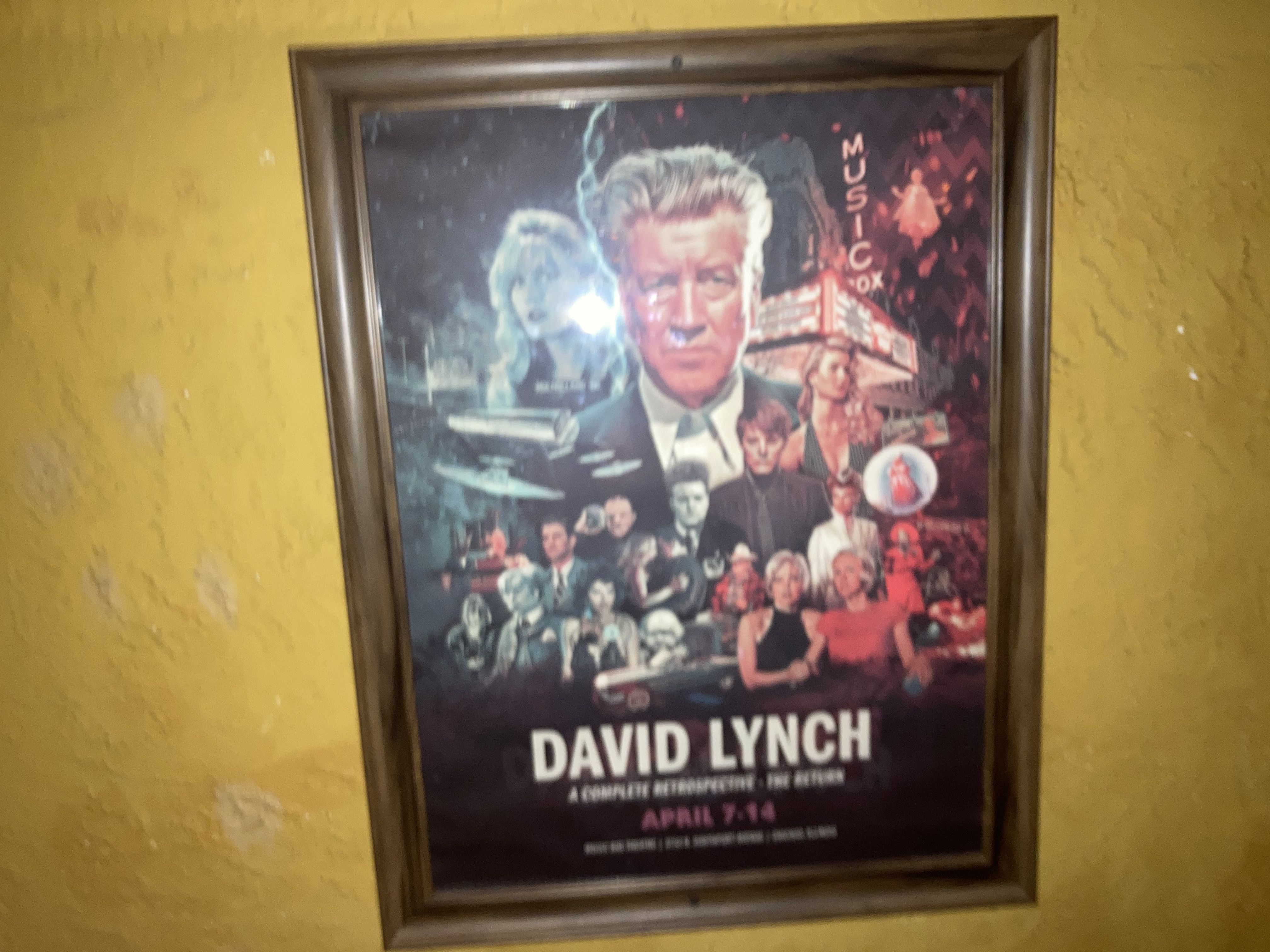
Click here to watch author Scott Ryan’s introduction to the film at Chicago’s Music Box Theatre from last year

Click herehereherehere and here to watch a Q&A with actress Sheryl Lee and actor Dana Ashbrook from a 2021 showing of Twin Peaks: Fire Walk with Me at Chicago’s Music Box Theatre

06.) The Devil’s Backbone (2001)
Dir: Guillermo del Toro
Country: Spain/Mexico
Color: Color

Along with the equally inventive Under the ShadowThe Devil’s Backbone is an inspired combination of the supernatural and the allegorical. When it comes to 21st century cinematic horror, both films serve as personal favorites of mine. As one may have deduced from this list, The Devil’s Backbone ranks very high for me. Set during the final year of the Spanish Civil WarThe Devil’s Backbone is on the one hand, a subtly tragic ghost story and on the other, a quietly frightening antifascist historical drama. Now I love every single film of Mexican filmmaker Guillermo del Toro and the highly personal The Devil’s Backbone (my second favorite of his after Pan’s Labyrinth) is arguably the most insightful out of all the truly great horror films produced since the dawn of 2000.

Click here to view the film’s original theatrical trailer

Click here to view British film critic Mark Kermode’s commentary on it as one of his BFI Player picks

Click here to read Kermode’s Criterion essay for it

05.) Midsommar (2019)
Dir: Ari Aster
Country: United States/Sweden
Color: Color

Whereas Ari Aster’s directorial debut Hereditary resembled the work of a master filmmaker, it was his follow-up film Midsommar that officially cemented him as such. As a horror film, Midsommar’s masterstroke lies not so much in it’s atmosphere as in how it uses it. Like The Wicker Man before it, Midsommar’s unique emphasis on daylight is what makes the film all the more disturbing. In fact, everything about Midsommar still sends shivers down my spine. As it did during it’s initial theatrical release five years ago in 2019, Midsommar still hits close to home (metaphorically and otherwise) in more ways than one.

Click here to view the film’s original teaser trailer

Click here to view the film’s original theatrical trailer

04.) The Seventh Victim (1943)
Dir: Mark Robson
Country: United States
Color: Black and White

Out of the nine unique official (or unofficial) horror films produced by Val Lewton at RKO Pictures during the 1940’s, director Mark Robson’s The Seventh Victim stands out as my personal favorite of the group. Every single trademark that shapes a Lewton production reaches it’s peak here. While The Seventh Victim is similarly downbeat as Lewton’s other horror films, neither of them ended on such an explicitly bleak note as this one does. The film’s black-and-white color palette coincides perfectly not only with it’s urban setting, but also in it’s thematic elements relating to depression and satanism among other things. Mature subject matter like homoeroticism is even touched upon here in an intelligent and sensitive manner. In addition, The Seventh Victim features a quietly chilling shower sequence that predates Alfred Hitchcock’s Psycho by seventeen years.

Click here to view the film’s original theatrical trailer

Click here to view TCM’s Eddie Mueller’s Noir Alley intro to the film from 2020

Click here to view TCM’s Eddie Mueller’s Noir Alley outro to the film from that same episode

Click here to view a Vimeo link to the 2007 documentary entitled Val Lewton: The Man in the Shadows

03.) Diabolique (1955)
Dir: Henri-Georges Clouzot
Country: France
Color: Black and White

Though Alfred Hitchcock is often credited for redefining cinematic horror with Psycho in 1960, with all due respect to the Master of Suspense, the aforementioned genre was actually redefined five years earlier in 1955 by French director Henri-Georges Clouzot with Diabolique. Coincidentally, not too long after the publication of Diabolique’s 1952 source material She Who Was No More, which was written by Pierre Boileau and Thomas Narcejac, Hitchcock set out to option the rights to it. He changed course upon learning that Clouzot had obtained them serveral hours earlier, which enabled him to adapt it as Diabolique. As the film’s plot unfolds, Clouzot wastes no time in elevating the tension to completely unbearable heights and effortlessly keeps it going throughout. Culminating in one of the scariest twist endings ever conceived, Diabolique is a horror thriller that will ultimately make one’s heart stop.

Click here to view the film’s original theatrical trailer

Click here to view Alex Cox’s Moviedrome intro to the film 

Spoiler Alert: If you have not seen the film, I strongly advise you not to click on the link below
Click here to view British film critic/novelist Kim Newman’s analysis of Diabolique

02.) Eyes Without a Face (1960)
Dir: Georges Franju
Country: France/Italy
Color: Black and White

If French poet Jean Cocteau had directed a 1930’s Universal horror film, the result would have undoubtedly been Eyes Without a Face. While it may not possess the delightfully eccentric humor that shaped The Invisible Man and Bride of Frankenstein among others, Eyes Without a Face does offer something every bit as inspired. Disturbing and poetic in equal measure, Eyes Without a Face is as much a horror film as it is a fairy tale. Dismissed by critics as one of his lesser films during it’s initial theatrical release in 1960, Eyes Without a Face has since been reassessed (and deservedly so) as not only French director Georges Franju’s most famous and influential film, but also his greatest one.

Click here to view what may or may not be the film’s French trailer

Click here to view British film critic Mark Kermode’s commentary on it as one of his BFI Player picks

Click here to view Kermode’s Kermode Uncut commentary on it

Click here to view Mark Kermode’s Cult Film Corner commentary on it

01.) Don’t Look Now (1973)
Dir: Nicolas Roeg
Country: United Kingdom/Italy
Color: Color

Now often hailed as one of the most influential horror films ever made, Don’t Look Now also happens to be my number one favorite horror film of all-time. Reportedly cited by it’s British director Nicolas Roeg as his exercise in film grammarDon’t Look Now also stands out as quite possibly the most beautiful marriage between form and content. Accompanied by composer Pino Donaggio’s emotionally powerful music score, Roeg’s trademark unconventional editing style and it’s fittingly bleak, yet strangely lovely atmosphere, Don’t Look Now explores a tragedy’s impact on a married couple through the power of visual storytelling. Along with an explicit controversial sex scene between it’s two lead actors (Julie Christie and Donald Sutherland), Don’t Look Now is noted for featuring (like Diabolique before it) the scariest ending ever conceived in the history of cinematic horror.

Click here to view the film’s original theatrical trailer

Click here to view the film’s 2019 4K Restoration trailer

Click here to view British film critic Mark Kermode’s 2008 Culture Show interview with director Nicolas Roeg

Click here to view Kermode’s review of the 2019 4K Restoration of the film

Click here to view Irish documentarian Mark Cousins 2001 Scene By Scene interview with actor Donald Sutherland on the film

Click here to view Mark Cousins Moviedrome intro to the film

Click here to view Danish-Norwegian filmmaker Joachim Trier commentary on the film

Click here to listen to the soundtrack

Let me conclude this blog entry with two questions for my dear readers below

What are your top 10 favorite horror films of all-time?

What video links in my blog entry interested you the most?

Marnie (1964) – A 10-Part Personal Essay Written By John Charet

This ten-part personal essay on iconic director Alfred Hitchcock’s Marnie is part of Maddy’s Third Master of Suspense Blogathon. Click here for the site in general, which is called Classic Film and TV Corner.

A polite reminder before reading this blog entry of mine 🙂 This essay of twenty-fifth favorite film of all-time (Marnie) is very personal to me and I worked very hard on it. I am asking everybody who reads it to remain courteous and kind (any mean or insulting comments will be deleted) and to try to understand where my love for Marnie comes from. I personally believe that I laid out everything articulately and I hope you readers feel the same and get as much out of this essay as I did 🙂

At the same time, it is my hope that I have treated every single subject presented here in a highly sensitive manner 🙂

Also, try to keep in mind that this blog entry was written for dyed-in-the-wool Marnie fans like myself 🙂

Spoiler Alert: This blog entry includes potential spoilers so If you have not seen Marnie, I highly recommend that you watch the film before reading this blog entry

Prologue

Indifferently received by both critics and audiences during it’s initial theatrical release in 1964, Marnie has long since been reassessed (and justifiably so) as one of director Alfred Hitchcock’s many underrated masterworks. Aside from being championed by film critics such as Dave Kehr, Robin Wood and Richard Brody, French New Wave filmmaker Jean-Luc Godard used clips from Marnie in his 8-episode video essay project Histoire(s) du Cinema. The esteemed French actress Catherine Deneuve once said that she always dreamed of playing Marnie Edgar (read here). The March 2008 issue of Vanity Fair featured actress Naomi Watts dressed as the title character (click here). Furthermore, Marnie ranks at number 47 on the BBC’s list of The 100 greatest American films, which was published back in 2015 (click here). In my opinion, Marnie is not only Hitchcock’s second greatest film after Vertigo (his magnum opus), but it also happens to rank at number 25 on the list of my first 100 favorite films of all time (click here). Not unlike that aforementioned 1958 classic, Marnie can be best classified as a dark and twisted psychological mystery-thriller/romantic drama. Similarly, the result is the Master of Suspense at his most complex.

Chapter 1: The First Half – A Psychological Mystery-Thriller

The film opens with a black-haired woman with a yellow purse walking down the middle of a train station. The next scene depicts her angry boss Sidney Strutt (Martin Gabel), who runs a tax consulting company. He reveals to other colleagues that she stole $10,000 from the company safe. In addition, the employee’s name was “Marion Holland”. One such aware individual is Mark Rutland (Sean Connery), who heads a Philadelphia-based publishing company. Rutland tells Strutt that he saw Holland on his last visit with him.

As it turns out, her actual name is not “Marion Holland”, but Margaret “Marnie” Edgar (Tippi Hedren), a habitual thief and compulsive liar. After washing the black dye out, her hair color is revealed to be blonde. Armed with the stolen $10,000, Marnie drives to Baltimore to see Bernice (Louise Latham), her mother. Before that, Marnie heads to a stable in Virginia to see Forio, her horse. Upon entering Bernice’s house, Marnie is triggered by the presence of red gladiolus. The color red occupies and flashes on the screen centering on Marnie’s panicked reaction. The relationship between Marnie and her mom Bernice is a dysfunctional one given the latter’s aloofness towards the former. As Marnie implies, Bernice is more affectionate towards a little girl that she babysits than her own daughter. Additionally, we learn that Bernice’s distrust in men is seconded by Marnie. At this point in the story, Marnie suffers an unseen nightmare involving tapping while muttering something.

Now dyed with chestnut hair, Marnie targets Mark Rutland’s publishing company under the alias of “Mary Taylor”. As with Sidney Strutt, Rutland hires Marnie without asking her for references. Once again, Marnie plans to open the safe and steal all the cash. Unbeknownst to Marnie, Mark is actually one step ahead of her.

Chapter 2: The Second Half – A Mystery-Thriller/Romantic Drama

Not too long after the robbery, Mark Rutland goes to the stable to confront Marnie (now back to natural blonde), who is riding on her horse Forio. While traveling on the road, Rutland demands that Marnie tell him the whole truth about who she really is. One detail we learn from Marnie is that unlike other men, Mark was the only one that she trusted given how kind he had been to her. Two weeks earlier, Mark comforted and caressed Marnie during a thunderstorm that caused some damage to his office, which destroyed the last of his deceased wife’s mementos. A week after, the two attended a horse racetrack in New Jersey. Marnie pleads with Mark to let go of her, but he refuses. Mark tells Marnie that it would make him irresponsible. Instead of turning Marnie over to the police, Mark blackmails her into marrying him. A betrayed Marnie tells Mark that you don’t love me. I’m just something you’ve caught! You think I’m some sort of animal you’ve trapped! To which Mark replies with something along the lines of that’s right–you are. And I’ve caught something really wild this time, haven’t I? I’ve tracked you and caught you, and by God, I’m going to keep you.

While on their honeymoon cruise, Mark tries to get a deeper understanding of what makes Marnie tick. Frustrated that he is not getting anywhere, the sex starved Mark bursts into Marnie’s room and attempts to make out with her. After screaming NO!, Mark realizes that he took her nightgown off. A seemingly regretful Mark than covers Marnie with his robe. Suddenly after Marnie lies down, it is implied that Mark rapes her. The next morning, Marnie is nowhere to be found in her room, which greatly concerns Mark. A frantic Mark runs all over the place until he finds Marnie drowning in the cruise ship swimming pool. Thankfully, Mark resuscitates Marnie before it was too late.

After returning from the honeymoon, Marnie calls mom Bernice to reassure her that she is fine. This discussion is heard by Lil Mainwaring (Diane Baker), the sister of Mark’s late wife Estelle. She is aware that Mark owes Sidney Strutt $10,000. This is after she finds a note in Mark’s drawer in this room. Not too long before he brings Marnie’s horse Forio back to his mansion for her, Lil overhears the two talking. She learns that Mark repaid the $10,000 to Strutt that Marnie stole from him. After admitting that she eavesdropped on their conversation, Lil promises to support Mark in any way possible. In response, Mark wants Lil to befriend the isolated Marnie. Instead, she invites Strutt to one of Mark’s house parties, which worries Marnie when he recognizes her, but Mark distracts him with another subject. When Marnie confesses to Mark that she robbed others, he makes sure that her other victims are compensated as well. Though he is able to convince him to drop the charges against Marnie, Strutt does remind Mark that he would feel differently If he was the victim of a theft.

During a fox hunt with Lil, the red coat of one of the hunters triggers Marnie to the point that she rides Forio in the wrong direction. A concerned Lil trails her. While riding, Forio falls and injures his legs inciting a now hysterical Marnie to beg a nearest resident for a gun to put the horse out of it’s misery. Lil offers to do the job, but Marnie refuses and does it herself. Afterwards, a devastated Marnie tries, but fails to steal the money from Mark’s safe. Subsequently, Mark announces that he is taking her to see her mother Bernice.

Chapter 3: A Mystery Solved

Prior to the upcoming climax, Mark’s investigation has proven to be a rich one as Marnie has a phobia of thunderstorms, the color red and men in general. Mark learns about the second thing in the aftermath of one of Marnie’s nightmares. During a word association game, Mark mentions the word red and it causes Marnie to break into tears pleading for psychological help. On the side, Mark discovers from a private investigator that Marnie’s mother Bernice was a sex worker, who was tried (and possibly acquited) for the murder of a sailor when Marnie was 5-years old. We also learn that Marnie was a witness to it. Mark takes Marnie and drives her to Baltimore to confront mom Bernice.

Upon arriving at the destination amid a thunderstorm, Marnie’s mom Bernice angrily asks him to leave, but Mark demands that she tell Marnie the truth about what happened on that fateful night long ago. When Bernice tries to physically attack him, a visibly shaken Marnie begins to remember her trauma by muttering you let my Mama go! You’re hurtin’ my Mama!…You’re one of them. One of them in the white suits. Mark taps on the wall to help her remember.

The flashback begins during a thunderstorm, as mother Bernice (inside of course) takes a then 5-year old Marnie (Melody Thomas Scott) out of a bedroom so she and her male client can have sex. The client in this case is a drunken sailor (Bruce Dern). A teary eyed Marnie recalls to Mark and Bernice that he came out to me. Continuing the story, we learn that after comforting her, Bernice mistook it for child molestation. She then tries to fight him off with a fireplace poker and after being overpowered, Marnie takes the poker and kills him with it. To paraphrase Marnie’s own words, I hit him, I hit him with a stick, I hurt him. In the aftermath of his murder, Bernice and the then young Marnie scream horrifically. Cut back to then present day, Mark has finally solved the mystery surrounding not only Marnie’s fear of the color red and thunderstorms, but also her aversion to human intimacy, not to mention sex.

In addition, mom Bernice reveals that she took the blame for the sailor’s murder and successfully fought the authorities, who threatened to place Marnie in a foster home in the wake of the incident. For Bernice, Marnie was the only thing that ever mattered to her. In Bernice’s own words, she promised God right then, if he’d let me keep you, and you not remember, I’d bring you up different from me. Decent. Touched upon hearing this, Marnie tells Bernice that I certainly am decent. Of course, I’m a cheat, and a liar and a thief, but I am decent. Nevertheless, Mark tells Marnie that it’s time to have a little compassion for yourself. When a child, a child of any age, Marnie, can’t get love, well, it takes what it can get, any way it can get it. It’s not so hard to understand. A now more amicable Bernice bids farewell to the two of them and says goodbye sugarpop to a now cured Marnie. As the rains stops, the two exit and Marnie requests to Mark (relating to the two options he handed to her earlier) that she would rather stay with him than serve a prison sentence. The final image implies that Mark will grant her wish.

Chapter 4: An examination of Childhood trauma

While it might seem messy at first, after repeated viewings, Marnie can be credibly interpreted as a profound and strangely optimistic examination of childhood trauma. This is precisely what the title character suffers from. Marnie Edgar’s childhood trauma comes in the form of three phobias: astraphobia, chromophobia/erythrophobia and genophobia.

Astraphobia

According to the Cleveland Clinic, astraphobia is an intense fear of thunder and lightning. The phobia is more common in children, but it can last into adulthood (read here). In addition, astrophobia is sometimes caused by a traumatic childhood event during a storm, which is what the title character suffered from in the film (read here). Marnie’s fear of thunderstorms is revealed to us during a regular workday in Mark Rutland’s office. As a tree branch crashes into his window from the outside, Marnie hangs on to Mark for life. At the same time, a slight flash of the color red triggers her further.

Chromophobia/Erythrophobia

Coined by Scottish artist David Batchelor in his 2000 book of the same name, the term chromophobia refers to a fear of corruption or contamination through color (read here). According to Batchelor, this psychological phenomenon can be traced all the way back to Ancient Greece. If a doctor were to diagnose Marnie Edgar with chromophobia, she would undoubtedly be placed under the subcategory of erythrophobia. Though commonly associated with blushing, an individual’s fear of the color red can also come from other factors. Marnie’s aversion to the color red plays a prominent role in the film. In chronological order, she is triggered by a bouquet of red gladiolus, red ink on her blouse, a horse jockey’s red-and-white jersey and the red coat of a fox hunter.

Genophobia

Though she does not mind being comforted by Mark Rutland when she is scarred, for the most part, Marnie Edgar’s distrust in the opposite sex boders on genophobia. In other words, a fear of sexual intimacy. This is evident during her cruise ship honeymoon with Mark. Frustrated by her unwillingness to make love, Mark frightens Marnie by taking her nightgown off, which leaves her emotionally stunted. Though initially remorseful, it is not too long before Mark takes advantage of this situation by implicitly raping her. In the wake of this, Marnie tries, but fails to commit suicide. As to be expected, Mark is still baffled as to why Marnie is afraid of sexual intercourse. A significant portion of it is rooted in her mom Bernice’s mistrust of men, which is just the tip of the iceberg.

-The Root Cause of Marnie’s Phobias-

Ironically, astraphobia, chromophobia/erythrophobia and genophobia serve as contributing factors in Marnie Edgar overcoming her trauma. Amid a strong thunderstorm, Mark Rutland brings Marnie back to her childhood home to confront her mom Bernice. Deeply concerned about the root cause of Marnie’s phobias, Mark demands Bernice tell her the whole story about what happened on that fateful night from a long time ago. Initially, Bernice responds with physical resistance, but stops upon hearing an emotionally upset Marnie blurt out you let my Mama go! You’re hurtin’ my Mama!…You’re one of them. One of them in the white suits. Mark taps on the wall to help Marnie remember. As mentioned earlier, the flashback involved Bernice when she was a young sex worker. A heavy thunderstorm can be heard from the outside, which scares the then 5-year old Marnie. Suddenly, Bernice’s drunken male client, a white-suited sailor tries to comfort her. Mistakenly believing that he is a child molester, Bernice tries to fight him off with a fireplace poker. Under the impression that he is trying to kill her mom, Marnie picks up the fireplace poker and beats him to death with it. The adult Marnie finishes up her story with I hit him, I hit him with a stick, I hurt him. Flashing back again, we now see a now horrified Bernice and then 5-year old Marnie loudly screaming at the sight of the sailor’s bloodied corpse. As we fast forward back to the then present day, Marnie is now in a more relaxed state of mind.

As with Vertigo, Marnie is another Alfred Hitchcock thriller that features the lead character overcoming their fears through a recreation of a traumatic experience. Unlike the former, the latter ends on a more hopeful note. After recalling every single detail of that traumatic childhood incident, Marnie learns from mom Bernice that she had always loved her. So much in fact, that she not only fought tooth and nail to prevent the authorities from placing Marnie in a foster home, but also took the blame for the sailor’s murder by standing trial for it. Marnie takes Bernice’s sentiments to heart by declaring I certainly am decent. Of course, I’m a cheat, and a liar and a thief, but I am decent. This also answers Mark’s question relating to why Marnie became a thief. This is expressed through Mark’s advice to Marnie with it’s time to have a little compassion for yourself. When a child, a child of any age, Marnie, can’t get love, well, it takes what it can get, any way it can get it. It’s not so hard to understand. Aside from renouncing her criminal past, Marnie leaves her past phobias behind as she and Mark exit the house. Subsequently, Marnie tells Mark that she would rather remain married to him than serve a jail sentence, which Mark (rather implicitly) happily agrees to.

Chapter 5: Beyond Marnie Edgar

In Marnie, the title character’s presence impacts two central characters and one small, but pivotal one. Here, it comes in the form of Sean Connery’s Mark Rutland, Diane Baker’s Lil Mainwaring and Louise Latham’s Bernice Edgar, who is Marnie’s mother.

-Mark Rutland-

On the surface, Mark Rutland is an affluent by the books CEO of the Rutlands publishing company in Philadelphia. In the center, there is an element of darkness to his character. Aware of Marnie Edgar’s recent robberies (Rutlands serving as the most recent target), when it comes to nabbing criminals, Mark is thrilled at the prospect of using his unorthodox methods on a beautiful woman. A widower, Mark sees himself as the trapper and Marnie Edgar as his prey. In a display of tough love, Mark blackmails Marnie into marrying him. Either that or prison. Besides, Mark is well aware that Marnie does not want to end up in jail. Mark truly loves Marnie, but she is incensed by this notion as she tells him you don’t love me. I’m just something you’ve caught! You think I’m some sort of animal you’ve trapped! Mark answers her question with that’s right–you are. And I’ve caught something really wild this time, haven’t I? I’ve tracked you and caught you, and by God, I’m going to keep you.

To an extent, Mark is like James Stewart’s John “Scottie” Ferguson from Vertigo, which was also directed by Alfred Hitchcock. As with Scottie, Mark’s obsession with a gorgeous blonde woman also borders on the unhealthy. Even so, this is where the similarities end. Unlike Scottie, Mark is upper class and when it comes to his sexual impulses, he actually acts on them. In Vertigo, the sexually repressed Scottie may have undressed Madeline Elster, but he never ever acted on that impulse. Here in Marnie, Mark not only undresses the title character, but also implicitly rapes her. The close-up of Mark’s lusty eyes indicates this. Today, this criminal offense would be categorized as marital rape, but back in 1964, it was still considered perfectly legal and acceptable in American society.

At the same time, Mark sincerely loves Marnie and cares deeply about her. In a display of kindness, Mark brings Marnie’s horse Forio back to his mansion for her. Not unlike how he comforted her during a thunderstorm earlier, Mark consoles Marnie after she suffers from a nightmare. In trying to figure out the root cause of Marnie’s recurring nightmare, he starts a word association game with her. When Mark mentions the words red and white, Marnie gets triggered and breaks down into tears. As Mark hugs her, Marnie admits she has a problem (Help me. Oh, God, somebody help me!). Perhaps the greatest thing Mark might have done for Marnie was helping her overcome the phobias that plagued her. After revealing her trauma amid the climax, Marnie is able to feel at peace with the world. In addition, she wants to remain married to Mark, who believed in her the entire time.

-Lil Mainwaring-

Initially, Lil Mainwaring’s relationship with Marnie Edgar resembles an antagonistic one, but as the film progresses, it becomes much more complicated than that. Lil is the sister of Mark’s deceased wife Estelle and she always hoped that he would marry her. While on their honeymoon, Lil spies in Mark’s room and in a drawer, finds a note reminding himself to pay Marnie’s former boss Sidney Strutt the $10,000 that she stole from him. Upon overhearing Mark telling Marnie that he payed Strutt off on her behalf and later, Marnie’s phone conversation with her mom Bernice, Lil comes to the realization that she is not only a liar, but a thief. In a futile attempt to win Mark’s affections, Lil promises to help Mark in any way she possibly can. For Mark, he wants Lil to befriend Marnie, who actually does not have any friends. Seemingly ignoring this, Lil invites Strutt to one of Mark’s house parties and right after telling Marnie that he recognizes her, Mark keeps him busy with conversation. In other words, Marnie dodged a bullet.

Perhaps the closest Lil has ever come in expressing empathy towards Marnie comes during the fox hunting sequence. When a jockey’s red coat triggers Marnie, she rides Forio (her horse) in the wrong direction, which causes Lil to chase after Marnie out of concern for her safety. When Forio injures his legs, a frantic Marnie runs to a nearby stranger’s house and demands a gun to put him out of his misery. When Lil arrives, she tries to calm her down by offering to shoot the Forio, but Marnie does it instead. In the wake of this incident, a credible argument can be made that Lil would now rather see Marnie placed in a psychiatric hospital than in the outside world.

-Bernice Edgar-

When we are first introduced mom Bernice Edgar, it becomes clear to us that the relationship between her and daughter Marnie is a troubled one. When she is not complaining about her hair being too blonde, Bernice chastises Marnie for spending too much money on frivolous things. Ironically, Bernice is fond of babysitting little neighbor girl Jessica “Jesse” Cotton (Kimberly Beck), who is every bit as blonde as Marnie is. Aside from relying on Marnie’s financial support, Bernice babysits on the side to make money. Due to mobility issues, Bernice never really leaves the house. Implicitly jealous of Jesse’s presence, Marnie asks Bernice why don’t you love me, Mama? I’ve always wondered why you don’t. You never give me one part of the love you give Jessie. Mama – Why do you always move away from me? Why? What’s wrong with me? Deeming it ridiculous that an adult is jealous of a child, Bernice denies the accusation. Unconvinced, Marnie goes on with my God! When I think of the things I’ve done to try to make you love me. The things I’ve done!”; You think I’m Mr. Pemberton’s girl. Is that why you don’t want me to touch you? Is that how you think I get the money to set you up? Insulted, Bernice slaps Marnie, who apologizes to her before heading to bed. This marks the first appearance of Marnie’s nightmare as she gently tosses and turns in bed. If their is one thing that unites the two, it lies in their distrust of men. Marnie always agreed with Bernice’s notion that men and a good name don’t go together. This is confirmed when Marnie tells her that we don’t need men, Mama. We can do very well for ourselves. You and me. Bernice nods in agreement with a decent woman don’t have need for any man.

Later on, Mark Rutland brings Marnie back to that same childhood home to confront Bernice about why her daughter is afraid of men. As the memory becomes all too vivid, Marnie starts to remember the root cause of her troubled state of mind. When Marnie was a 5-year old child, Bernice was making money as a sex worker. At this moment, she was making out with a drunken white-suited sailor. Upon noticing that Marnie is frightened by the noise of the loud thunderstorm, he tries to calm her down. Under the impression that he is trying to molest Marnie, Bernice beats him with a fireplace poker. When she is outnumbered, Marnie uses the poker to kill him. The sight of the sailor’s bloodied white shirt incites Bernice and Marnie to scream very loud, which traumatizes the both of them for life. Back in the then present day, Bernice tells Marnie that she claimed responsibility for the crime and stood trial for it. Contrary to earlier, Bernice reveals that she always loved Marnie more than life itself and vowed to fight the authorities who wanted to place her then young child in a foster home in the wake of the sailor’s murder. To Bernice, she was the only thing in this world I ever did love. It – it was just that I was so young Marnie. I never had anything of my own. In addition, Bernice promised God right then, if he’d let me keep you, and you not remember, I’d bring you up different from me. Decent. This revelation not only comforts Marnie, but it can be implied that Mark’s concern for her incites she and Bernice to reconsider their previous negative attitude towards the opposite sex.

Chapter 6: A Litmus Test

More or less marked as the beginning of director Alfred Hitchcock’s supposed decline in quality, Marnie actually serves as the conclusion of his peak period, which began in 1954 with Rear Window. Despite an indifferent reception during it’s initial theatrical release in 1958, Vertigo has since been reassessed as Hitchcock’s crowning achievement. After redefining cinematic horror with Psycho in 1960, Hitchcock’s flair for suspense would reach it’s purest expression with The Birds in 1963. Out of these five key Hitchcock classics, Marnie (released in 1964) is the one that stands out as a litmus test for cinephiles. You either love it or hate it. I am part of the former group. My reasons are rooted in the views held by late film theorist Robin Wood, former Chicago Reader critic Dave Kehr and The New Yorker’s Richard Brody.

-Robin Wood’s Take on Marnie

There’s a sense, and I don’t mean this in any derogatory way, there’s a sense in which Hitchcock’s is the most artificial form of cinema that’s ever been invented. He talks in interviews uh, repeatedly about his ideal of pure cinema. And he means by this putting together, often tiny fragments of film, in order to create effects. I’m always amazed, seeing Marnie again and again, at the extreme level of virtuosity that Hitchcock had reached when he got to this point when he made this film.Sequence after sequence seems almost a miracle of pure cinema. In the timing of the editing… the whole complex of editing, camera movements, camera position, acting, gesture, expression, the way in which a head is turned slightly in one direction or another. The command of this pure cinema is extraordinary, but it is a very artificial form of filmmaking in a sense.

He remained all his life very influenced by German Expressionism, which was really his first exciting experience of film. He’s always said how excited he was by it. He worked in German studios at first in the silent period, very early on when he started making films. He saw Fritz Lang’s German silent movies. He was enormously influenced by that. And Marnie is basically an Expressionist film in many ways. Things like scarlet suffusions over the screen, back projection and backdrops, artificial-looking thunderstorms. These are Expressionist devices, and one has to accept them. If one doesn’t accept them, then one doesn’t understand and can’t possibly like Hitchcock.

I would say myself, and this may sound provocative and even arrogant, but if you don’t like Marnie, you don’t really like Hitchcock. I would go further than that and say if you don’t love Marnie, you don’t really love cinema.

-Robin Wood
The Trouble with Marnie (2000)
(Click here)

While I agree with everything that Robin Wood stated above, I do have a slight issue with his last paragraph. In those two sentences, I would go one further by adding Vertigo as another film that one must love in order to be both an Alfred Hitchcock devotee and a cinephile. Though he replaced it with Marnie for the 2002 edition, Wood did place Vertigo as one of his 10 favorites from the 1992 Sight and Sound poll (read here and here).

-Dave Kehr’s Take on Marnie

Universally despised on its first release, Marnie (1964) remains one of Alfred Hitchcock’s greatest and darkest achievements. Tippi Hedren, in a performance based on a naked, anxious vulnerability, is a compulsive thief; Sean Connery is the neurotically motivated southern gentleman who catches her in the act and blackmails her into marriage. The examination of sexual power plays surpasses Fassbinder’s films, which Marnie thematically resembles, going beyond a simple dichotomy of strength and weakness into a dense, shifting field of masochism, class antagonism, religious transgression, and the collective unconscious. The mise-en-scene tends toward a painterly abstraction, as Hitchcock employs powerful masses, blank colors, and studiously unreal, spatially distorted settings. Theme and technique meet on the highest level of film art.

-Dave Kehr
Chicago Reader
(Click here)

Like myself, Vertigo is Dave Kehr’s favorite Alfred Hitchcock film based on his top 10 choices for the 2012 and 2022 Sight and Sound polls (read here and here). As for how he sums up the equally masterful Marnie, I could not have stated what he said any more eloquently.

-Richard Brody’s Take on Marnie

I’ve long thought that “Marnie,” not “Vertigo,” is Hitchcock’s best film—and, as such, is one of the greatest films of all time. It, too, is about disguise, deception, crime, and desire, about mental illness and unhealed trauma. The plot twists in “Marnie” aren’t as elaborate or as surprising, but it captures, more harrowingly, a sense of derangement—inner and outer, intimate and widespread—that reflects a world on the breaking point. Nobody would mistake Hitchcock for a political filmmaker, but “The Birds” and, especially, “Marnie,” are the work of an American Antonioni, whose psychological dramas are matched by architectural and symbolic ones, by a confrontation with the roiling chill of technological modernity.

But, yes, these movies also feature the performances of Tippi Hedren, which are not only the ultimate Hitchcock performances but—and especially that of “Marnie”—among the very best in the history of cinema.

-Richard Brody
The New Yorker
(Click here)

As much as I love Marnie, I have to disagree with Richard Brody when he cites it as Hitchcock’s best film. Make no mistake, Marnie is (to quote him) one of the greatest films of all time. In fact, aside from ranking at number 25 on the list of my Top 100 favorite Films, Marnie also happens to be my second favorite Alfred Hitchcock film. What I take issue with is him placing Marnie higher than Vertigo. For me, when it comes to great films, none of them will ever top Vertigo, which will not only forever stand as Hitchcock’s greatest achievement, but also as my number one favorite film of all time. That being said, I do agree with Brody’s sentiments regarding Marnie on a whole. Brody’s summary of The Birds and Marnie as the work of an American Antonioni is an interesting one. Coincidentally, when I published a list of my Top 10 Favorite Horror Films of All Time, blog visitor Bill White compared Hitchcock to Michelangelo Antonioni as well in one of his replies (click here). At the same time, Hitchcock briefly looked up to Antonioni an an influence when he tried to reinvent himself a few years later with the unrealized Kaleidoscope (read here).

Chapter 7: Marnie as a celebration of Form

German Expressionism’s influence on director Alfred Hitchcock’s career on a whole can be traced all the way back to the Silent era with his 1927 breakthrough film The Lodger, which was also his first suspense thriller. After hitting his stride in the United Kingdom, the British-born Hitchcock moved to Hollywood in 1939 and as the 1940’s progressed, so did his artistry as a filmmaker. By 1964, Hitchcock had already mastered the tricks of the trade. Which brings me to Marnie. Stylistically, Marnie is Hitchcock’s ultimate tribute to cinema. When it comes to visual style, no other Hitchcock film has displayed the aforementioned filmmaker’s trademark combination of German Expressionist intensity and Classical Hollywood allure more openly than in Marnie. Coincidentally, Marnie marked the last time that Hitchcock collaborated with three key regulars. For Hitchcock, that was cinematographer Robert Burks, editor George Tomasini and composer Bernard Herrmann. Tomasini died a few months after the film’s release and Burks died in 1968. During the filming of his then following film Torn Curtain, Hitchcock had a falling out with Herrmann over it’s music score, which resulted in him being replaced by John Addison.

-The Title Sequence-

Uncharacteristic for it’s time, Marnie intentionally opens with a title sequence more fitting for the 1940’s and it’s prior decades than the 1960’s. Set to composer Bernard Herrmann’s operatic prelude, we first get a storybook illustration of the Universal logo with the words UNIVERSAL PRESENTS. The next page turns and the name TIPPI HEDREN shows up before turning again to a page with the name SEAN CONNERY. Next page features the words IN ALFRED HITCHCOCK’s and after that, turns to one that spells in the center page MARNIE and on the bottom of it, from the novel by WINSTON GRAHAM. Before reaching the last page with the words Directed by ALFRED HITCHCOCK, the next thirteen pages credits everything from the supporting players to the Screenplay by JAY PRESSON ALLEN.

Click here to watch the title sequence

-Mise en scene-

From a technical standpoint, Marnie resembles a German Expressionist film shot in Technicolor. This is emphasized by Albert Whitlock’s mattes and Robert Burks cinematography. The artificial backgrounds symbolize Marnie Edgar’s troubled mental state. Chiaroscuro lightning comes in the form of the aftermath of a thunderstorm. After a tree brach crashes through a window in Mark Rutland’s office, we see light shining on the left of the screen and darkness covering the right side. Other standout examples include Marnie in a bathroom stall and she and Mark’s alone time in a stable. A panicked Mark’s running down the cruise ship’s hallway to find Marnie is another demonstration. Though it opens with a dolly zoom shot, the climactic flashback sequence is lit in a way that subtly evokes the tinting (yellow in this case) in films such as Robert Wiene’s The Cabinet of Dr. Caligari and F.W. Murnau’s Nosferatu among others. Periodically, a red light briefly flashes in front of Marnie upon spotting something associated with that color. During a thunderstorm, white lightning flashes in front of Mark and a terrified Marnie, who buries her head on his shoulder. As a visual storyteller, all of these aforementioned elements serve as just a few of many examples in how director Alfred Hitchcock builds suspense.

-Costumes and Music-

Simultaneously, Marnie can arguably be viewed as a contemporary throwback akin to Jacques Demy’s The Umbrellas of Cherbourg, which was also released in 1964. In Marnie, the past is exemplified by Bernard Herrmann’s distinctive music score, which debatably gives off vibes characteristic of not only the 1950’s, but (debatably) that of the 1930’s and 1940’s as well. As elegant as they are trendy, Edith Head’s costume designs serve as a representation of the then present. The colors of Marnie Edgar’s suits range from light and dark greens to grey. The lower sleeves on one of them is covered in fur accents. Black, brown, gray, tan and yellow are the colors of Marnie’s slacks and sweaters. The trench coats are green and tan. Dresses and evening gowns are black, yellow and white. The blouses are in various subdued colors. The nightgowns and robes are blue, green, pink and white.

Click here to read a Classic Critics Corner article on Edith Head’s costumes for the film

Chapter 8: The Content of Marnie

Not unlike many of director Alfred Hitchcock’s other films, there is more to Marnie than meets the eye. On the surface, Marnie is a psychological thriller, but in the center, it is a marriage drama doubling as a companion piece to Hitchcock’s then previous film The Birds.

-A Marriage Drama-

As the film’s second act progresses, Marnie emerges as a twisted marriage drama. This is confirmed by the metaphorical representations of Mark Rutland and Marnie Edgar as husband and wife. In this case, the former acts as the psychiatrist treating the latter as a patient. Though generally well-intentioned, some of Mark’s unorthodox methods at curing Marnie of her phobias go too far. On their honeymoon, Mark’s behavior towards Marnie resembles that of a sexual predator. This becomes evident when Mark rapes Marnie off screen. No longer a widower, newlywed Mark strives for sexual intimacy within the relationship, but Marnie’s fear of sex makes it an impossibility. While playing a word association game, Mark mentions the word red, which causes Marnie to break into tears and admit that she is troubled. An empathetic Mark hugs and consoles Marnie afterwards. Eventually, we learn that Marnie’s distrust of men stemmed from a childhood incident that left her traumatized. Whereas Marnie recalls the events in the presence of Mark and mom Bernice, we experience it visually in the form of a flashback. In the very last shot of the film, Marnie tells Mark that she wants to stay married to him. Cured and rehabilitated, Marnie now desires an intimate relationship with Mark. In the end, love conquers all.

-A Companion Piece to The Birds

Thematically, Marnie can also be seen as a companion piece to The Birds from a year earlier, which was also directed by Alfred Hitchcock. Like The Birds, Marnie examines how upper class society influences a woman. In contrast to socialite Melanie Daniels in The Birds, habitual thief Marnie Edgar comes from either a lower or lower middle class background. Mom Bernice’s former profession as a sex worker when Marnie was a child confirms this. Contrary to Melanie’s more or less harmless pranks, Marnie’s addiction to stealing is much more complex. Aside from using stolen money to fulfill her dream of an affluent lifestyle, Marnie also uses it to financially support the somewhat ailing Bernice, who babysits for cash. Even so, Bernice remains dismissive towards her efforts. Despite her frequent denials, Marnie is still convinced that Bernice loves Jessie (a little neighborhood girl that she babysits) more than her. If practical jokes served as Melanie’s way of overcompensating for the lack of a mother, then lone non-violent robberies serve as Marnie’s way of trying to get love wherever she can find it.

Unlike The Birds, Marnie centers on a woman married into money as opposed to one who was born into it. Nevertheless, both films are similar in that they feature the lead female character being tamed not once, but twice. In The Birds, the initially mischievous Melanie Daniels becomes emotionally mature in the wake of the frequent attacks on Bodega Bay by the title villains. In Marnie, the title character’s loss of interest in stealing becomes evident shortly after marrying Mark Rutland. The former climaxed with an avian attack on Melanie, whereas the latter double climaxes with Marnie’s mercy killing of her prized horse Forio and her childhood flashback.

The ties that bind these two films together is rooted in the strained relationship between a troubled young woman and a matriarchal figure. Near the end of The Birds, Melanie Daniels rests her wounded head on the shoulder of Lydia Brenner, who has (symbolically) regained influence over adult son Mitch, whom she possess as a mother. If anything else, Lydia will now be babying Melanie like she had with her other children. In a way, it is a win for Melanie, who always wanted to be mothered. This is where Marnie concludes similarly to The Birds. Shortly after the climactic flashback sequence, mom Bernice reveals to Marnie that she always truly loved her. The problem was that Bernice conceived Marnie when she was young and knew next to nothing about parenting. When Marnie turned 5, Bernice was still a sex worker and the drunken behavior of one her male clients rubbed her the wrong way. Under the impression that he was sexually assaulting Marnie, Bernice beat him with a fireplace poker. Once he overpowered her, Marnie picked up the poker and killed him in self-defense. Grateful to her, Bernice gave up sex work to raise Marnie. Not wanting her to repeat the same mistakes she did, Bernice set out to bring up Marnie as respectable as possible. Hitchcock and screenwriter Jay Presson Allen’s optimistic ending contrasts with the one in Winston Graham’s 1961 novel of the same name on which this film is loosely based on. In the book, Marnie comes home and discovers that Bernice had already passed away. For me, Hitchcock and Allen’s decision to keep Bernice alive enriched the film. The key to understanding why Hitchcock is the Master of Suspense can be best summed up by a quote from a 1939 lecture to Yale drama students along the lines of Suspense can be introduced in a simple love story as well as the mystery or ‘whodunit’ picture. Make the audience suffer as much as possible. In Marnie, we the audience suffer with the title character and root for her to gain a sense of comfort. Upon receiving it from her mother, we become every bit as relaxed and remorseful as Marnie is. The final image of Mark and Marnie exiting Bernice’s house is not so much a happy ending as it is a cautiously optimistic one. Even with Mark’s help, the road to recovery is bound to be a long one for Marnie.

-How Marnie Psychologically Impacts Me as a Viewer-

Like Vertigo, Marnie is another Alfred Hitchcock film that has impacted me on a psychological level. As ridiculous as this might sound, I see a little of myself in the character of Marnie Edgar, despite the fact that I am a male. No, I have never engaged in crime (theft in this case) nor suffered any kind of abuse like Marnie does in this film. Neither do I have a strained relationship with my loved ones like Marnie had with mom Bernice. The similarities between me and Marnie lie in how we respond to a past trauma. For example, I have felt apprehensive about emergency rooms ever since the death of my father at the age of 14. This traumatic experience has stayed with me ever since. Shortly after, I would get all teary eyed whenever empathetic psychologists and teachers brought up the word envy. This reaction was my way of confirming to them that I needed help. In Marnie, there is a scene where the title character cries about needing help to Mark Rutland, who hugs and consoles her in response, which is exactly how my psychologists and teachers reacted. For a while, it was hard for me to look at other people whose fathers were still living without becoming jealous or breaking down into tears. Fortunately, I no longer have these feelings, which often filled me with distress and shame. Despite agreeing with mom Bernice’s view of her as decent, at the same time, Marnie implies that she is imperfect by calling herself a cheat. Like a lot of average folk, I would sum myself up as decent with reservations, but never a cheat. The film ends with Marnie simultaneously feeling relieved about the past and uncertain about the future. The latter is rooted in the inevitable challenge of overcoming addiction and trauma. As a Catholic, Marnie’s state of mind in the very last scene mirrors mine shortly after confessing my sins to a priest at Confession. This aforementioned mindset is a very common one for Catholics. Unlike I Confess, The Wrong Man and Vertigo, Marnie may not be one of director Alfred Hitchcock’s Catholic films, but it’s impact on me as a viewer remains no less significant for all the reasons I stated and much more.

Chapter 9: Tippi Hedren – The Last Iconic Hitchcock Blonde

If Grace Kelly and Vera Miles were the epitome of elegance and vulnerability respectively, than Kim Novak was elegance characterized by moral ambiguity and vulnerability. Aside from adding an extra layer of complexity, Novak embodied the best of both worlds as a Hitchcock Blonde in Vertigo. My description of Novak can also apply to Tippi Hedren in not only The Birds, but Marnie as well. Along with Novak, Hedren stands out for me as one of the two quintessential Hitchcock Blondes.

Out of all the Hitchcock Blondes, Tippi Hedren represents the last of her type. Topaz and Family Plot may have featured blondes like Dany Robin in the former and Barbara Harris in the latter, but neither of them were iconic. Hedren came at the tail’s end of director Alfred Hitchcock’s vintage period, which began in 1954 with Rear Window and concluded (or at least for myself) in 1964 with Marnie. In Marnie, Hedren delivers a heartfelt performance as Marnie Edgar, a habitual thief and compulsive liar. As in a lot of Hitchcock’s films though, the women are too complex to be classified as femme fatales on a whole. For example, Vertigo’s Madeleine Elster may be a femme fatale on the surface, but in the center, her nuanced character renders this label misguided. Deep down, Marnie is an emotionally damaged woman, who resorts to stealing and lying as compensation for a supposed lack of motherly love. If North by Northwest is the Hitchcock picture to end all Hitchcock pictures, than Hedren is the Hitchcock Blonde to end all Hitchcock Blondes. Unlike Hitchcock’s other films from this period, Marnie (like The Birds before it) is told almost entirely from the woman’s point of view. Coincidentally, we viewers can’t help but see things the same way Marnie does and it goes beyond rooting for her. Take for instance Marnie’s relationship with Mark Rutland. Whenever Marnie is repulsed by him, so are we, and when she feels comforted by him, so do we. Now that is a true sign of an interesting character. Ms. Hedren would nod in agreement as she considers Marnie to be the personal favorite of her two collaborations with Hitchcock.

Chapter 10: The Vision of Marnie

As an Alfred Hitchcock film, Marnie works as both an ideal star vehicle for it’s lead actress Tippi Hedren and, in retrospect, the official conclusion of the director’s peak period. At the same time, like all great filmmakers, Hitchcock takes a property that intrigues him and reimagines it as something personal. The source material in question is Winston Graham’s 1961 novel of the same name. Hitchcock’s inspired vision is completed by female screenwriter Jay Presson Allen’s insightful interpretation of the aforementioned book.

-Director and Muse

Director Alfred Hitchcock’s mistreatment of actress Tippi Hedren has been common knowledge for cinephiles since 1983 with the publication of late American biographer Donald Spoto’s book The Dark Side of Genius: The Life of Alfred Hitchcock. Twenty-five years later in 2008, Spoto published the equally questionable Spellbound by Beauty: Alfred Hitchcock and His Leading Ladies, which focused primarily on Hitchcock’s relationship with his leading actresses. One of the most talked about aspects of both books was Hitchcock’s frequent sexual harassment towards Hedren during the filming of The Birds and Marnie. When it comes to his biographies on Hitchcock, one needs to take Spoto’s writings with a grain of salt. For me, British film critic/biographer John Russell Taylor’s 1978 book Hitch: The Life and Times of Alfred Hitchcock is still the authoritative biography on the Master of Suspense. That being said, Hitchcock did have an unhealthy obsession with Hedren on their two collaborations. This reportedly went beyond sexual overtures. Hitchcock made the rules of who Hedren could talk to, how to dress, what to eat, etc. According to Hedren, everyone – I mean everyone – knew he was obsessed with me. He always wanted a glass of wine or champagne, with me alone, at the end of the day. He was really isolating me from everyone. One day, Hitchcock told Hedren of a dream he kept having where she said Hitch, I love you – I’ll always love you. A creeped out Hedren would tell Hitchcock it was just a dream. Later on, in Hedren’s own words: He stared at me and simply said, as if it was the most natural thing in the world, that from this time on, he expected me to make myself sexually available and accessible to him – however and whenever and wherever he wanted. Hedren publically opened up about these incidents back in 2012, when her story was made into a controversial HBO film titled The Girl, which stars Sienna Miller as Hedren and Toby Jones as Hitchcock. When Hedren announced to him that she would not work with him again, a heartbroken Hitchcock retaliated by refusing to end her contract with him, which rendered her unable to chase roles for other studios. Hitchcock eventually sold her contract to Universal (the film’s distributor) in 1966. Though she appeared in two episodes of television shows produced by them (Kraft Suspense Theatre and Run for Your Life), Hedren’s refusal to act in a television western resulted in her release from Universal. Even so, Hedren has made it clear that while Hitchcock did ruin her career, he didn’t ruin her life. Hedren stated that that time of my life was over. I still admire the man for who he was. Furthermore, Hedren has been able to separate the two. The man who was the artist. I mean, what he gave to the motion picture industry can never be taken away from him and I certainly wouldn’t want to try. But on the other side, there is that dark side that was really awful. At the same time, while Hedren believes that The Girl is an accurate representation of her working relationship with Hitchcock, at the same time, she admitted that It wasn’t a constant barrage of harassment. If it had been constantly the way we have had to do it in this film, I would have been long gone. Hedren added that Hitchcock was absolutely delightful and wonderful too. Hedren also felt that Hitchcock had a charm about him. He was very funny at times. He was incredibly brilliant in his field (read here). In addition, Hitchcock never got to the point of raping her. In a 2016 Inside Edition interview, Hedren reveals that she put an end to his sexual advances towards her and added that he never got that far (read here).

Click here to watch a 2012 HuffPost Live interview with Hedren

Click here to watch a trailer of sorts for Hedren’s 2016 auobiography entitled Tippi: A Memoir

Click here to see an Amazon page for the book

Click here to read a story from a Pro-Alfred Hitchcock forum entitled Save Hitchcock

Click here to visit the site in general

In order to understand director Alfred Hitchcock’s mad love for actress Tippi Hedren, one needs to go back to 1953 and 1954. During those two years, Hitchcock was making four films. Three of them were Dial M for Murder!, Rear Window and To Catch a Thief. What do they all have in common? All three of them featured the iconic Grace Kelly. For Hitchcock, Kelly was the embodiment of perfection. Out of all the Hitchcock Blondes, Kelly was his favorite. Now let us fast-forward to two years later. On April 19, 1956, Kelly became Princess of Monaco by marrying Rainer III, who was the Prince of Monaco (read here). This depressed Hitchcock to no end as she could no longer be his muse. From then on, Hitchcock needed the perfect replacement. To Hitchcock, Vera Miles, Kim Novak, Eva Marie Saint and Janet Leigh remained a pale shadow of Kelly. Then comes Tippi Hedren, who was a model at the time. The commercial of Hedren promoting the diet drink Sego prompted Hitchcock to cast her in The Birds. Hedren’s work in that film pleased Hitchcock so much for him to declare that Tippi has a faster tempo, city glibness, more humor [than Grace Kelly]. She displayed jaunty assuredness, pertness, an attractive throw of the head, and she memorized and read lines extraordinarily well and is sharper in expression (read here). In Hitchcock’s opinion, Hedren not only measures up to Kelly, but even surpasses her in some ways.

All of the above made Tippi Hedren the object of director Alfred Hitchcock’s desire. One could even say that Marnie is Hitchcock’s valentine to the aforementioned actress. Regardless of what she is feeling at the moment, the camera frequently gazes at the beautiful Hedren and her elegant fashion sense. Hitchcock is madly in love with Hedren like Sean Connery’s Mark Rutland is with her character, which is Marnie Edgar. Simultaneously, Mark’s way of loving and caring for wife Marnie is (with that one obvious debatable exception) akin to how Hitchcock might want to treat Hedren If he was her age and married to her. For Hitchcock, Hedren is Grace Kelly 2.0. This is confirmed by Hitchcock’s trademark cameo appearance. In it, Hitchcock stares at Marnie (backside and in disguise wearing a black wig) from a short distance, walking down her apartment hallway. Afterwards, he stares at the camera for a brief second.

-Interpretations-

Coincidentally, Marnie is a film that can be interpreted in many different ways. While it is not wrong to perceive Marnie as a psychological romantic mystery-thriller, by summing it up as such on a whole, one would only be scratching the surface of it’s numerous interpretations. Themes such as childhood trauma, marital rape and family estrangement are explored perceptively by screenwriter Jay Presson Allen. Merged, the three aforementioned themes result in a drama that is as much a haunting examination of childhood trauma as it is a disturbing and unsettling social commentary on marriage and an empathetic look at a strained daughter-mother relationship to boot.

Epilogue

When it comes to 1960’s Classical Hollywood cinema, Marnie stands out for myself as it’s crowning achievement. Along with Vertigo, Marnie is the most beautifully realized of director Alfred Hitchcock’s trademark effortless balance of form and content. Every other American masterpiece from that aforementioned decade can neither equal nor surpass the inspired vision and emotional wallop of Marnie. Like Vertigo, Marnie remains in a class of it’s own.

Click here to watch the film’s original theatrical trailer

Click here to listen to famed composer Bernard Herrmann’s haunting soundtrack

Click here to watch a close to two-hour 2005 interview with Hedren

Click here to watch a 2012 BFI interview with Tippi Hedren

Click here to watch a 2013 hour long interview with Hedren

Click here to watch an over 30-minute 2013 interview with Hedren

Click here to watch a close to 50-minute 2013 interview with Hedren

Click here to watch a 2017 hour long interview with Hedren

Let me conclude this blog entry with two questions for my dear readers:

What parts of my Marnie essay stood out for you readers in particular?

What links in my Marnie essay did you readers love the most?

Also, I hope that I covered a lot of ground in helping all of you dear readers understand why I love Marnie so much.

For newcomers to my blog, I also participated in Maddy’s Second Master of Suspense Blogathon from last year in 2024 🙂 That one was on Vertigo, which is my number one favorite film of all time 🙂 Click here to read my Vertigo essay 🙂 Click here to view Maddy’s blogathon page on Hitchcock from last year 🙂 Once again, her website is titled Classic Film and TV Corner 🙂
John Charet’s 17 Romantic Film Recommendations (In Chronological Order)

-A Few Words Before Reading-

Please be kind to the film at number 11. Any comment expressing negativity towards number 11 will be deleted. So once again, please be polite 🙂

-Introduction-

Since I did not finish this in time for Valentine’s Day, I decided to just compose a list of 17 great romantic films. With the exception of number 15 (which I love dearly), every film on here ranked within the list of my first 100 favorite films of all time (read here). Once again, I have more than 17 favorite romantic films, but these are the ones that I wanted to start with.

Click here to listen to the late great Doris Day singing Move Over Darling

Click here to listen to Day also singing Dream a Little Dream

Now without further ado, I present to all of my dear readers:

-John Charet’s 16 Romantic Film Recommendations-
(In Chronological Order)

1.) Sunrise (1927)
Dir: F.W. Murnau
Country: United States
Color: Black and White

Renowned for it’s unique combination of expressionism and realism (read here), it is no wonder that Sunrise is often hailed as the pinnacle of artistic cinematic quality in the silent form and the end of an era as well (read here). Given that it is one of the earliest silent films to feature a synchronized music score and sound, it would not be far-fetched to view Sunrise as a transitional film in that regard (read here). Metaphorically, the silent and (then upcoming) sound era represent rural and city life respectively. An undisputed poet of German Expressionism, director F.W. Murnau was allowed carte blanche by Fox Film Corporation (now known as 20th Century Studios) founder William Fox to create his magnum opus. For example, the story’s large unnamed city was actually built from scratch. The film’s reported estimated budget of $200,000 confirms it. Along with Erich von Stroheim’s Greed, Sunrise is quite possibly the most technically audacious American masterwork of it’s era.

Click here to view the film’s original theatrical trailer

Click here to view the entire film

2.) The Docks of New York (1928)
Dir: Josef von Sternberg
Country: United States
Color: Black and White

With or without Marlene Dietrich, each and every film by Austrian-American director Josef von Sternberg remains visually dazzling. Not unlike F.W. Murnau’s Sunrise, what makes The Docks of New York so unique lies less in it’s fairly straightforward plot and more in it’s visual poetry. Sternberg’s utilization of Hans Dreier’s set designs and Harold Rosson’s cinematography goes a long way in not only effortlessly shaping the film’s mise en scene, but also it’s romantic drama and lead characters. The result packs an emotional wallop that is felt in every single frame.

Click here to view the entire film

3.) Lonesome (1928)
Dir: Paul Fejos
Country: United States
Color: Black and White (also color tinted)

If one subscribes to legendary film critic turned screenwriter James Agee’s notion that silent comedy was represented by four most eminent masters (read here), then director Paul Fejos Lonesome represents the Harry Langdon (i.e. the forgotten) of the four notable late silent era masterworks. The other three being F.W. Murnau’s Sunrise, Josef von Sternberg’s The Docks of New York and King Vidor’s The Crowd. Simultaneously, Lonesome is part-talkie. Considering that it was not until 2012 that Lonesome debuted on a home video format (Blu-Ray/DVD in this case), my aforementioned description of it stands out as an apt one. Now that this terrible wrong has long been corrected, we can all easily view Lonesome as an equal to those previously mentioned three films. The film’s use of camerawork, color tinting and editing makes for an exhilarating cinematic experience.

Click here to view the entire film

4.) City Lights (1931)
Dir: Charlie Chaplin
Country: United States
Color: Black and White

Though frequently hailed (and deservedly so) as the quintessential Tramp entry, for me, City Lights reputation has always rested upon so much more than that. Whereas The Kid established iconic director/producer/star Charlie Chaplin’s trademark combination of humor and pathos, City Lights unquestionably polished it. From the first to last frame, City Lights can only be described as the most beautifully realized comedy ever made. In addition, City Lights features a justifiably celebrated ending that is as poignant as it is perfect. Close to ninety-four years may have passed since it’s initial theatrical release in 1931, but City Lights still continues to impact audiences, critics and filmmakers alike as of 2025. As for myself, I define City Lights as the cinematic equivalent of poetry in motion.

Click here to view what may be the film’s original theatrical trailer or one of the re-released ones

Click here to view what is definitely a re-release trailer of the film

Click here to view the 2003 documentary Chaplin Today: City Lights

5.) Love Me Tonight (1932)
Dir: Rouben Mamoulian
Country: United States
Color: Black and White

Everything I always wanted to say about this cinematic masterpiece has already been summed up more eloquently than I ever could by two other writers. In his 1968 book Hollywood in the Thirties, John Baxter remarked that If there is a better musical of the Thirties, one wonders what it can be (click here). Aside from hailing it as a magical, rapturous, unique, charming, audacious, unforgettable, and, to beat a warhorse, masterpiece, film historian Richard Barrios also said that It remains less well-known than it warrants even as vastly inferior works are enshrined. . . . It is, after all, quite a provable truth: Love Me Tonight is a great film, and along with Singin’ in the Rain and a very few others it resides at the very pinnacle of movie musicals, and at the apex of art (click here). Not much more I can add except that If Charade is the best Hitchcock movie Hitchcock never made (read here), then Love Me Tonight is the best Lubitsch musical that Lubitsch never made.

Click here to view the original theatrical trailer for Love Me Tonight

Click here to view the entire film

6.) Make Way for Tomorrow (1937)
Dir: Leo McCarey

Country: United States
Color: Black and White

During an interview conducted by film critic turned director Peter Bogdanovich, legendary filmmaker Orson Welles cited Make Way for Tomorrow as the saddest movie ever made! (read here and here). Welles added that It would make a stone cry! Make Way for Tomorrow was reportedly Leo McCarey’s personal favorite of the films he directed. In fact, upon receiving the Academy Award for Best Director for the screwball comedy classic The Awful Truth, McCarey responded with something along the lines of Thanks, but you gave it to me for the wrong picture (read here). The picture he was referring to was of course Make Way for Tomorrow. The plot revolves around Barkley and Lucy Cooper (Victor Moore and Beulah Bondi), an elderly couple, who recently lost their home to foreclosure. This is relevant because Make Way for Tomorrow was made during the Great Depression. In the aftermath, the two must separate and live with one of their five grown children respectively. The result is an insightful, refreshingly nuanced, uncompromising and ultimately tragic social commentary on the relationship between parents, their offspring and society. Last, but not least, Make Way for Tomorrow is a film that never fails to bring tears to my eyes.

Click here to view the film’s original theatrical trailer

Click here to view the late Peter Bogdanovich’s commentary on it

Click here to view the late Robert Osborne’s intro to it on TCM (Turner Classic Movies) from 2014

Click here to view Osborne’s outro to it

Click here to view Dave Karger’s intro. to it on TCM

7.) Brief Encounter (1945)
Dir: David Lean
Country: United Kingdom
Color: Black and White

Though justifiably celebrated for epics like The Bridge on the River Kwai and Lawrence of Arabia, British filmmaker David Lean proved that he was every bit as accomplished early on with smaller scaled works like Summertime and this generally acknowledged classic from 1945 entitled Brief Encounter. In adapting celebrated playwright Noel Coward’s 1936 play Still Life, director Lean adds a touch of cinematic poetry that goes a long way in making this low-key romantic drama come alive. Like the film itself, lead actress Celia Johnson’s blend of quiet dignity with pathos has been frequently equalled, but seldom surpassed.

Click here to view the film’s original theatrical trailer

Click here to view British film critic Mark Kermode’s commentary on it as one of his BFI Player picks

Click here to view Ronald Neame’s (also co-writer) fond memories of it

Click here to view an interesting take on one of the film’s memorable locations, which in this case is Carnforth railway station

Click here to view the entire film

8.) Leave Her to Heaven (1945)
Dir: John M. Stahl
Country: United States
Color: Color

Extraordinary on every single level imaginable, Leave Her to Heaven also happens to be my number one favorite film noir of the 1940’s. As the first film noir shot in color (read here), Leave Her to Heaven is noted for uniquely blending elements belonging to that aforementioned subgenre with that of melodramasromantic dramas and psychological thrillers. The result still stands out today as an American masterpiece in a class of it’s own. Though he made two other very excellent films that Douglas Sirk would later not only equal, but surpass (Magnificent Obsession and Imitation of Life), Leave Her to Heaven towers above them all as director John M. Stahl’s greatest film. Leon Shamroy’s gorgeous Technicolor cinematography and Kay Nelson’s stylish costume designs serve as only two of many aspects that shape Stahl’s dazzling mise-en-scene. For my money, the always sexy Gene Tierney delivers a performance for the ages as the cold-hearted and narcissistic Ellen Berent Harland, who simultaneously ranks as the sexiest and most complex femme fatale in cinematic history. Aside from ranking as the second highest grossing film of 1945 after The Bells of St. Mary’sLeave Her to Heaven also reportedly ranked as 20th Century Studios (then 20th Century Fox) biggest box-office hit of the decade. Now that is something.

Click here to watch a youtube video link to TCM’s (Turner Classic Movies) Alicia Malone’s intro and outro to the film from a few years back

Click here to watch a youtube video link to master filmmaker Martin Scorsese’s introduction of the film at the 2007 New York Film Festival

Click here to watch a youtube video link to Scorsese introducing it again. Only this time it was from this year in 2024. The date he introduced it was on Sunday, November 10, 2024

Click here to watch a youtube video link to the entire film

Click here to watch another youtube video link to the entire film

Click here to watch a youtube video link to the film’s original theatrical trailer

Click here to watch another youtube video link to the film’s original theatrical trailer

Click here to watch another youtube video link to the film’s original theatrical trailer

9.) Pandora and the Flying Dutchman (1951)
Dir: Albert Lewin
Country: United Kingdom
Color: Color

Exquisite, sensual and surreal are the three words that best sum up this masterful 1951 romantic fantasy directed by Albert Lewin. Emphasized by John Bryan’s lush scenic designs, Jack Cardiff’s visually stunning cinematography and Beatrice Dawson’s elegant costumes, Pandora and the Flying Dutchman emerges as the cinematic equivalent of a beautiful dream. Last, but not least, as the sexy Pandora Reynolds (the film’s title character), Classical Hollywood icon Ava Gardner imbues her with an aura of glamour and mystery. If Charade is the best Hitchcock movie Hitchcock never made and Love Me Tonight is the best Lubitsch musical that Lubitsch never made (emphasis mine), then Pandora and the Flying Dutchman is the best Powell and Pressburger film that Powell and Pressburger never made.

Click here to view the film’s original theatrical trailer

Click here to view the film’s Restoration trailer

10.) Journey to Italy (1954)
Dir: Roberto Rossellini
Country: Italy/France
Color: Black and White

Notwithstanding the fact that a majority of it’s dialogue is in English, Journey to Italy remains my number one favorite foreign film of all time. On the surface, it stems from master Italian director Roberto Rossellini’s neorealist visual style, courtesy of location shooting. In the center, it comes from Rossellini’s modernist approach to drama and storytelling. The answer lies in how it forever changed the face of European cinema. By combining these two aforementioned elements together, Rossellini laid the groundwork for the French New Wave movement and Michelangelo Antonioni’s existentialist dramas, which emerged simultaneously at the tail’s end of the 1950’s into 1960. During the past nine years of the 21st century, Journey to Italy’s influence seems to have gradually expanded into the American cinema. For example, in director/writer Richard Linklater’s 2013 romance drama Before Midnight, (the third film in his Before Trilogy), Julie Delpy’s character references it. As a devotee of everything it influenced, maybe my enthusiasm for Journey to Italy is based on that? Either way, for me, watching Journey to Italy is like sipping a fine wine – the taste never ages.

Click here to view the entire film

Click here to view Janus Films 2013 restoration trailer of the film

Click here to view Roberto Rossellini’s intro to the film himself

Click here to view late Scottish novelist and film critic Gilbert Adair’s 1990 Film Club intro to the film

Click here to view master filmmaker Martin Scorsese’s 2014 video conversation on the films of Roberto Rossellini, which includes Journey to Italy

11.) Vertigo (1958)
Dir: Alfred Hitchcock
Country: United States
Color: Color

Former Chicago Reader film critic Dave Kehr eloquently praised Vertigo as One of the landmarks-not merely of the movies, but of 20th-century art. I am in total agreement with him. Coincidentally, Vertigo ranks as my number one favorite film of all time. For me, Vertigo not only stands out as the crowning achievement of Classical Hollywood cinema, but of filmmaking on a whole. No other cinematic masterwork has impacted me on so many levels than this 1958 American classic. Set to celebrated composer Bernard Herrmann’s unforgettable music score, Vertigo opens with a characteristically expressive title sequence designed by the legendary Saul Bass. After this, we are treated to one of the most atmospheric and visually stunning films ever made. In the center, Vertigo is two beautifully realized films for the price of one. What begins as a riveting mystery, suddenly turns into a haunting drama of sexual obsession. The result is every bit as erotic as it is disturbing and ultimately tragic. As directed by the iconic Alfred Hitchcock (a.k.a. The Master of Suspense), Vertigo is a masterpiece of form and content. More than that, Vertigo serves as Hitchcock’s magnum opus. Though renowned (and justifiably so) as a showman, Hitchcock also deserves to be lauded as an artist. This latter trait has never been more evident than in Vertigo. In that same review, Kehr summed up Vertigo as the most intensely personal movie to emerge from the Hollywood cinema. Kehr is totally right on that. For everybody involved, Vertigo represents the pinnacle of their careers. What else left is there for me to say except that Vertigo is (for myself) the greatest film ever made.

Click here to read former Chicago Reader film critic Dave Kehr’s review of Vertigo

Click here to view the film’s original theatrical trailer

Click here to view the film’s 1996 Restoration trailer

Click here to view the film’s 60th anniversary 4K Restoration trailer

Click here to view legendary title designer Saul Bass masterful opening title sequence

Click here to view the film’s memorable psychedelic dream sequence

Click here to listen to Bernard Herrmann’s haunting music for the film

Click here to view the documentary on Vertigo’s 1996 Restoration from 1997 entitled Obsessed with Vertigo

Click here to read my 2024 blog entry entitled Vertigo (1958) – A Ten-Part Personal Essay Written By Me

Click here to read a 2024 blog entry regarding my viewing of it at the great Music Box Theatre

12.) Last Year at Marienbad (1961)
Dir: Alain Resnais
Country: France/Italy
Color: Black and White

Out of all the undisputed classics of world cinema, Last Year at Marienbad debatably stands out as the one whose greatness is difficult to put into words. Let me try to break it down as best as I can though. In what is quite possibly Left Bank director Alain Resnais most popular film, Last Year at Marienbad combines nonlinear storytelling and a fittingly fragmented editing style with a mise en scene visually resembling that of a dream. Sound familiar? If so, that is because whether it be in form, content or both, Last Year at Marienbad has been impacting filmmakers close to around the world ever since it’s initial release in 1961. Influencing everyone from Agnes Varda to Ingmar Bergman to Nicolas Roeg to Stanley Kubrick to David Lynch to Christopher Nolan and beyond, Last Year at Marienbad remains a timeless masterpiece of French cinema.

Click here to view what might be the film’s French trailer

Click here to view the 50th anniversary trailer for it, which is more or less similar to the French one, only their is English subtitles

Click here to view the film’s 55th anniversary trailer for it

Click here to view British director Edgar Wright’s commentary on it

Click here to view French/British film professor Ginette Vincendeau’s intro to it

13.) L’Eclisse (1962)
Dir: Michelangelo Antonioni
Country: Italy/France
Color: Black and White

When it comes to 1960’s Italian cinema, I always single out Michelangelo Antonioni’s L’Eclisse as the crowning achievement of that decade. Yes, I rank it higher than 81/2 and The Leopard and those two equally magnificent films make up only two of many masterworks produced in that country from that era. Widely acclaimed American filmmaker Martin Scorsese has cited L’Eclisse as a step forward in storytelling. For him, it felt less like a story and more like a poem (read here). I echo his sentiments. For me, no other director has depicted alienation as poetically as Antonioni. Furthermore, L’Eclisse stands out for me as the most daring Italian film to come out of the 1960’s. Not unlike Journey to Italy before it, L’Eclisse dramatically and stylistically redefined narrative film for a future generation of cinephiles and filmmakers. Three examples of the latter include esteemed directors like the aforementioned Scorsese, Richard Linklater and Wong Kar-wai (read here and here). As for the former, I count myself among Jake Cole and Jonathan Rosenbaum (read here and here) as the three of many cinema enthusiasts championing L’Eclisse. As the third film in Antonioni’s trilogy on modernity and it’s discontentsL’Eclisse serves as his thesis. In this one, the alienated relationship between modernity and everyday society really hits close to home in every single way imaginable. Featuring one of (If not) the most talked about endings in cinematic history, L’Eclisse emerges as quite possibly the boldest Italian film of it’s decade.

Click here to watch a 50th anniversary trailer

Click here to watch Scorsese’s commentary on L’Eclisse

Click here to view the film’s 50th anniversary Restoration trailer

Click here to listen to Italian pop singer Mina’s L’Eclisse Twist

Click here to read my essay on the film

14.) Gertrud (1964)
Dir: Carl Theodor Dreyer
Country: Denmark
Color: Black and White

If anything else, I would like to think that If there is one thing that me and other cinephiles share, it is the notion that one can’t go wrong with any film from esteemed Danish director Carl Theodor Dreyer’s back catalogue. For me, it is Gertrud that stands out as Dreyer’s crowning achievement. Critically dismissed (implicitly or otherwise) as outdated during it’s initial release in 1964, Gertrud has since been reassessed as one of Dreyer’s many masterpieces. Additionally, in it’s refusal to adapt to what was then considered cinematically fashionable, Gertrud can definitively be viewed as the most stylistically radical film of the 1960’s. Dreyer’s characteristically slow, but steady pacing stood in sharp contrast to the French New Wave’s more contemporary approach to cinematic storytelling. Not unlike the film’s title character, Dreyer’s own vision can debatably be seen as his unapologetic response to the popularity of the latter. In other words, Dreyer could care less whether or not he is seen as uncompromising. Though not intended as his swan song (a film about Jesus Christ had been in the works), Gertrud nevertheless serves as a perfect film for Dreyer to bookend his career as a filmmaker on.

Click here to view a scene from Gertrud (I could not find a trailer)

Click here to view a trailer for a 2022 documentary about it Dreyer’s Gertrud

15.) The Umbrellas of Cherbourg (1964)
Dir: Jacques Demy
Country: France/West Germany
Color: Color

Not Unlike All That Heaven Allows before it, director Jacques Demy’s The Umbrellas of Cherbourg unfolds against a visually beautiful backdrop. Only here, the film’s bright use of color aligns with the mood as much as it stands in contrast to it. As a coming-of-age musical (all of the dialogue is sung), The Umbrellas of Cherbourg resonates with me on so many levels. The denouement never fails to bring tears to my eyes.

Click here to watch a Restoration trailer of it

Click here to watch a what I believe is a BFI 2019 trailer showing of it

Click here to watch a recent 4K Restoration trailer for it

16.) Three Times (2005)
Dir: Hou Hsiao-hsien
Country: Taiwan
Color: Color

As of 2025, Three Times remains my number one favorite foreign film of the 21st century. On a whole, Three Times is the most beautifully realized anthology film ever helmed single-handedly. In the case of Three Times, that would be renowned Taiwanese director Hou Hsiao-hsien. Shot in a series of elegantly composed long takes, the result consists of three romantic stories set during the past and the then present. Ranging from poignant to inspired to ultimately insightful, Three Times explores the human condition in rich and poetic ways. Like all truly great directors, Hsiao-hsien uses atmosphere, color and music to shape the film’s drama. These aforementioned elements may have been combined flawlessly in films before and after it, but never more effortlessly than in Three Times.

Click here to view what may or may not be the film’s Taiwanese trailer

Click here to view what may or may not be another Taiwanese trailer for it

Click here to view the film’s US trailer

17.) Certified Copy (2010)
Dir: Abbas Kiarostami
Country: France/Italy/Belgium
Color: Color

While it undoubtedly works as a subtle homage to some of the celebrated works of European directors like Roberto Rosseliini, Alain Resnais and Michelangelo Antonioni to name only three, late great Iranian director Abbas Kiarostami’s Certified Copy also stands on it’s own as a bona fide masterwork. Kiarostami’s trademark theme of role-playing within reality remains as inventive as always. Even when all is said and done, one wonders If the writer (William Shimell) and the woman (Juliette Binoche) will ever meet each other again in the future, regardless of their true feelings towards each other? Not unlike Binoche herself, Certified Copy is a film that engages us on an emotional and intellectual level.

Click here to view the film’s original theatrical trailer

Click here to view another trailer for it

Click here to view it’s director Abbas Kiarostami briefly talking about it

Click here to view Kiarostami briefly talking about it some more


Let me conclude this blog entry with two questions for my dear readers below:

What are some of your favorite romantic films of all time?

What links or videos were your favorites?

L’Eclisse (1962) — A Four-Part Personal Essay Written By John Charet

This four-part personal essay on Italian director Michelangelo Antonioni’s L’Eclisse is my entry for The Journey to Italy Blogathon hosted by Gill from Realweegiemidget Reviews and Kristina from Speakeasy. Please visit their wonderful sites 🙂

Prologue

When it comes to 1960’s Italian cinema, I always single out Michelangelo Antonioni’s L’Eclisse as the crowning achievement of that decade. Yes, I rank it higher than 81/2 and The Leopard and those two equally magnificent films make up only two of many masterworks produced in that country from that era. The deservedly widely acclaimed American filmmaker Martin Scorsese has cited L’Eclisse as a step forward in storytelling. For him, it felt less like a story and more like a poem (read here). I echo his sentiments. For me, no other director has depicted alienation as poetically as Antonioni. Furthermore, L’Eclisse stands out for me as the most daring Italian film to come out of the 1960’s.

The Plot

During the very beginning of L’Eclisse, we are introduced to a literary translator named Vittoria, who is played here by Monica Vitti. Not too long after, we learn that she is going to end her love relationship with Riccardo (Francisco Rabal). This is not the fault of Riccardo nor of Vittoria. Vittoria’s stock-obsessed mother (Lilla Brignone) does not seem to care one way or another. Unlike her, wealth barely holds Vittoria’s interest. Neither does the casual racism of her friend neighbor Marta (Mirella Ricciardi), a white woman from Kenya. After meeting handsome stock broker Piero (Alain Delon), the two slowly fall in love with each other. Not unlike earlier, this romance is doomed due to Vittoria’s inability to emotionally connect.

Chapter 1: Alienation as a Theme in L’Eclisse

As to be expected from any film directed by the great Michelangelo Antonioni, L’Eclisse emphasizes characterization over plot and marries form with content. Whether or not L’Eclisse is your introduction to Antonioni, all of this remains essential in understanding the drama within the aforementioned director’s work. Antonioni’s work may be challenging to more average viewers (especially today’s), but once they make that valiant effort in immersing themselves into not only his visual style, but his characters (like I long ago did), I can promise you all that the journey will be a very involving one. The key word here is alienation.

At first, one is bound to dismiss Monica Vitti’s Vittoria as impulsive, but as the story progresses, it becomes much more complex than that. For example, Vittoria shares nothing in common with her money obsessed mother. Vittoria even implies later on to Piero that she does not care If she never gets rich. We also learn from Vittoria that her father died when she was very little. Limited to the first two examples alone, L’Eclisse may serve as a social commentary on our love-hate relationship with capitalism. Simultaneously, it can also be seen as a cautionary tale on the effects of fatherlessness based on that last example. Are these two aforementioned debatable metaphors largely responsible for Vittoria’s alienation? Maybe? Maybe not? Who knows, but it is worth pondering either way.

Given how Vittoria shares none of the racist beliefs of her neighbor Marta, it remains a mystery as to how she can tolerate it. True, Vittoria does don blackface at the latter’s apartment while mimicking African tribe dancing, which amuses fellow neighbor Anita (Rossana Rory), but angers Marta. Why? Marta is a white Kenyan, who believes that Kenya’s blacks are threatening that country’s white population. This stands in contrast as to why certain viewers might find it offensive, which can be best summed up as cultural appropriation. Personally, I view it not so much as outrageous, nor as Vittoria’s way of gently mocking Marta’s fear of blacks. Instead, I simply see it as Vittoria’s way of either goofing off or having fun in a harmless way. On second thought, maybe Vittoria aspires to be an African tribe woman? I would not be surprised If other dyed-in-the-wool fans of L’Eclisse (like myself) perceived it any of these ways long before I did.

Unlike everybody else, Piero intrigues Vittoria, but in the grand scheme of things, that is not saying much. For example, whenever Piero tries to offer Vittoria kisses, she rejects them. When one attempt results in Piero accidentally tearing Vittoria’s dress, the two end up having sex with each other. Soon enough, Piero talks to Vittoria about marriage, but she remains uninterested in it. Much to Piero’s annoyance, Vittoria chooses to wallow in alienation. Vittoria may be allowing alienation to consume her. This is confirmed with Vittoria’s following response to Piero along the lines of I wish I didn’t love you or that I loved you much more. Then again, the latter might imply that Vittoria wishes that Piero was not every bit as shallow as her mother, Riccardo and Marta. For example, earlier in the film, Piero (with Vittoria at the time) seems more concerned about his recovered submerged car than the dead drunkard responsible for sinking it. Unlike everybody else in Vittoria’s life, she values human life over material goods. Believe me, I am far from the first person to toy with this theory.

Expectedly or unexpectedly, Vittoria meets Piero at his office and the two make out once again. Here, Vittoria tries to overcome her alienation, but fails in the end. Before departing, Piero and Vittoria make a promise to meet each other at 8 pm later that night at the construction site (their usual hangout), but neither of the two ever show up.

Chapter 2: Analyzing The Ending of L’Eclisse

For everybody who has seen the film in it’s entirety, L’Eclisse is notable for it’s radical five minute ending that consists of a series of shots featuring it’s central urban setting. Whether it be through extreme wide shots (EWS) or otherwise, each frame remains sparsely populated by people and objects. Sound effects are heard in the background as well. Winds blowing against trees, water draining or spraying and passing vehicles serve as standout examples here. As day transitions into night, the camera moves up and captures the image of a street light with the words fine, which is Italian for end.

Click here to watch the entire sequence became even I can’t do justice in summing up why this ending is so unique.

-Interpreting the Ending-

On the surface, it would not be wrong to suggest that L’Eclisse ends with reckless abandon, but when observed at the center, the ending actually makes perfect sense. When all is said and done, Vittoria is alienated from the rest of the world and Piero is every bit as (If not more) shallow as everyone else in her life. In the end, neither of them wants to maintain the relationship, so Vittoria and Piero go their own separate ways. The final sequence suggests that the world has moved on too. At the same time, the scarcely populated imagery reflects not only Vittoria’s alienation, but also the shallowness that embodies every character in this film. This scene feels apocalyptic, which it is, albeit psychologically. A bus passenger even reads a newspaper with a front headline concerning nuclear war. Speaking of which, L’Eclisse concludes with that same foreboding musical note played near the end of the opening title sequence, which is preceded by Italian Pop singer Mina’s strangely tuneful song entitled L’Eclisse Twist. This bold transition from upbeat to downbeat (and vice versa) recurs throughout the film.

Close to sixty-three years ago, L’Eclisse came off as an existential look at a hedonistic 1960’s Italian society. Fast-forward to present day 2025, it now doubles as an existential metaphor for 21st-century society on a whole. During that time, we have all witnessed the ever increasing popularity of social media through various outlets. Yesterday, it was Facebook and Twitter (now known as X). Today, it seems to be Bluesky. Inevitably, the result has been a mixed blessing. Make no mistake, some of these outlets have been wonderful in a number of ways. Some people may not have close friends or family (sometimes neither) and these sites might have helped them tremendously in perfecting their social skills. In fact, I have been doing exactly that ever since 2012, when I first started this blog. All of these sentiments can easily apply to the IPhone as well, which first hit the market as far back as the late second quarter of 2007. Two of the many benefits provided by these devices come through phone call capability and texting. I also carry an IPhone and use it for many things. At the same time, the everyday use of social media and electronic devices for communication has not been immune to consequences.

If L’Eclisse were made today, it would arguably end with two sequences. The first would feature people communicating through social media via the Internet and an IPhone in their own house or apartment. The second scene would remain largely intact. The only difference would be that most of the very few people outside would be texting on their IPhones. According to a recent social media report (read here), out of the 5.52 billion internet users, which make up 67.5 percent of the world’s population, 5.22 billion are social media users. If that is the case, then this means that only 32.5 percent of the world’s population engages in social activities. This is an undoubtedly troubling phenomenon. Based on recent studies examining the link between social media and mental health alone (read here and here), is it any wonder why so many individuals today feel alienated?

In his masterful 1999 documentary about Italian cinema entitled My Voyage to Italy, director Martin Scorsese summed up L’Eclisse’s ending as a frightening way to end a film…but at the time it also felt liberating. The final seven minutes of Eclipse suggested to us that the possibilities in cinema were absolutely limitless (read here). I could not have stated this any more eloquently than he does. On Antonioni’s part, some of the inspiration for L’Eclisse originated from his filming of a solar eclipse in Florence (read here).

-An Intentionally Unresolved Mystery-

All (or at least most of) Italian director Michelangelo Antonioni’s films can be seen as mysteries, but not in the conventional sense (no not even Blowup). Here, in L’Eclisse, we never learn why Vittoria is so alienated, but that is precisely the point. Throughout my life, I have befriended several individuals (both male and female), who were every bit as aloof as Vittoria. I actually come off as one of those people. Occasionally that is. Thankfully, I am more sociable than aloof. Unfortunately, this is not the case for everybody. Some folks do not even have an underlying reason for their alienation, it is just simply beyond their control. Is it possible that Antonioni (privately or otherwise) himself may have suffered from alienation and used it as a recurring theme in his own films like this one? If one’s own answer to that question is yes, then he might have seen himself as the male equivalent of Vittoria and everyone else as shallow. The sparse number of people in the film’s final sequence are either hollow or they suffer from the same ailment that Vittoria suffers from. Is this official? As I mentioned earlier in this essay, who knows? Once again, it can interpreted in many different ways.

Chapter 3: Monica Vitti in L’Eclisse

Since all of her collaborations with director Michelangelo Antonioni are outstanding, the question remains as to how does one do justice in summing up actress Monica Vitti’s performance in L’Eclisse? I can answer that one effortlessly. As usual, it lies in how Vitti achieves it. In other words, Vitti executes her performance as If it were a cakewalk. As the alienated Vittoria, Vitti imbues her with charisma, mystery, playfulness and sex appeal.

Charisma and Mystery

As described earlier in this essay, me and quite a few of my friends have all felt a sense of alienation to varying degrees in our pasts. Whether you are an alienated or sociable devotee of L’Eclisse, all of us can agree that their is something charismatic about Monica Vitti’s Vittoria. For me, Vittoria comes off as the male equivalent of Jean-Paul Belmondo’s Michel Poiccard in Breathless. Unlike Poiccard though, Vittoria is no criminal. In L’Eclisse, Vitti’s Vittoria is a literary translator, who struggles with connecting to the world she lives in. A very credible argument can be made that her charisma lies in how relatable her ailment is to any viewer, who has ever felt alienated in their lives. Believe me, we all have.

At the same time, dyed-in-the-wool alienated and hospitable fans of L’Eclisse are probably still trying to solve the mystery as to why Vittoria is so aloof. The answer is best summed up by a line said by Vittoria to Piero consisting of I don’t know. Let’s face it, most (If not all) of us have probably uttered this whenever anybody asks us why we feel alienated. After all, If we can’t give a proper answer, why should we as viewers expect one from Vittoria? This is precisely what makes Vittoria not only a fascinating character, but an authentic one as well. Not unlike her, in real life, some people are simply unable to justify their alienation.

Playfulness and Sex Appeal

Fortunately, based on my experiences with some others, those who suffer from alienation (occasionally or otherwise) have been able to get through life in their own ways. Half of the time in L’Eclisse, Vittoria displays a playful streak when it comes to her relationship with her neighbors (Anita and Marta) and later, stock broker Piero. The former is characterized by comedic irreverence when Vittoria dons blackface during a small party with Anita and Marta. The lighter moments of her romance with Piero is the film’s purest expression of playfulness.

Though I never donned blackface (or any other kind for that matter) when it came to amusing myself during my occasional alienation period, I would resort to nonsensical humor (quoting lines from Aqua Teen Hunger Force among others) or doing an impersonation of a popular figure by making them all sound like Arnold Schwarzenegger. All privately of course. To put it in other words, this is me being silly. When it comes to that last example, all of you would have to see it to know what I am talking about. Other times, it comes through my trademark gentleness. For example, I always wanted to be like the late great Fred Rogers and since none of us can, I do the next best thing. I rise to the occasion to be as kind and caring as I possibly can in spite of my then alienated state. Other times, I will go swimming at my fitness center’s pool, write a blog entry or just talk to myself in private. I am by no means comparable to Vittoria, but she is someone we can all debatably relate to.

Along with the handsome Alain Delon as Piero, the beautiful Monica Vitti oozes sex appeal as Vittoria. Team these two European cinematic icons together and you get one of (If not) the sexiest romantic duos ever depicted in an Italian film. Perhaps the most erotic scene comes when Delon’s Piero accidentally tears part of Vittoria’s dress and soon enough, the two have sex in a bedroom. The other sex scene is set in an office and blends eroticism with playfulness. Other times it is through communication during day and night (inside and outside). When it comes to clothing, Delon and Vitti could not be more stylish. Dressed in a tie and a suit, Delon looks every bit as cool as his hitman character Jef Costello in Le Samourai. Whether she is clad in a blouse, dress or otherwise, as usual, Vitti stands out as the epitome of elegance.

When Vitti died close to three years ago in 2022, Italy’s then Minister of Culture Dario Franceschini called her the Queen of Italian cinema as well as a great artist and a great Italian. Italy’s then former Prime Minister Mario Draghi said that Vitti made Italian cinema shine around the world. In addition, Draghi added that she was an actress of great wit and extraordinary talent, she conquered generations of Italians with her spirit, her bravura, her beauty (read here). Neither of these sentiments have ever been expressed more poetically than in Vitti’s four collaborations with Antonioni. L’Avventura, La Notte, Red Desert, The Mystery of Oberwald and here in L’Eclisse.

Chapter 4: The Vision of L’Eclisse

Alienation is a recurring theme in Michelangelo Antonioni’s work and in L’Eclisse, it (as usual) coincides perfectly with the aforementioned Italian director’s mise en scene. Architecture, compositions and long takes serve as the three standout aspects here.

Architecture

In L’Eclisse, modernism contrasts with everyday people through Antonioni’s use of (more-or-less) modern architecture. In one scene, we get an extreme wide shot of Vittoria walking down the sidewalk. Divided by a post and rail fence, the left side of the screen is dominated by a large tree and under it is Vittoria. The right side is dominated by a large modernist tower hovering over trees that are smaller by comparison. Considering that Vittoria is presented as very small in this frame, it can be argued that this whole image is a metaphor for the everyday individual’s struggle to cope with modernity. Vittoria comes off as tiny in another image of her staring outside a window and to the left, the screen is filled with giant buildings (apartments or otherwise). When Vittoria is out at night looking for her dog, on the left, we get streetlights and a fence the size of a baseball stadium and in the center is Vittoria tinier than everything else once again. Another image features Vittoria with Piero sitting on the grass and facing them (from a distance) is a building. This is the scene where Piero gets quietly frustrated in trying to understand Vittoria. Given that Piero represents modernism himself (he is a stock broker), that alone might explain Vittoria’s reluctance to maintain a longterm romance with him. I mean let’s face it, modernity barely holds Vittoria’s interest. I can think of many more, but I will limit it to these perfect examples, which are executed similarly in the film’s much discussed final sequence.

Compositions

As with all of Antonioni’s work, L’Eclisse is shaped by it’s visually expressive compositions. Vittoria’s breakup with Riccardo as one example. In that scene, Vittoria is standing on the left side of the screen in front of a messy painting of sorts and on the right side features Riccardo next to the painting. He stands in front of a background with a window and furniture. A companion to this shot is when Vittoria stands in the back of a door with a square window and sitting on a comfy chair to the far right side of the screen is Riccardo. This might symbolize Vittoria as an independent woman and Riccardo as a member of the bourgeoisie, which he is. . Another frame features Vittoria standing behind a steel gate, which emphasizes her isolation. Vittoria staring by the right window as opposed to in between the two at the dark room from across is a metaphor for her alienation. During the mock African tribe dancing sequence, a bed is placed in the middle of the screen and Vittoria (in blackface) standing on a bed with the traditional spear and Marta sitting down on a chair on the right edge of the screen. Shortly after, we see Marta standing in the background of the bed (Vittoria is nowhere in sight) and she is shaped by dark lighting. This frame illustrates white Kenyan Marta’s fear of Kenya’s blacks by debatably asking us viewers to visualize how she sees them. In the case of Marta, she basically sees them as savages. Is her view wrongheaded? Of course it is. The scenes inside and outside the Rome stock exchange hilariously (albeit, in a dry sense) illustrate chaos. With the exception of Vittoria, everybody wants to partake in the Italian economic miracle. In between a tuscan order, lies Piero on the left and Vittoria on the right. What does this symbolize? Well, If one is an independent thinker and the other a conforming stock broker, it means that this romance is bound to fail. For every close (close-up or otherwise) shot of Vittoria and Piero together, we get as many distant shots. An outside evening scene features communicating with Vittoria from a distance. Piero is standing talking to her, but she is making eye contact from her house and he is far away compared. A house door stands in between Vittoria and Piero when they are kissing in another scene by pressing their respective mouths against the glass window. My theory is confirmed when the two break their promise of meeting at their usual spot near the end of the film. I can name plenty more examples, but these are the ones I want to limit it to.

Long Takes

L’Eclisse’s use of long takes is in synch with the film’s deadpan tone. Since the film serves as a metaphor for emotional emptiness within modern society, it is only fitting that Antonioni would utilize long takes to visually depict the drama. At first glance, it may look unfitting in a film about the chaotic contemporary world, but once viewers take into account that alienation is it’s primary theme, everything starts clicking together. Vittoria can’t connect with it and as a result, the slow pacing is intentional on Antonioni’s part. Each and every sequence is not only elegant, but relaxing as well.

Epilogue

Not unlike Journey to Italy before it, L’Eclisse dramatically and stylistically redefined narrative film for a future generation of cinephiles and filmmakers. Three examples of the latter include esteemed directors like the aforementioned Scorsese, Richard Linklater and Wong Kar-wai (read here and here). As for the former, I count myself among Jake Cole and Jonathan Rosenbaum (read here and here) as the three of many cinema enthusiasts championing L’Eclisse. As the third film in Michelangelo Antonioni’s trilogy on modernity and it’s discontents, L’Eclisse serves as his thesis. In this one, the alienated relationship between modernity and everyday society really hits close to home in every single way imaginable. Featuring one of (If not) the most talked about ending in cinematic history, L’Eclisse emerges as quite possibly the boldest Italian film of it’s decade.

Click here to watch a 50th anniversary trailer

Click here to watch Scorsese’s commentary on L’Eclisse

Let me conclude this blog entry with two questions for my dear readers.

What parts of my L’Eclisse essay stood out for you readers in particular?

What links in my L’Eclisse essay did you readers love the most?

R.I.P. David Lynch (1946-2025)

A polite reminder before reading this blog entry of mine 🙂 I will not tolerate any insults or negativity towards David Lynch or any of his films I mention in this post. Any negative comments will be deleted. As a matter of fact, I will not tolerate any negativity of anybody mentioned in this blog entry. So once again, I am politely asking you all to please be kind 🙂

David Lynch (1946-2025)

Earlier today, the world lost one of our greatest visionary filmmakers. He was 78-years old and the cause of death was emphysema. That director was David Lynch. My introduction to Lynch was in early 2002, when I watched the then entire series of the cult television series Twin Peaks, which lasted from 1990 to 1991. Co-created with Mark Frost, Lynch also directed episodes of the show. When Lynch and Frost brought the series back in 2017 for Showtime, Lynch would direct every episode of the third season. By 2005, I had seen and loved almost every single Lynch film. Dune was good, but after watching it, I can totally understand why Lynch refused to talk about it during his life. Not since the death of British filmmaker Terence Davies back in 2023 has the death of a well-respected director hit me so hard. When I first heard the news, I just could not believe it. Ever since then, I have been in a very sad mood 😦 Lynch’s family made the following statement on his Facebook page – There’s a big hole in the world now that he’s no longer with us, But, as he would say, ‘Keep your eye on the donut and not on the hole.’ … It’s a beautiful day with golden sunshine and blue skies all the way. Read here and here for more information. I know the news is probably not as shocking once one takes into account that Lynch was battling lung disease for a long time (read here), but it is still heartbreaking either way.

Click here to visit the David Lynch Foundation website

Click here to visit a youtube video channel entitled DAVID LYNCH THEATER

Click here to watch a youtube video link to a wonderful remembrance of David Lynch courtesy of Chicago-based cinephile Kursten Ranquist (Click here to see his youtube channel)

Limited to this website only, I would love to remember Lynch through quite a few posts of mine. One of his films is on the first link, three on the second, one on the third and two on the fourth.

Click here to read a 2022 blog entry regarding my Top 10 Favorite Films of All Time

Click here to read a 2023 blog entry regarding my 100 Favorite Films of All Time

Click here to read a 2024 blog entry regarding my Top 10 Favorite Horror Films of All Time

Click here to read a 2024 blog entry regarding my Top 100 Favorite Horror Films of All Time

Click here to read a 2024 blog entry I did where I mention Twin Peaks during my visit to the Music Box Theatre that year

Click here to read a 2024 blog entry wishing actress Sheryl Lee (Laura Palmer in Twin Peaks) a very Happy 57th Birthday

Since I do not have time to do a ranking of every single one of Lynch’s films, I want to let all of my dear readers know that with the exception of Dune (the 1984 version), I love every single film that David Lynch has directed and If you need me to direct you all to every single thing he ever directed, just click here.

Also, below are a few examples of me indulging (but in a healthy way) in Lynch fandom 🙂


Two More Things

For David Lynch’s Family

I want to express my condolences to David Lynch’s entire family with this beautiful Catholic (my religious affiliation) prayer for the departed below:

Eternal rest grant unto them, O Lord, and let perpetual light shine upon them. May their souls and the souls of all the faithful departed, through the mercy of God, rest in peace.

For Californians

As all of you are probably aware right now, the recent California Wildfires has affected many Californians through loss of property and loved ones. Once again, I want to offer this beautiful Catholic prayer for the departed below:

Eternal rest grant unto them, O Lord, and let perpetual light shine upon them. May their souls and the souls of all the faithful departed, through the mercy of God, rest in peace.

John Charet’s 25 Christmas Film Recommendations (Alternative or Otherwise)

-A Few Words Before Reading-

Please be kind to not only the film at number 13, but also any other films I mention in my summary of that number. Any comment expressing negativity towards number 13 or any of the other films I mention in that summary will be deleted. So once again, please be polite 🙂


-Introduction-

Ah, the Christmas season 🙂 The celebration of Jesus Christ’s birth 🙂 Each year, I delight in putting up the Christmas decorations and the tree 🙂 It really makes my own house look so magical 🙂 Also, It is the one time of year (except for maybe one’s own birthday), where everybody arguably gets to open more than just a few presents 🙂 Christmas Day also happens to be my birthday 🙂 Yep, you heard it hear first my dear readers. December 25th is my birthday 🙂 Anyway, with all that being said, let us not forget one of the other most important aspects of the season 🙂 What is that one you might ask? 🙂 Watching Christmas films of course 🙂 I have admittedly eclectic tastes, though a few items on my list below are traditional entries 🙂 The 25 titles I am presenting to all of you are in chronological order as opposed to preferential 🙂 These are not my only favorites, just the ones I happen to watch during the season 🙂

Click here to listen to the late great Doris Day singing Christmas songs from her 1964 album of such 🙂

Also, click here to listen to Prim & Proper’s rendition of Here We Come A-Caroling

Also, click here to watch a video of TCM’s offerings this month with the above song playing in the background

Now without further ado, I present to all of my dear readers:

-John Charet’s 25 Christmas Film Recommendations-
(In Chronological Order)

01.) Hell’s Heroes (1929)
Dir: William Wyler
Country: United States
Color: Black and White

What Makes It a Christmas Film: A church celebrates Christmas near the end of the film.
One of the Many Reasons Why I Love It: As much as I love John Ford’s 1948 remake Three Godfathers, director William Wyler’s 1929 version entitled Hell’s Heroes still remains unsurpassable. Dramatically and visually poetic, Hell’s Heroes is as masterful a western as those of Ford’s.

Click here to watch the entire film

02.) The Thin Man (1934)
Dir: W.S. Van Dyke
Country: United States
Color: Black and White
What Makes It a Christmas Film:
The whole film is set during Christmastime.
One of the Many Reasons Why I Love It: The delightful chemistry between it’s two lead stars William Powell and Myrna Loy as detective couple Nick and Nora Charles is one good reason. The witty dialogue is another. Last, but not least, The Thin Man is just so entertaining on a whole. Oh and let us not forget Nick and Nora’s talented dog Asta.

Click here to watch the film’s original theatrical trailer

03.) Remember the Night (1940)
Dir: Mitchell Leisen
Country: United States
Color: Black and White

What Makes It a Christmas Film: The film is set during the Christmas season.
One of the Many Reasons Why I Love It: Released the same year that it’s screenwriter Preston Sturges made his directorial debut with The Great McGinty and his follow-up Christmas in July, Remember the Night is a fitting bookend to his career as a writer-for-hire. A genuinely funny comedy on the one hand and a touching drama on the other, Remember the Night serves as a perfect demonstration of Sturges talents as a writer. Plus, we get two lovable lead characters, who are played here by Barbara Stanwyck and Fred MacMurray.

Click here to watch the film’s original theatrical trailer

04.) The Shop Around the Corner (1940)
Dir: Ernst Lubitsch
Country: United States
Color: Black and White

What Makes It a Christmas Film: The whole film (or at least most of it) is set during the Christmas season and concludes on Christmas Eve.
One of the Many Reasons Why I Love It: Along with Heaven Can Wait, The Shop Around the Corner ranks as celebrated German-American director Ernst Lubitsch’s purest expression of the human condition. As to be expected, the result is genuinely funny and touching.

Click here to watch the film’s original theatrical trailer

05.) The Magnificent Ambersons (1942)
Dir: Orson Welles
Country: United States
Color: Black and White

What Makes It a Christmas Film: Watch the sleigh ride sequence.
One of the Many Reasons Why I Love It: How does legendary director Orson Welles follow up one of the greatest directorial debuts in cinematic history? For him, he does it with this haunting adaptation of Booth Tarkington’s Pulitzer Prize winning 1918 novel of the same name. From start to finish, The Magnificent Ambersons remains a masterpiece of mise en scene.

Click here to watch the film’s original theatrical trailer

Click here to read an article about the continuing search for original 131-minute cut of Ambersons

Click here to view a short video about it

Click here to view a link to a 1993 book about Orson Welles original cut entitled The Magnificent Ambersons: A Reconstruction

Click here to view an excerpt from the 1982 documentary entitled The Orson Welles Story, in which Welles details how RKO sabotaged Ambersons

06.) Christmas Holiday (1944)
Dir: Robert Siodmak
Country: United States
Color: Black and White

What Makes It a Christmas Film: The present day sequence is set on Christmas Eve.
One of the Many Reasons Why I Love It: Dark and tragic. These serve as only two of many traits that have characterized the film noir subgenre. Director Robert Siodmak obviously understood this when he helmed Christmas Holiday. Blend the two aforementioned elements together and you get a demonstration of why it is such a fitting combination.

Click here to watch the film’s original theatrical trailer

Click here to watch the entire film

07.) The Curse of the Cat People (1944)
Dir: Robert Wise
Country: United States
Color: Black and White

What Makes It a Christmas Film: Part of the third act is set during Christmas Eve.
One of the Many Reasons Why I Love It: Against the wishes of producer Val Lewton and director Robert Wise, The Curse of the Cat People was wrongly marketed as a horror film in the same vein as it’s 1942 predecessor Cat People. In truth, The Curse of the Cat People plays out more as a psychological fantasy drama than a straight up scare picture. In fact, director Joe Dante once remarked that the film’s disturbingly Disneyesque fairy tale qualities have perplexed horror fans for decades. Late English-American film historian William K. Everson has implied that it is every bit as poetic as Jean Cocteau’s Beauty and the Beast. I could not have stated those aforementioned sentiments any better.

Click here to watch the film’s original theatrical trailer

Click here to watch this 2007 documentary entitled Martin Scorsese Presents: Val Lewton The Man in the Shadows

08.) Meet Me in St. Louis (1944)
Dir: Vincente Minnelli
Country: United States
Color: Color

What Makes It a Christmas Film: One of the vignettes is set during Christmastime. Among other things, the film is noted for introducing the world to the celebrated holiday song Have Yourself a Merry Little Christmas.
One of the Many Reasons Why I Love It: Even though I rank his melodramas and comedies higher, director Vincente Minnelli is still a master of musicals and Meet Me in St. Louis (my second favorite after The Band Wagon) may be the most charming of them all. Judy Garland’s rendition of Have Yourself a Merry Little Christmas never fails to move me.

Click here to watch the film’s original theatrical trailer

Click here to watch Judy Garland singing Have Yourself a Merry Little Christmas

09.) The Miracle of Morgan’s Creek (1944)
Dir: Preston Sturges
Country: United States
Color: Black and White

What Makes It a Christmas Film: Part of the latter half is set during Christmastime.
One of the Many Reasons Why I Love It: I think I may have finally answered my own question regarding what makes director/writer Preston Sturges so deservedly unique. The answer may be that his screwball comedies remain incomparable to all of the others. In The Miracle of Morgan’s Creek, Sturges takes the subject of unwed pregnancy and turns it into a laugh out loud comedy with two lovable characters, who are played here by Eddie Bracken and Betty Hutton. Long after concluding with a sidesplittingly hilarious surprise ending, one question inevitably remains on the minds of we the audience. How on earth did all of this hilarity get passed the Hays Office? For example, in the film, three characters have the last name Kockenlocker. Kindly figure it out for yourselves :)) Either way, The Miracle of Morgan’s Creek still emerges as a bonafide comedy classic.

Click here to watch the film’s original theatrical trailer

10.) Black Narcissus (1947)
Dir: Michael Powell and Emeric Pressburger
Country: United Kingdom
Color: Color
What Makes It a Christmas Film:
One sequence revolves around a Christmas Eve mass.
One of the Many Reasons Why I Love It: British-American film critic/historian David Thomson cited Black Narcissus as an erotic film about the fantasies of nuns. I could not have stated it any more eloquently. Plus, I just had to include a Michael Powell and Emeric Pressburger film on here.

Click here to watch the film’s original theatrical trailer

Click here to watch a youtube video link of British film critic Mark Kermode’s commentary on it as one of his BFI Player picks

11.) Good Sam (1948)
Dir: Leo McCarey
Country: United States
Color: Black and White

What Makes It a Christmas Film: The third act is set during Christmastime.
One of the Many Reasons Why I Love It: Director Leo McCarey’s unofficial counterpoint to Frank Capra’s It’s a Wonderful Life deals with some of the negative consequences that arise from altruism. Whereas the latter film has since been reassessed as a holiday classic, Good Sam has yet to receive this honor and for me, it is ripe for rediscovery.

Click here to watch the entire film

12.) All That Heaven Allows (1955)
Dir: Douglas Sirk
Country: United States
Color: Color

What Makes It a Christmas Film: Two scenes stand out in particular here. The first is outdoors at what looks to be a Christmas Tree shop. The second features Jane Wyman’s character staring at the snowy outside.
One of the Many Reasons Why I Love It: As directed by the master of melodrama Douglas Sirk, All That Heaven Allows bright color palette contrasts with the drama’s social commentary on suburban 1950’s conformity. The plot here revolves around the romance between an older woman (Jane Wyman) and a younger man (Rock Hudson). Along with Sirk’s other masterful melodramas, All That Heaven Allows is as visually expressive as it is subtly insightful.

Click here to watch the film’s original theatrical trailer

Click here to watch Mark Cousins Moviedrome intro to the film

13.) Bell, Book and Candle (1958)
Dir: Richard Quine
Country: United States
Color: Color

What Makes It a Christmas Film: Part of the first act is set on Christmas Eve and Christmas day.
One of the Many Reasons Why I Love It: Richard Quine’s career as a reliable director debatably rests on his four collaborations with actress Kim Novak. Pushover, Strangers When We Meet, The Notorious Landlady and this enchanting 1958 romantic comedy entitled Bell, Book and Candle. While their chemistry in Vertigo still stands in a class of it’s own, the onscreen pairing between lead stars James Stewart and Novak here remains every bit as (If not more) inspired.

Click here to watch the film’s original theatrical trailer

Click here to watch the entire film

14.) Blast of Silence (1961)
Dir: Allen Baron
Country: United States
Color: Black and White
What Makes It a Christmas Film:
The film is set during the week of Christmas.
One of the Many Reasons Why I Love It: When it comes to dream double bills consisting of a film noir and a neo-noir, the pairing of Irving Lerner’s Murder by Contract with Allen Baron’s Blast of Silence would be an ideal one. Not unlike that aforementioned earlier film, Blast of Silence can be best described as an existential crime drama with a Bressonian sensibility. Furthermore, I have a feeling that If Blast of Silence were made today (2024 in this case), everything about it would remain intact. In other words, as with Murder by Contract, Blast of Silence has aged like fine wine.

Click here to watch the film’s original theatrical trailer

Click here to watch TCM’s (Turner Classic Movies) Eddie Muller’s intro to the film from his Noir Alley series

Click here to watch TCM’s (Turner Classic Movies) Eddie Muller’s outro to the film from his Noir Alley series

15.) The Umbrellas of Cherbourg (1964)
Dir: Jacques Demy
Country: France/West Germany
Color: Color

What Makes It a Christmas Film: The conclusion is set outside a gas station on Christmas Eve.
One of the Many Reasons Why I Love It: Not Unlike All That Heaven Allows before it, director Jacques Demy’s The Umbrellas of Cherbourg unfolds against a visually beautiful backdrop. Only here, the film’s bright use of color aligns with the mood as much as it stands in contrast to it. As a coming-of-age musical (all of the dialogue is sung), The Umbrellas of Cherbourg resonates with me on so many levels. The denouement never fails to bring tears to my eyes.

Click here to watch a Restoration trailer of it

Click here to watch a what I believe is a BFI 2019 trailer showing of it

Click here to watch a recent 4K Restoration trailer for it

16.) Female Trouble (1974)
Dir: John Waters
Country: United States
Color: Color
What Makes It a Christmas Film:
The early parts of the film’s first half. I usually watch this one shortly before or after Thanksgiving.
One of the Many Reasons Why I Love It: Quite possibly one of the few (If not the only) genuine trash classics that can be watched and enjoyed during Christmastime. For me, Female Trouble is the film I will watch on the last day of November to kick off my Christmas viewing marathon. Before hitting the mainstream somewhat with Polyester, Hairspray and Cry-Baby, iconoclastic director/writer John Waters was making delightfully trashy 16mm underground films like Pink Flamingos, Desperate Living and this one in between the two. In Female Trouble, the late great Divine (a then Waters regular) plays bad girl Dawn Davenport, who embarks on a life of crime when she does not receive her beloved Cha Cha Heels for Christmas. A ridiculous premise no doubt, but only Waters could write such trash and make it charming at the same time. I hate you, I hate this house, and I hate Christmas! is just one of many truly hilarious lines that can be found in the film. Click here to see more examples.

Click here to watch the film’s original theatrical trailer

Click here to watch a TCM interview with John Waters from earlier in the year

Click here to view John Waters Top 10 Favorite Films of 2024

Click here to watch one video of an actress reaction (I won’t spoil) from his number one choice’s reaction

Click here to listen to all of the songs from his album of Christmas songs (I believe it was from 2013) entitled A John Waters Christmas

17.) Fanny and Alexander (1982)
Dir: Ingmar Bergman
Country: Sweden/France/West Germany
Color: Color
What Makes It a Christmas Film:
The opening sequence is set during Christmastime.
One of the Many Reasons Why I Love It: Every once in a while, Fanny and Alexander gets wrongfully dismissed as Ingmar Bergman’s sellout film, but as a huge fan of the aforementioned Swedish director myself, I can assure all of you dear readers that it is anything but. Fanny and Alexander is undoubtedly more optimistic than his then more recent films, but standing on it’s own, it remains every bit as emotionally and intellectually stimulating as the rest of Bergman’s work. At the heart of it, Fanny and Alexander is a semi-autobiographical period drama of Bergman’s upbringing as a child. In fact, the latter title character is based (loosely or otherwise) on Bergman himself. One can’t get more personal than that. Though I still rank Persona, Wild Strawberries, Cries and Whispers and Saraband above it, Fanny and Alexander still remains a grand late period cinematic achievement that I never tire of watching.

Click here to watch the film’s original theatrical trailer

Click here to watch a BFI 40th anniversary trailer for it

Click here to watch a youtube video link of British film critic Mark Kermode’s commentary on it as one of his BFI Player picks

18.) A Christmas Story (1983)
Dir: Bob Clark
Country: United States/Canada
Color: Color
What Makes It a Christmas Film:
Everything about it basically.
One of the Many Reasons Why I Love It: What do you know, a traditional comedic Christmas classic. What else can be said about A Christmas Story that has not been said yet? The vignettes for one thing. Whether it be the licking of a school flagpole in one episode to the presence of a leg lamp clad in fishnet stockings, it is nothing but pure hilarity from start to finish. Last, but not least, who can forget the lead child protagonist’s wish of a Red Ryder Carbine Action 200-shot Range Model air rifle for his Christmas present. Almost everybody’s response to it is the inevitable you’ll shoot your eye out.

Click here to watch the film’s original theatrical trailer

19.) The Dead (1987)
Dir: John Huston
Country: United Kingdom/United States/West Germany
Color: Color

What Makes It a Christmas Film: The story is set during a dinner party celebrating the Epiphany.
One of the Many Reasons Why I Love It: If anything else, The Dead not only resembles the work of a seasoned veteran, but also that of a born-again director. For his intended or unintended swan song, Huston adapts James Joyce’s title story that first appeared in the aforementioned celebrated author’s 1914 book of shorts entitled The Dubliners. Huston’s refined touch fits perfectly with the elegantly written drama, which is penned by his son Tony. The result is every bit as intimate as it is profound.

Click here to watch the film’s original theatrical trailer

20.) Die Hard (1988)
Dir: John McTiernan
Country: United States
Color: Color

What Makes It a Christmas Film: The entire film is set on Christmas Eve night.
One of the Many Reasons Why I Love It: Along with A Christmas Story, this recommendation is for all of you normies out there. Admittedly, I wrestled back and forth as to whether or not I should include Die Hard on this list. Make no mistake, I love the film and I do watch it four times each year with December marking one of those occasions. Taking all of that into account, I just decided to put it on here anyway. What else can be said about this action-packed masterpiece that has not been said before? Aside from featuring a suave villain played with relish by late great British actor Alan Rickman, Die Hard made a superstar out of a then low-profile Bruce Willis, who at the time was only known as one of the two leads (the other being Cybill Shepherd) on the ABC television series Moonlighting. In contrast to all of the Ramboesque type action heroes at the time, Willis John McClane is a wisecracking everyman (a cop in this case) and to feature such a character at the time was a breath of fresh air when the action genre was showing a slight (just slight) case of wear and tear. All in all, in the words of the immortal McClane, Yippie-Ki-Yay motherf**ker.

Click here to watch the first original theatrical trailer for it

Click here to watch the second trailer for it

Click here to watch the third trailer for it

Click here to watch a 30th Anniversary trailer for it

Click here to watch a hilarious trailer in the style of a Christmas themed film :))

21.) The Long Day Closes (1992)
Dir: Terence Davies
Country: United Kingdom
Color: Color

What Makes It a Christmas Film: Along with a child staring at a window (it is snowing outside), we get a poetic image of a family (all dressed up) sitting at a table for Christmas Eve dinner. This film is full of many other such images.
One of the Many Reasons Why I Love It: In contrast to the bleakness and existential dread that powered the late great British director Terence Davies Children, Madonna and Child, Death and Transfiguration (his three early short films) and Distant Voices, Still Lives (his first feature-length film), The Long Day Closes is driven more by a beautifully realized combination of gentleness and melancholia. In The Long Day Closes, the grimmer aspects of those previous films are limited to the surface. This time around, it is jubilation and togetherness that take center stage. One of many standout images is set in a packed movie theater and the camera gazes in the center top at a young boy (the film’s protagonist), who has a look of joy on his face at what he is watching. As with it’s predecessor, The Long Day Closes is an autobiographical film for Davies. In fact, Davies love for Classical Hollywood cinema (it is set during the mid-1950’s) is emphasized by excerpts from numerous films of that era peppered throughout. I too share his passion. The Long Day Closes is as much a celebration of cinema as it is the cinematic equivalent of a poem.

Click here to watch the film’s original theatrical trailer

Click here to watch a short video about the use of dissolves and memory in the film

Click here to watch this 1992 documentary on Terence Davies (one of the joys here comes at the 3:00 mark of the video featuring him lip-synching to Doris Day)

Click here to watch Terence Davies insightful analysis on Ingmar Bergman’s Cries and Whispers from a 1990 episode of Channel 4’s Movie Masterclass

Click here to watch Terence Davies 1989 BBC Film Club into to Stanley Kubrick’s Dr. Strangelove

Click here to watch Terence Davies 1989 BBC Film Club into to Stanley Kubrick’s 2001: A Space Odyssey

Click here to watch a video entitled In Conversation: Terence Davies

Click here to watch a video of Terence Davies talking about Ealing Studios

Click here to watch a video of Terence Davies appreciation of The Ladykillers

22.) Eyes Wide Shut (1999)
Dir: Stanley Kubrick
Country: United Kingdom/United States
Color: Color
What Makes It a Christmas Film:
The whole film is set during the holiday season. For example, we see Christmas lights displayed in various places.
One of the Many Reasons Why I Love It: Along with Barry Lyndon, Eyes Wide Shut is legendary director Stanley Kubrick’s most mature film to date. A fitting achievement for a debatably unintended swan song. Here, Kubrick takes the early 20th-century Vienna setting of Arthur Schnitzler’s 1926 novella Traumnovelle (the film’s source material) and interestingly updates it to the then present day New York City of the 1990’s. With the exception of one or two establishing shots, Eyes Wide Shut was filmed entirely in the United Kingdom (England in this case). This blends perfectly with the film’s dreamlike quality. The result is simultaneously disturbing and sexy.

Click here to watch the film’s original theatrical trailer

Click here to watch another trailer for it

23.) The Royal Tenenbaums (2001)
Dir: Wes Anderson
Country: United States
Color: Color
What Makes It a Christmas Film:
Vince Guaraldi’s Christmas Time Is Here is played in the film. Enough said.
One of the Many Reasons Why I Love It: As to be expected from director/co-writer Wes Anderson, beneath The Royal Tenenbaums stylized surface, lies at the center, a deadpan and poignant comedy/drama effortlessly acted by it’s ensemble cast. The now retired Gene Hackman stands out especially as flawed family patriarch Royal Tenenbaum. Like Anderson’s other films, The Royal Tenenbaums is set to a distinctive soundtrack of popular songs.

Click here to watch the film’s original theatrical trailer

24.) Bad Santa (2003)
Dir: Terry Zwigoff
Country: United States
Color: Color

What Makes It a Christmas Film: The film is set during the Christmas season.
One of the Many Reasons Why I Love It: Delightfully tasteless comedies like Bad Santa are in short supply compared to the endless number of tasteful ones, which is why I always gladly welcome something like this. Lead actor Billy Bob Thornton’s performance as the irreverent title character (named Willie T. Soke here) is worthy to that of the late great W.C. Fields.

Click here to watch the film’s original theatrical trailer

25.) Carol (2015)
Dir: Todd Haynes
Country: United Kingdom/United States
Color: Color
What Makes It a Christmas Film:
The first half is set during the Christmas season.
One of the Many Reasons Why I Love It: If Carol is not the greatest LGBTQ romance drama ever made, then it certainly comes close. Adapted from Patricia Highsmith’s 1952 novel The Price of Salt (under the pseudonym Claire Morgan), Carol is like a collaborative match made in heaven. On the one hand, Carol is helmed by gay director Todd Haynes and on the other, it is written by lesbian screenwriter/playwright Phyllis Nagy. When it comes to content, the two complete each other so effortlessly, one is tricked into thinking that the whole production must have been a cakewalk. As a period piece set during the early 1950’s, we are treated to beautifully evocative Super 16mm cinematography and costume designs courtesy of Ed Lachman and Sandy Powell respectively as well as Carter Burwell’s expressive music score. Last, but not least, who can forget the standout performances of it’s two lead actresses, which in this case are Cate Blanchett and Rooney Mara? In Carol, Blanchett and Mara imbue their respective characters with grace and pathos. Carol is also noted for featuring one of the most tender lesbian sex scenes ever depicted in an English-Language film.

Click here to watch the film’s original theatrical trailer

Click here to watch the film’s second trailer

Click here to listen to composer Carter Burwell’s entire score for Carol

Let me conclude this blog entry with two questions for my dear readers below:

What Christmas films do you love to watch during the season?

What links (video or otherwise) interested you the most?

John Charet’s Top 100 Favorite Horror Films of All-Time

-Introduction-

Last year around this time of year, I posted a blog entry regarding my Top 10 Favorite Horror Films of All-Time. As all of my dear readers are probably aware, I posted this year’s entry one week before Halloween (click here). As for Halloween 2024, I have posted a big treat, which comes in the form of my Top 100 Favorite Horror Films of All-Time. Now all of the films listed are not my only favorite horror films (I have an unlimited number), but this is a perfect start. I have decided to start with number 100 and work my way down to 01.

-The Opening Celebration-

First off, below are a few delightful links to check out 🙂

Click here to watch the complete 1983 music video of late iconic singer Michael Jackson’s (a.k.a. The King of Pop) song Thriller

Click here to listen to a shortened version of the song

Have any of you dear readers out there heard of The Merkins? Check out their youtube channel here. They do horror parodies of songs and one of their running acts is The Slashstreet Boys (a spoof of The Backstreet Boys) 🙂 The band consists of Leatherface, Michael Myers, Jason Voorhees, Freddy Kruegger and Ghostface 🙂 Below are three of my personal favorite parodies of theirs 🙂

Click here to view their spoof of I Want It That Way entitled I’ll Kill You That Way

Click here to view their spoof of Larger than Life entitled Die By My Knife

Click here to view their spoof of Rock Your Body Right entitled Slashing Bodies

-A Few Words Before Reading-

Please be kind to the film at number 07 on this list because that one means a lot to me. Any comment expressing negativity towards number 07 will be deleted. So once again, please be polite 🙂

Now, without further ado, I present to you all:

-John Charet’t Top 100 Favorite Horror Films of All-Time-
(#100-01)

100.) The Lighthouse (2019) (Dir: Robert Eggers)
99.) Frankenstein (1931) (Dir: James Whale)
98.) The Spiral Staircase (1946) (Dir: Robert Siodmak)
97.) What Ever Happened to Baby Jane? (1962) (Dir: Robert Aldrich)
96.) Kwaidan (1964) (Dir: Masaki Kobayashi)

95.) The Exorcist (1973) (Dir: William Friedkin)
94.) The Changeling (1980) (Dir: Peter Medak)
93.) Bram Stoker’s Dracula (1992) (Dir: Francis Ford Coppola)
92.) The Orphanage (2007) (Dir: J.A. Bayona)
91.) Under the Shadow (2016) (Dir: Babak Anvari)
90.) The Invisible Man (1933) (Dir: James Whale)
89.) The Body Snatcher (1945) (Dir: Robert Wise)
88.) Kuroneko (1968) (Dir: Kaneto Shindo)
87.) Rosemary’s Baby (1968) (Dir: Roman Polanski)
86.) The Texas Chain Saw Massacre (1974) (Dir: Tobe Hooper)
85.) God Told Me To (1976) (Dir: Larry Cohen)
84.) The Entity (1982) (Dir: Sidney J. Furie)
83.) Jacob’s Ladder (1990) (Dir: Adrian Lyne)
82.) Halloween II (2009) (Dir: Rob Zombie)
81.) Annihilation (2018) (Dir: Alex Garland)
80.) The Texas Chainsaw Massacre 2 (1986) (Dir: Tobe Hooper)
79.) Twixt (2011) (Dir: Francis Ford Coppola)
78.) Bluebeard (1944) (Dir: Edgar G. Ulmer)
77.) Horror of Dracula (1958) (Dir: Terence Fisher)
76.) Island of Lost Souls (1932) (Dir: Erle C. Kenton)
75.) Onibaba (1964) (Dir: Kaneto Shindo)
74.) Night of the Living Dead (1968) (Dir: George A. Romero)
73.) Halloween (1978) (Dir: John Carpenter)
72.) Dead Alive (1992) (Dir: Peter Jackson)
71.) The Descent (2005) (Dir: Neil Marshall)
70.) The Lords of Salem (2012) (Dir: Rob Zombie)

69.) Dr. Jekyll and Mr. Hyde (1931) (Dir: Rouben Mamoulian)
68.) The Leopard Man (1943) (Dir: Jacques Tourneur)

67.) Frankenstein Must Be Destroyed (1969) (Dir: Terence Fisher)
66.) Blood and Black Lace (1964) (Dir: Mario Bava)
65.) The Tenant (1976) (Dir: Roman Polanski)
64.) Inferno (1980) (Dir: Dario Argento)
63.) Henry: Portrait of a Serial Killer (1986) (Dir: John McNaughton)
62.) Cemetery Man (1994) (Dir: Michele Soavi)
61.) Shaun of the Dead (2004) (Dir: Edgar Wright)
60.) The Phantom Carriage (1921) (Dir: Victor Sjostrom)
59.) Cat People (1942) (Dir: Jacques Tourneur)
58.) Psycho (1960) (Dir: Alfred Hitchcock)
57.) Kill, Baby… Kill! (1966) (Dir: Mario Bava)
56.) Suspiria (1977) (Dir: Dario Argento)
55.) Possession (1981) (Dir: Andrzej Zuwalski)
54.) The Fly (1986) (Dir: David Cronenberg)
53.) Cronos (1992) (Dir: Guillermo del Toro)
52.) Let the Right One In (2008) (Dir: Tomas Alfredson)
51.) The Babadook (2014) (Dir: Jennifer Kent)
50.) Nope (2022) (Dir: Jordan Peele)
49.) Haxan (1922) (Dir: Benjamin Christensen)
48.) The Old Dark House (1932) (Dir: James Whale)
47.) I Walked with a Zombie (1943) (Dir: Jacques Tourneur)
46.) The Birds (1963) (Dir: Alfred Hitchcock)
45.) Dawn of the Dead (1978) (Dir: George A. Romero)
44.) Evil Dead II (1987) (Dir: Sam Raimi)
43.) Cure (1997) (Dir: Kiyoshi Kurosawa)
42.) Martyrs (2008) (Dir: Pascal Laughier)
41.) The Haunting of Hill House (2018) (Dir: Mike Flanagan)
(Miniseries)
(Streaming/Television)
40.) Pearl (2022) (Dir: Ti West)

39.) The Fall of the House of Usher (1928) (Dir: Jean Epstein)
38.) Freaks (1932) (Dir: Tod Browning)
37.) Dead of Night (1945) (Dir: Alberto Cavalcanti, Charles Crichton, Basil Dearden and Robert Hamer)
(Anthology Film)
36.) The Innocents (1961) (Dir: Jack Clayton)
35.) The Wicker Man (1973) (Dir: Robin Hardy)
34.) Dead Ringers (1988) (Dir: David Cronenberg)
33.) Ringu (1998) (Dir: Hideo Nakata)
32.) Rec (2007) (Dir: Jaume Balaguero and Paco Plaza)
31.) Under the Skin (2013) (Dir: Jonathan Glazer)
30.) The Cabinet of Dr. Caligari (1920) (Dir: Robert Wiene)
29.) Bride of Frankenstein (1935) (Dir: James Whale)
28.) The Uninvited (1944) (Dir: Lewis Allen)
27.) Night of the Demon (1957) (Dir: Jacques Tourneur)
26.) The Haunting (1963) (Dir: Robert Wise)
25.) Eraserhead (1977) (Dir: David Lynch)
24.) The Thing (1982) (Dir: John Carpenter)
23.) Audition (1999) (Dir: Takashi Miike)
22.) Inside (2007) (Dir: Julien Maury and Alexandre Bustillo)
21.) Mother! (2017) (Dir: Darren Aronofsky)
20.) Un Chien Andalou (1929) (Dir: Luis Bunuel)
(Short Cinema)
19.) The Black Cat (1934) (Dir: Edgar G. Ulmer)
18.) Isle of the Dead (1945) (Dir: Mark Robson)
17.) Peeping Tom (1960) (Dir: Michael Powell)
16.) Hour of the Wolf (1968) (Dir: Ingmar Bergman)
15.) Let’s Scare Jessica to Death (1971) (Dir: John Hancock)
14.) Videodrome (1983) (Dir: David Cronenberg)
13.) The Kingdom Trilogy (1994/1997/2022) (Dir: Lars Von Trier)
(Danish Television)

12.) Pulse (2001) (Dir: Kiyoshi Kurosawa)
11.) Climax (2018) (Dir: Gaspar Noe)
10.) Vampyr (1932) (Dir: Carl Theodor Dreyer)
09.) The Shining (1980) (Dir: Stanley Kubrick)
08.) Nosferatu (1922) (Dir: F.W. Murnau)
07.) Twin Peaks: Fire Walk with Me (1992) (Dir: David Lynch)
06.) The Devil’s Backbone (2001) (Dir: Guillermo del Toro)
05.) Midsommar (2019) (Dir: Ari Aster)
04.) The Seventh Victim (1943) (Dir: Mark Robson)
03.) Diabolique (1955) (Dir: Henri-Georges Clouzot)
02.) Eyes Without a Face (1960) (Dir: Georges Franju)
01.) Don’t Look Now (1973) (Dir: Nicolas Roeg)

P.S. I just added two links from this year’s blog entry regarding my Top 10 Favorite Horror Films of All-Time – a Kim Newman commentary link on number 3 and a documentary link on number 4. Click here 🙂

Anyway, I hope all of you enjoyed reading my Top 100 Favorite Horror Films of All-Time list and last, but not least:

Have a Happy Halloween
. .
U

John Charet’s Official Top 10 Favorite Horror Films of All-Time

Note: Next Thursday, which is October 31st (Halloween), I will be posting a blog entry regarding my Top 100 Favorite Horror Films of All Time, so this is not the only Halloween post I will be doing this year 🙂

This blog entry is dedicated to what I consider to be an official version of my Top 10 Favorite Horror Films of All-Time. Aside from some different choices (see numbers 4,5 and 6) this year, every film on here from last years remains intact. I know I have said it before, but it bears repeating – all lists (including my own) are subjective. Nevertheless, please be kind to number 7 on this list because that one means a lot to me, so once again please be polite 🙂 Also, any comment expressing negativity at number 7 will be deleted. Now, without further ado, I present to you all:

-My Top 10 Favorite Horror Films of All-Time-
(#10-01)

10.) Vampyr (1932)
Dir: Carl Theodor Dreyer
Country: Germany/France
Color: Black and White

Danish director Carl Theodor Dreyer’s only horror film was dismissed by critics as one of his lesser works during it’s initial theatrical release in 1932. Fast-forwarding ninety-two years later in 2024, many critics now consider Vampyr to be (in the words of former Village Voice film critic J. Hoberman) Dreyer’s most radical film. Given everything that came before and after it in Dreyer’s oeuvre, Hoberman’s view can not be stated any better. Intentionally emphasizing atmosphere and imagery over plot, when it comes to horror films produced after the advent of sound, Vampyr stands out as quite possibly the only one to truly resemble that of a nightmare.

Since I could not find a youtube video link to an official theatrical trailer, click here to view a 90th anniversary trailer

Click here to view a youtube video link of British film critic Mark Kermode’s commentary on it as one of his BFI Player picks

Click here to watch the film on youtube

09.) The Shining (1980)
Dir: Stanley Kubrick
Country: United States/United Kingdom
Color: Color

Author Stephen King may have been greatly disappointed over director Stanley Kubrick’s adaptation of his 1977 bestselling novel, but this has not prevented The Shining from eventually becoming (and deservedly so) a quintessential example of cinematic horror. Along with other Kubrick films, The Shining has only improved with time. Not unlike Carl Theodor Dreyer’s VampyrThe Shining remains the only horror film within Kubrick’s oeuvre. Similar to the former, The Shining resembles the work of an idiosyncratic filmmaker. Here, we get now iconic scares ranging from the elevator of blood sequence to images of hacked up twins to the image of it’s lead actor Jack Nicholson exclaiming (through ad-libbing) Here’s Johnny!. As in all (or most) of Kubrick’s films since 1957’s Paths of GloryThe Shining has been open to all sorts of interpretations and neither one would be wrong.

Click here to view the film’s original theatrical trailer

08.) Nosferatu (1922)
Dir: F.W. Murnau
Country: Germany
Color: Black and White

German director F.W. Murnau’s unauthorized silent adaptation of author Bram Stoker’s 1897 novel Dracula also happens to be my personal favorite version of the source material. Whereas other versions romanticized the aforementioned title character, Nosferatu depicts the vampire (named Count Orlok in this film) as a truly hideous monster in every single way imaginable. All of his mannerisms are expressed perfectly by it’s lead actor Max Schreck. As a masterpiece of both German Expressionism and cinematic horror, Nosferatu is driven less by scares and more by it’s eerie atmosphere.

Since I can’t find an official theatrical trailer for it, click here to view this youtube video link of it’s 100 Anniversary trailer

Click here to watch the film on youtube

07.) Twin Peaks: Fire Walk with Me (1992)
Dir: David Lynch
Country: United States/France
Color: Color

Critically savaged upon it’s initial theatrical release back in 1992, Twin Peaks: Fire Walk with Me has since been reassessed as not only a misunderstood masterpiece, but also as one of director David Lynch’s major masterworks. As for myself, I will go one step further by citing Twin Peaks: Fire Walk with Me as the number one greatest American horror film of the 1990’s. A prequel to both the original series (1990-91) and 2017’s The ReturnTwin Peaks: Fire Walk with Me centers on the sad last days of Laura Palmer – acted with gusto by the immensely beautiful and talented Sheryl Lee. Aided by composer Angelo Badalamenti’s haunting music score, the result is every bit as surreal and nightmarish as it is ultimately tragic. British film critic/novelist Kim Newman once stated that the film’s many moments of horror demonstrate just how tidy, conventional and domesticated the generic horror movie of the 1980’s and 1990’s has become. I could not have stated it any better.

Click here to view the film’s original theatrical trailer

Click here to listen to the soundtrack

Click here to watch author Scott Ryan’s introduction to the film at Chicago’s Music Box Theatre from last year

Click herehereherehere and here to watch a Q&A with actress Sheryl Lee and actor Dana Ashbrook from a 2021 showing of Twin Peaks: Fire Walk with Me at Chicago’s Music Box Theatre

06.) The Devil’s Backbone (2001)
Dir: Guillermo del Toro
Country: Spain/Mexico
Color: Color

Along with the equally inventive Under the Shadow, The Devil’s Backbone is an inspired combination of the supernatural and the allegorical. When it comes to 21st century cinematic horror, both films serve as personal favorites of mine. As one may have deduced from this list, The Devil’s Backbone ranks very high for me. Set during the final year of the Spanish Civil War, The Devil’s Backbone is on the one hand, a subtly tragic ghost story and on the other, a quietly frightening antifascist historical drama. Now I love every single film of Mexican filmmaker Guillermo del Toro and the highly personal The Devil’s Backbone (my second favorite of his after Pan’s Labyrinth) is arguably the most insightful out of all the truly great horror films produced since the dawn of 2000.

Click here to view the film’s original theatrical trailer

Click here to view British film critic Mark Kermode’s commentary on it as one of his BFI Player picks

Click here to read Kermode’s Criterion essay for it

05.) Midsommar (2019)
Dir: Ari Aster
Country: United States/Sweden
Color: Color

Whereas Ari Aster’s directorial debut Hereditary resembled the work of a master filmmaker, it was his follow-up film Midsommar that officially cemented him as such. As a horror film, Midsommar’s masterstroke lies not so much in it’s atmosphere as in how it uses it. Like The Wicker Man before it, Midsommar’s unique emphasis on daylight is what makes the film all the more disturbing. In fact, everything about Midsommar still sends shivers down my spine. As it did during it’s initial theatrical release five years ago in 2019, Midsommar still hits close to home (metaphorically and otherwise) in more ways than one.

Click here to view the film’s original teaser trailer

Click here to view the film’s original theatrical trailer

04.) The Seventh Victim (1943)
Dir: Mark Robson
Country: United States
Color: Black and White

Out of the nine unique official (or unofficial) horror films produced by Val Lewton at RKO Pictures during the 1940’s, director Mark Robson’s The Seventh Victim stands out as my personal favorite of the group. Every single trademark that shapes a Lewton production reaches it’s peak here. While The Seventh Victim is similarly downbeat as Lewton’s other horror films, neither of them ended on such an explicitly bleak note as this one does. The film’s black-and-white color palette coincides perfectly not only with it’s urban setting, but also in it’s thematic elements relating to depression and satanism among other things. Mature subject matter like homoeroticism is even touched upon here in an intelligent and sensitive manner. In addition, The Seventh Victim features a quietly chilling shower sequence that predates Alfred Hitchcock’s Psycho by seventeen years.

Click here to view the film’s original theatrical trailer

Click here to view TCM’s Eddie Mueller’s Noir Alley intro to the film from 2020

Click here to view TCM’s Eddie Mueller’s Noir Alley outro to the film from that same episode

Click here to view a Vimeo link to the 2007 documentary entitled Val Lewton: The Man in the Shadows

03.) Diabolique (1955)
Dir: Henri-Georges Clouzot
Country: France
Color: Black and White

Though Alfred Hitchcock is often credited for redefining cinematic horror with Psycho in 1960, with all due respect to the Master of Suspense, the aforementioned genre was actually redefined five years earlier in 1955 by French director Henri-Georges Clouzot with Diabolique. Coincidentally, not too long after the publication of Diabolique’s 1952 source material She Who Was No More, which was written by Pierre Boileau and Thomas Narcejac, Hitchcock set out to option the rights to it. He changed course upon learning that Clouzot had obtained them serveral hours earlier, which enabled him to adapt it as Diabolique. As the film’s plot unfolds, Clouzot wastes no time in elevating the tension to completely unbearable heights and effortlessly keeps it going throughout. Culminating in one of the scariest twist endings ever conceived, Diabolique is a horror thriller that will ultimately make one’s heart stop.

Click here to view the film’s original theatrical trailer

Click here to view Alex Cox’s Moviedrome intro to the film

Spoiler Alert: If you have not seen the film, I strongly advise you not to click on the link below
Click here to view British film critic/novelist Kim Newman’s analysis of Diabolique

02.) Eyes Without a Face (1960)
Dir: Georges Franju
Country: France/Italy
Color: Black and White

If French poet Jean Cocteau had directed a 1930’s Universal horror film, the result would have undoubtedly been Eyes Without a Face. While it may not possess the delightfully eccentric humor that shaped The Invisible Man and Bride of Frankenstein among others, Eyes Without a Face does offer something every bit as inspired. Disturbing and poetic in equal measure, Eyes Without a Face is as much a horror film as it is a fairy tale. Dismissed by critics as one of his lesser films during it’s initial theatrical release in 1960, Eyes Without a Face has since been reassessed (and deservedly so) as not only French director Georges Franju’s most famous and influential film, but also his greatest one.

Click here to view what may or may not be the film’s French trailer

Click here to view British film critic Mark Kermode’s commentary on it as one of his BFI Player picks

Click here to view Kermode’s Kermode Uncut commentary on it

Click here to view Mark Kermode’s Cult Film Corner commentary on it

01.) Don’t Look Now (1973)
Dir: Nicolas Roeg
Country: United Kingdom/Italy
Color: Color

Now often hailed as one of the most influential horror films ever made, Don’t Look Now also happens to be my number one favorite horror film of all-time. Reportedly cited by it’s British director Nicolas Roeg as his exercise in film grammar, Don’t Look Now also stands out as quite possibly the most beautiful marriage between form and content. Accompanied by composer Pino Donaggio’s emotionally powerful music score, Roeg’s trademark unconventional editing style and it’s fittingly bleak, yet strangely lovely atmosphere, Don’t Look Now explores a tragedy’s impact on a married couple through the power of visual storytelling. Along with an explicit controversial sex scene between it’s two lead actors (Julie Christie and Donald Sutherland), Don’t Look Now is noted for featuring (like Diabolique before it) the scariest ending ever conceived in the history of cinematic horror.

Click here to view the film’s original theatrical trailer

Click here to view the film’s 2019 4K Restoration trailer

Click here to view British film critic Mark Kermode’s 2008 Culture Show interview with director Nicolas Roeg

Click here to view Kermode’s review of the 2019 4K Restoration of the film

Click here to view Irish documentarian Mark Cousins 2001 Scene By Scene interview with actor Donald Sutherland on the film

Click here to view Mark Cousins Moviedrome intro to the film

Click here to view Danish-Norwegian filmmaker Joachim Trier commentary on the film

Click here to listen to the soundtrack

Let me conclude this blog entry with two questions for my dear readers below

What are your top 10 favorite horror films of all-time?

What video links in my blog entry interested you the most?

R.I.P. Alain Delon (1935-2024)

Along with Gena Rowlands, the cinephile community lost another giant this past month on August 18. In this case, it is Alain Delon – one of the most iconic French actors of all-time. He was 88 years-old and the cause of death was B-cell lymphoma. On the screen, Delon oozed coolness and sexiness in equal measures. Various actors, artists, directors and musicians among others have cited Delon as an influence on their work. As usual, I could go on, but I want to finish this blog entry by citing some of my favorite films with Delon (all * * * * out of * * * *).

  1. Purple Noon (1960) (Dir: Rene Clement) Click here and here to watch two various trailers
  2. Rocco and His Brothers (1960) (Dir: Luchino Visconti) Click here and here to watch two various trailers
  3. L’Eclisse (1962) (Dir: Michelangelo Antonioni) Click here to watch a various trailer for it
  4. The Leopard (1963) (Dir: Luchino Visconti) Click here and here to watch two trailers
  5. Any Number Can Win (1963) (Dir: Henri Verneuil) I could not find an English subtitled trailer for it
  6. Le Samourai (1967) (Dir: Jean-Pierre Melville) Click here to watch a 4K Restoration trailer for it
  7. La Piscine (1969) (Dir: Jacques Deray) Click here and here to view two different 4K Restoration trailers for it
  8. The Sicilian Clan (1969) (Dir: Henri Verneuil) Click here to watch a trailer for it
  9. Le Cercle Rouge (1970) (Dir: Jean-Pierre Melville) Click here to watch a 4K Restoration trailer for it
  10. Un flic (1972) (Dir: Jean-Pierre Melville) Click here to watch a trailer for it
  11. Tony Arzenta (1973) (Dir: Duccio Tessari) Click here to watch a trailer for it
  12. Mr. Klein (1976) (Dir: Joseph Losey) Click here to watch a 4K Restoration trailer for it
  13. Nouvelle Vague (1990) (Dir: Jean-Luc Godard) I could not find a trailer for that one

I would like to end this blog entry with a question for my dear readers below

What is your favorite Alain Delon film?