John Charet’s Top 100 Favorite Horror Films of All Time (2025 Edition)

-Introduction-

Last year around this time of year, I posted a blog entry regarding my Top 10 and 100 Favorite Horror Films of All-Time (read here and here). As for Halloween 2025, I have posted that big treat again, which comes in the form of my Top 100 Favorite Horror Films of All-Time. I have some new entries this time around 🙂 Now all of the films listed are not my only favorite horror films (I have an unlimited number), but this is a perfect start. I have decided to start with number 100 and work my way down to 01.

-The Opening Celebration-

First off, below are a few delightful links to check out 

Click here to watch the complete 1983 music video of late iconic singer Michael Jackson’s (a.k.a. The King of Pop) song Thriller

Click here to listen to a shortened version of the song

Have any of you dear readers out there heard of The Merkins? Check out their youtube channel here. They do horror parodies of songs and one of their running acts is The Slashstreet Boys (a spoof of The Backstreet Boys)  The band consists of LeatherfaceMichael MyersJason VoorheesFreddy Kruegger and Ghostface Below are three of my personal favorite parodies of theirs 

Click here to view their spoof of I Want It That Way entitled I’ll Kill You That Way

Click here to view their spoof of Larger than Life entitled Die By My Knife

Click here to view their spoof of Rock Your Body Right entitled Slashing Bodies

-A Few Words Before Reading-

Please be kind to the film at number 07 on this list because that one means a lot to me. Any comment expressing negativity towards number 07 will be deleted. So once again, please be polite 🙂

Now, without further ado, I present to you all:

-John Charet’t Top 100 Favorite Horror Films of All-Time-
(#100-01)

100.) The Spiral Staircase (1946) (Dir: Robert Siodmak)
99.) Blood and Black Lace (1964) (Dir: Mario Bava)
98.) Repulsion (1965) (Dir: Roman Polanski)
97.) The Exorcist (1973) (Dir: William Friedkin)
96.) The Changeling (1980) (Dir: Peter Medak)

95.) Jacob’s Ladder (1990) (Dir: Adrien Lyne)
94.) The Orphanage (2007) (Dir: J.A. Bayona)
93.) Halloween II (2009) (Dir: Rob Zombie)
92.) Under the Shadow (2016) (Dir: Babak Anvari)
91.) The Lighthouse (2019) (Dir: Robert Eggers)
90.) Dr. Jekyll and Mr. Hyde (1931) (Dir: Rouben Mamoulian)
89.) The Body Snatcher (1945) (Dir: Robert Wise)
88.) Rosemary’s Baby (1968) (Dir: Roman Polanski)
87.) Kwaidan (1964)(Dir: Masaki Kobayashi)
86.) The Texas Chain Saw Massacre (1974) (Dir: Tobe Hooper)
85.) Possession (1981) (Dir: Andrzej Zulawski)
84.) Henry: Portrait of a Serial Killer (1986) (Dir: John McNaughton)
83.) Dead Alive (1992) (Dir: Peter Jackson)
82.) The Descent (2005) (Dir: Neil Marshall)
81.) The Lords of Salem (2012) (Dir: Rob Zombie)
80.) Island of Lost Souls (1932) (Dir: Erle C. Kenton)
79.) Bluebeard (1944) (Dir: Edgar G. Ulmer)
78.) Horror of Dracula (1958) (Dir: Terence Fisher)
77.) Night of the Living Dead (1968) (Dir: George A. Romero)
76.) Kuroneko (1968) (Dir: Kaneto Shindo)
75.) God Told Me To (1976) (Dir: Larry Cohen)
74.) The Texas Chainsaw Massacre 2 (1986) (Dir: Tobe Hooper)
73.) Bram Stoker’s Dracula (1992) (Dir: Francis Ford Coppola)
72.) Shaun of the Dead (2004) (Dir: Edgar Wright)
71.) Annihilation (2018) (Dir: Alex Garland)
70.) Nope (2022) (Dir: Jordan Peele)

69.) The Leopard Man (1943) (Dir: Jacques Tourneur)
68.) Frankenstein Must Be Destroyed (1969) (Dir: Terence Fisher)

67.) Onibaba (1964) (Dir: Kaneto Shindo)
66.) Halloween (1978) (Dir: John Carpenter)
65.) Inferno (1980) (Dir: Dario Argento)
64.) Evil Dead II (1987) (Dir: Sam Raimi)
63.) Cemetery Man (1994) (Dir: Michele Soavi)
62.) Let the Right One In (2008) (Dir: Tomas Alfredson)
61.) Twixt (2011) (Dir: Francis Ford Coppola)
60.) Sinners (2025) (Dir: Ryan Coogler)
59.) Haxan (1922) (Dir: Benjamin Christensen)
58.) The Old Dark House (1932) (Dir: James Whale)
57.) Cat People (1942) (Dir: Jacques Tourneur)
56.) Psycho (1960) (Dir: Alfred Hitchcock)
55.) Dawn of the Dead (1978) (Dir: George A. Romero)
54.) The Fly (1986) (Dir: David Cronenberg)
53.) Cronos (1992) (Dir: Guillermo del Toro)
52.) Martyrs (2008) (Dir: Pascal Laughier)
51.) The Babadook (2014) (Dir: Jennifer Kent)
50.) Pearl (2022) (Dir: Ti West)
49.) The Phantom Carriage (1921) (Dir: Victor Sjostrom)
48.) I Walked with a Zombie (1943) (Dir: Jacques Tourneur)
47.) The Birds (1963) (Dir: Alfred Hitchcock)
46.) Kill, Baby… Kill! (1966) (Dir: Mario Bava)
45.) Suspiria (1977) (Dir: Dario Argento)
44.) Dead Ringers (1988) (Dir: David Cronenberg)
43.) Cure (1997) (Dir: Kiyoshi Kurosawa)
42.) Rec (2007) (Dir: Jaume Balaguero and Paco Plaza)
41.) Under the Skin (2013) (Dir: Jonathan Glazer)
40.) Nosferatu (2024) (Dir: Robert Eggers)

39.) The Fall of the House of Usher (1928) (Dir: Jean Epstein)
38.) Freaks (1932) (Dir: Tod Browning)
37.) Dead of Night (1945) (Dir: Alberto Cavalcanti, Charles Crichton, Basil Dearden and Robert Hamer)
(Anthology Film)
36.) Night of the Demon (1957) (Dir: Jacques Tourneur)
35.) The Innocents (1961) (Dir: Jack Clayton)
34.) The Tenant (1976) (Dir: Roman Polanski)
33.) Ringu (1998) (Dir: Hideo Nakata)
32.) Inside (2007) (Dir: Julien Maury and Alexandre Bustillo)
31.) The Haunting of Hill House (2018) (Dir: Mike Flanagan)
(Miniseries)
(Streaming)
30.) The Shrouds (2024) (Dir: David Cronenberg)
29.) The Cabinet of Dr. Caligari (1920) (Dir: Robert Wiene)
28.) Bride of Frankenstein (1935) (Dir: James Whale)
27.) The Uninvited (1944) (Dir: Lewis Allen)
26.) The Haunting (1963) (Dir: Robert Wise)
25.) Eraserhead (1977) (Dir: David Lynch)
24.) The Thing (1982) (Dir: John Carpenter)
23.) Audition (1999) (Dir: Takashi Miike)
22.) Pulse (2001) (Dir: Kiyoshi Kurosawa)
21.) Mother! (2017) (Dir: Darren Aronofsky)
20.) Angst (1983) (Dir: Gerald Kargl)
19.) Un Chien Andalou (1929) (Dir: Luis Bunuel)
(Short Cinema)
18.) The Black Cat (1934) (Dir: Edgar G. Ulmer)
17.) Isle of the Dead (1945) (Dir: Mark Robson)
16.) Peeping Tom (1960) (Dir: Michael Powell)
15.) Carrie (1976) (Dir: Brian De Palma)
14.) Videodrome (1983) (Dir: David Cronenberg)
13.) The Kingdom Trilogy (1994/1997/2022) (Dir: Lars Von Trier) 
(Danish Television)

12.) The Host (2006) (Dir: Bong Joon Ho)
11.) Climax (2018) (Dir: Gaspar Noe)
10.) Vampyr (1932) (Dir: Carl Theodor Dreyer)
09.) The Shining (1980) (Dir: Stanley Kubrick)
08.) Nosferatu (1922) (Dir: F.W. Murnau)
07.) Twin Peaks: Fire Walk with Me (1992) (Dir: David Lynch)
06.) The Devil’s Backbone (2001) (Dir: Guillermo del Toro)
05.) Midsommar (2019) (Dir: Ari Aster)
04.) The Seventh Victim (1943) (Dir: Mark Robson)
03.) Diabolique (1955) (Dir: Henri-Georges Clouzot)
02.) Eyes Without a Face (1960) (Dir: Georges Franju)
01.) Don’t Look Now (1973) (Dir: Nicolas Roeg)

Honorable Mentions: Frankenstein (1931), The Invisible Man (1933), What Ever Happened to Baby Jane? (1962), Hour of the Wolf (1968), Let’s Scare Jessica to Death (1971), The Wicker Man (1973) and The Entity (1982)

Click here to see my exact same ranking on Letterboxd

P.S. I just added two links from this year’s blog entry regarding my Top 10 Favorite Horror Films of All-Time – a Kim Newman commentary link on number 3 and a documentary link on number 4. Click here 

Anyway, I hope all of you enjoyed reading my Top 100 Favorite Horror Films of All-Time list and last, but not least 🙂

Have a Happy Halloween
. .
U

John Charet’s Official Top 10 Favorite Horror Films of All-Time

Before I go further, I want to say that I am sadly still without a laptop. Either way, I plan on doing a blog entry for Steve (a regular visitor to this site) in November.

With the exception of the note below, this blog entry was originally published on here last year on October 24, 2024.

Note: This Friday, which is October 31st (Halloween), I will be posting a blog entry regarding my Top 100 Favorite Horror Films of All Time, so this is not the only Halloween post I will be doing this year 

This blog entry is dedicated to what I consider to be an official version of my Top 10 Favorite Horror Films of All-Time. Aside from some different choices (see numbers 4,5 and 6) this year, every film on here from last years remains intact. I know I have said it before, but it bears repeating – all lists (including my own) are subjective. Nevertheless, please be kind to number 7 on this list because that one means a lot to me, so once again please be polite  Also, any comment expressing negativity at number 7 will be deleted. Now, without further ado, I present to you all:

-My Top 10 Favorite Horror Films of All-Time-
(#10-01)

10.) Vampyr (1932)
Dir: Carl Theodor Dreyer
Country: Germany/France
Color: Black and White

Danish director Carl Theodor Dreyer’s only horror film was dismissed by critics as one of his lesser works during it’s initial theatrical release in 1932. Fast-forwarding ninety-two years later in 2024, many critics now consider Vampyr to be (in the words of former Village Voice film critic J. Hoberman) Dreyer’s most radical film. Given everything that came before and after it in Dreyer’s oeuvre, Hoberman’s view can not be stated any better. Intentionally emphasizing atmosphere and imagery over plot, when it comes to horror films produced after the advent of soundVampyr stands out as quite possibly the only one to truly resemble that of a nightmare.

Since I could not find a youtube video link to an official theatrical trailer, click here to view a 90th anniversary trailer

Click here to view a youtube video link of British film critic Mark Kermode’s commentary on it as one of his BFI Player picks

Click here to watch the film on youtube

09.) The Shining (1980)
Dir: Stanley Kubrick
Country: United States/United Kingdom
Color: Color

Author Stephen King may have been greatly disappointed over director Stanley Kubrick’s adaptation of his 1977 bestselling novel, but this has not prevented The Shining from eventually becoming (and deservedly so) a quintessential example of cinematic horror. Along with other Kubrick films, The Shining has only improved with time. Not unlike Carl Theodor Dreyer’s VampyrThe Shining remains the only horror film within Kubrick’s oeuvre. Similar to the former, The Shining resembles the work of an idiosyncratic filmmaker. Here, we get now iconic scares ranging from the elevator of blood sequence to images of hacked up twins to the image of it’s lead actor Jack Nicholson exclaiming (through ad-libbing) Here’s Johnny!. As in all (or most) of Kubrick’s films since 1957’s Paths of GloryThe Shining has been open to all sorts of interpretations and neither one would be wrong.

Click here to view the film’s original theatrical trailer

08.) Nosferatu (1922)
Dir: F.W. Murnau
Country: Germany
Color: Black and White

German director F.W. Murnau’s unauthorized silent adaptation of author Bram Stoker’s 1897 novel Dracula also happens to be my personal favorite version of the source material. Whereas other versions romanticized the aforementioned title character, Nosferatu depicts the vampire (named Count Orlok in this film) as a truly hideous monster in every single way imaginable. All of his mannerisms are expressed perfectly by it’s lead actor Max Schreck. As a masterpiece of both German Expressionism and cinematic horror, Nosferatu is driven less by scares and more by it’s eerie atmosphere.

Since I can’t find an official theatrical trailer for it, click here to view this youtube video link of it’s 100 Anniversary trailer

Click here to watch the film on youtube

07.) Twin Peaks: Fire Walk with Me (1992)
Dir: David Lynch
Country: United States/France
Color: Color

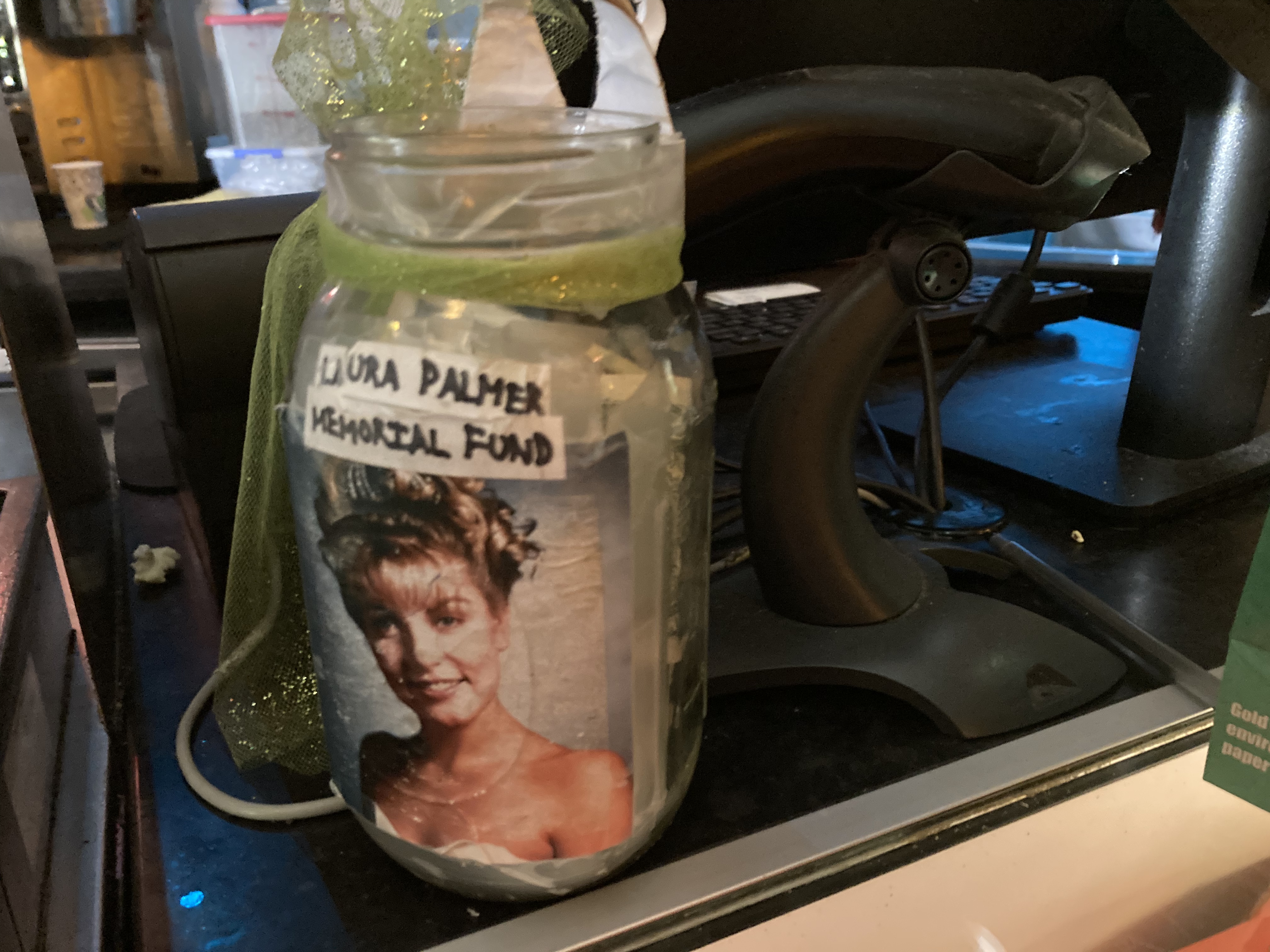
Critically savaged upon it’s initial theatrical release back in 1992, Twin Peaks: Fire Walk with Me has since been reassessed as not only a misunderstood masterpiece, but also as one of director David Lynch’s major masterworks. As for myself, I will go one step further by citing Twin Peaks: Fire Walk with Me as the number one greatest American horror film of the 1990’s. A prequel to both the original series (1990-91) and 2017’s The ReturnTwin Peaks: Fire Walk with Me centers on the sad last days of Laura Palmer – acted with gusto by the immensely beautiful and talented Sheryl Lee. Aided by composer Angelo Badalamenti’s haunting music score, the result is every bit as surreal and nightmarish as it is ultimately tragic. British film critic/novelist Kim Newman once stated that the film’s many moments of horror demonstrate just how tidy, conventional and domesticated the generic horror movie of the 1980’s and 1990’s has become. I could not have stated it any better.

Click here to view the film’s original theatrical trailer

Click here to listen to the soundtrack

Click here to watch author Scott Ryan’s introduction to the film at Chicago’s Music Box Theatre from last year

Click herehereherehere and here to watch a Q&A with actress Sheryl Lee and actor Dana Ashbrook from a 2021 showing of Twin Peaks: Fire Walk with Me at Chicago’s Music Box Theatre

06.) The Devil’s Backbone (2001)
Dir: Guillermo del Toro
Country: Spain/Mexico
Color: Color

Along with the equally inventive Under the ShadowThe Devil’s Backbone is an inspired combination of the supernatural and the allegorical. When it comes to 21st century cinematic horror, both films serve as personal favorites of mine. As one may have deduced from this list, The Devil’s Backbone ranks very high for me. Set during the final year of the Spanish Civil WarThe Devil’s Backbone is on the one hand, a subtly tragic ghost story and on the other, a quietly frightening antifascist historical drama. Now I love every single film of Mexican filmmaker Guillermo del Toro and the highly personal The Devil’s Backbone (my second favorite of his after Pan’s Labyrinth) is arguably the most insightful out of all the truly great horror films produced since the dawn of 2000.

Click here to view the film’s original theatrical trailer

Click here to view British film critic Mark Kermode’s commentary on it as one of his BFI Player picks

Click here to read Kermode’s Criterion essay for it

05.) Midsommar (2019)
Dir: Ari Aster
Country: United States/Sweden
Color: Color

Whereas Ari Aster’s directorial debut Hereditary resembled the work of a master filmmaker, it was his follow-up film Midsommar that officially cemented him as such. As a horror film, Midsommar’s masterstroke lies not so much in it’s atmosphere as in how it uses it. Like The Wicker Man before it, Midsommar’s unique emphasis on daylight is what makes the film all the more disturbing. In fact, everything about Midsommar still sends shivers down my spine. As it did during it’s initial theatrical release five years ago in 2019, Midsommar still hits close to home (metaphorically and otherwise) in more ways than one.

Click here to view the film’s original teaser trailer

Click here to view the film’s original theatrical trailer

04.) The Seventh Victim (1943)
Dir: Mark Robson
Country: United States
Color: Black and White

Out of the nine unique official (or unofficial) horror films produced by Val Lewton at RKO Pictures during the 1940’s, director Mark Robson’s The Seventh Victim stands out as my personal favorite of the group. Every single trademark that shapes a Lewton production reaches it’s peak here. While The Seventh Victim is similarly downbeat as Lewton’s other horror films, neither of them ended on such an explicitly bleak note as this one does. The film’s black-and-white color palette coincides perfectly not only with it’s urban setting, but also in it’s thematic elements relating to depression and satanism among other things. Mature subject matter like homoeroticism is even touched upon here in an intelligent and sensitive manner. In addition, The Seventh Victim features a quietly chilling shower sequence that predates Alfred Hitchcock’s Psycho by seventeen years.

Click here to view the film’s original theatrical trailer

Click here to view TCM’s Eddie Mueller’s Noir Alley intro to the film from 2020

Click here to view TCM’s Eddie Mueller’s Noir Alley outro to the film from that same episode

Click here to view a Vimeo link to the 2007 documentary entitled Val Lewton: The Man in the Shadows

03.) Diabolique (1955)
Dir: Henri-Georges Clouzot
Country: France
Color: Black and White

Though Alfred Hitchcock is often credited for redefining cinematic horror with Psycho in 1960, with all due respect to the Master of Suspense, the aforementioned genre was actually redefined five years earlier in 1955 by French director Henri-Georges Clouzot with Diabolique. Coincidentally, not too long after the publication of Diabolique’s 1952 source material She Who Was No More, which was written by Pierre Boileau and Thomas Narcejac, Hitchcock set out to option the rights to it. He changed course upon learning that Clouzot had obtained them serveral hours earlier, which enabled him to adapt it as Diabolique. As the film’s plot unfolds, Clouzot wastes no time in elevating the tension to completely unbearable heights and effortlessly keeps it going throughout. Culminating in one of the scariest twist endings ever conceived, Diabolique is a horror thriller that will ultimately make one’s heart stop.

Click here to view the film’s original theatrical trailer

Click here to view Alex Cox’s Moviedrome intro to the film 

Spoiler Alert: If you have not seen the film, I strongly advise you not to click on the link below
Click here to view British film critic/novelist Kim Newman’s analysis of Diabolique

02.) Eyes Without a Face (1960)
Dir: Georges Franju
Country: France/Italy
Color: Black and White

If French poet Jean Cocteau had directed a 1930’s Universal horror film, the result would have undoubtedly been Eyes Without a Face. While it may not possess the delightfully eccentric humor that shaped The Invisible Man and Bride of Frankenstein among others, Eyes Without a Face does offer something every bit as inspired. Disturbing and poetic in equal measure, Eyes Without a Face is as much a horror film as it is a fairy tale. Dismissed by critics as one of his lesser films during it’s initial theatrical release in 1960, Eyes Without a Face has since been reassessed (and deservedly so) as not only French director Georges Franju’s most famous and influential film, but also his greatest one.

Click here to view what may or may not be the film’s French trailer

Click here to view British film critic Mark Kermode’s commentary on it as one of his BFI Player picks

Click here to view Kermode’s Kermode Uncut commentary on it

Click here to view Mark Kermode’s Cult Film Corner commentary on it

01.) Don’t Look Now (1973)
Dir: Nicolas Roeg
Country: United Kingdom/Italy
Color: Color

Now often hailed as one of the most influential horror films ever made, Don’t Look Now also happens to be my number one favorite horror film of all-time. Reportedly cited by it’s British director Nicolas Roeg as his exercise in film grammarDon’t Look Now also stands out as quite possibly the most beautiful marriage between form and content. Accompanied by composer Pino Donaggio’s emotionally powerful music score, Roeg’s trademark unconventional editing style and it’s fittingly bleak, yet strangely lovely atmosphere, Don’t Look Now explores a tragedy’s impact on a married couple through the power of visual storytelling. Along with an explicit controversial sex scene between it’s two lead actors (Julie Christie and Donald Sutherland), Don’t Look Now is noted for featuring (like Diabolique before it) the scariest ending ever conceived in the history of cinematic horror.

Click here to view the film’s original theatrical trailer

Click here to view the film’s 2019 4K Restoration trailer

Click here to view British film critic Mark Kermode’s 2008 Culture Show interview with director Nicolas Roeg

Click here to view Kermode’s review of the 2019 4K Restoration of the film

Click here to view Irish documentarian Mark Cousins 2001 Scene By Scene interview with actor Donald Sutherland on the film

Click here to view Mark Cousins Moviedrome intro to the film

Click here to view Danish-Norwegian filmmaker Joachim Trier commentary on the film

Click here to listen to the soundtrack

Let me conclude this blog entry with two questions for my dear readers below

What are your top 10 favorite horror films of all-time?

What video links in my blog entry interested you the most?

John Charet’s 10 Films to Watch for St. Patrick’s Day (In Chronological Order)

-A Few Words Before Reading-

Please be kind to the film at number 9. Any comment expressing negativity towards number 9 will be deleted. So once again, please be polite 🙂

-Introduction-

First off, before I continue, I would like to wish all of my dear readers a very Happy St. Patrick’s Day 🙂 Anyway, all of the films listed here are great films that I love to watch near or on St. Patrick’s Day. Most of these do not hail from Ireland, but they do have a hint of Irish flavor to them.

Click here to listen to The Irish Rovers Goodbye Mrs. Durkin

Click here to listen to The Irish Rovers Black Velvet Band

Click here to listen to their entire album

Click here to listen to The Dubliners Molly Malone

Click here to listen to their entire album

Now without further ado, I present to all of my dear readers:

-John Charet’s 8 Films Recommended for St. Patrick’s Day Viewing-
(In Chronological Order)

1.) Odd Man Out (1947)
Dir: Carol Reed
Country: United Kingdom
Color: Black and White

While The Third Man will always remain director Carol Reed’s crowning achievement (or at least for me), Odd Man Out has to at least rank as second best for most people like myself. Set over the course of one night, Odd Man Out is a tightly constructed British film noir rich in suspense. Robert Krasker’s expressionistic cinematography is as much a creative dress rehearsal for his work on The Third Man as it is masterful in it’s own right. Odd Man Out is also a reported favorite of directors Roman Polanski and Sam Peckinpah (read here and here).

Click here to watch the entire film

I can’t find a link to the film’s original theatrical trailer

2.) The Quiet Man (1952)
Dir: John Ford
Country: United States
Color: Color

While I am unsure whether The Quiet Man would rank somewhere within my top 10 favorite John Ford films (I love every single one), it is undeniably one of his most personal films, made evident by the director’s Irish heritage (read here). Along with Wake of the Red Witch, The Quiet Man was one of the very few big-budget projects ever financed by Republic Pictures, a studio that regularly specialized in B-films. What we get is a highly entertaining period piece doubling as a romanticized depiction of Ireland in all it’s Technicolor glory. Last, but not least, The Quiet Man is justifiably celebrated for a long climactic fight sequence that is every bit as humorous as it is exciting.

Click here to watch a 1992 making of hosted by Leonard Maltin

Click here to watch a 1991 documentary on The Quiet Man from Irish television (or at least I believe)

Click here to watch a documentary entitled Memories Of The Quiet Man. Though I am not sure when it came out

Click here to watch part 1 of 2 of a tour of The Quiet Man locations

Click here to watch part 2 of 2 of a tour of The Quiet Man locations

Click here to watch Irish actor Gabriel Byrne talking about The Quiet Man from 2011

Click here to view a trailer for the 2010 documentary entitled Dreaming The Quiet Man

Click here to view the film’s original theatrical trailer

3.) Duck, You Sucker! (1971)
(a.k.a. A Fistful of Dynamite)
Dir: Sergio Leone
Country: Italy/United States
Color: Color

Often overlooked in favor of his more popular Once Upon a Time in the West or The Good, the Bad and the Ugly, Duck, You Sucker! proves to be every bit as masterful as director Sergio Leone’s other spaghetti westerns, which include those first two aforementioned titles. In fact, Duck, You Sucker! is actually my personal favorite of Leone’s westerns. Part of it lies in it’s historical backdrop of the Mexican Revolution (1910-1920) and as a self-proclaimed cinephile, it’s presence has always fascinated me. The other half is rooted in the theme of friendship and along with Once Upon a Time in America, Duck, You Sucker! may be Leone’s most insightful take on it. Leone’s flair for exhilarating set pieces and celebrated composer Ennio Morricone’s distinctive music score serve as the icing on the cake.

Click here to watch the film’s original theatrical trailer

Click here to watch the entire film

Click here to listen to Ennio Morricone’s complete music score for the film

4.) Barry Lyndon (1975)
Dir: Stanley Kubrick
Country: United Kingdom/United States
Color: Color

2001: A Space Odyssey is often considered legendary director Stanley Kubrick’s magnum opus, but some cinephiles usually opt for a different title. Whenever somebody asks me what my personal favorite Kubrick film is, my answer is Barry Lyndon. Indifferently received by both critics and audiences during it’s initial theatrical release in 1975, Barry Lyndon (like most of Kubrick’s films) has since been reassessed as a cinematic masterpiece. Based (loosely or otherwise) on William Makepeace Thackeray’s picaresque novel The Luck of Barry Lyndon (first published as a serial in Fraser’s Magazine in 1844), Barry Lyndon is the closest Kubrick ever came to creating a period piece akin to his unrealized ambitious Napoleon Bonaparte biopic. Set during the 18th century, Barry Lyndon chronicles the misadventures, eventual rise and inevitable fall of an Irish rogue. Not unlike 2001, Barry Lyndon remains a technically groundbreaking film. To achieve authenticity for it’s respective period setting, Kubrick relied (for the most part) on natural lighting for the exterior and interior shots (candlelight for the latter) courtesy of cinematographer John Alcott. Humorous, tragic and characteristically thought-provoking, Barry Lyndon may just be the most mature film in Kubrick’s oeuvre.

Click here to watch an analysis of the film from youtube user Empire of the Mind (click here to view his channel)

Click here to view the film’s original theatrical trailer

Click here to view a 2016 BFI trailer for it

Click here to watch a video about Kubrick’s unrealized Napoleon Bonaparte epic uploaded by youtuber Frame Voyager (click here to check out his channel)

Click here to watch other video about it

Click here to read this Amazon link to a 2011 massive book that fully details Kubrick’s vision and given the size of it, no wonder the price tag is heavy 🙂

5.) The Dead (1987)
Dir: John Huston
Country: United Kingdom/United States/West Germany
Color: Color

If anything else, The Dead not only resembles the work of a seasoned veteran, but also that of a born-again director. For his intended or unintended swan song, Huston adapts James Joyce’s title story that first appeared in the aforementioned celebrated author’s 1914 book of shorts entitled Dubliners. Huston’s refined touch fits perfectly with the elegantly written drama, which is penned by his son Tony. The result is every bit as intimate as it is profound.

Click here to watch the film’s original theatrical trailer

6.) Miller’s Crossing (1990)
Dir: Joel Coen
Country: United States
Color: Color

If it weren’t for A Serious Man, Miller’s Crossing would be my number one favorite Coen Brothers film of all time. On the surface, Joel and co-writer Ethan borrow elements from hard-boiled crime novels and similar films to blend them together within it’s atmosphere. The former consists of works written by Dashiell Hammett (Red Harvest and The Glass Key), while films like The Third Man, Le Doulos, The Conformist and The Godfather make up the latter (read here). While the result most certainly works as a highly effective pastiche, Miller’s Crossing is so much more than that. In the center, Miller’s Crossing emerges as a bona fide gangster classic in it’s own right. As with all of their work, when it comes to characters, dialogue and direction, The Coen Brothers trademark quirkiness is evident in every single frame of Miller’s Crossing. Carter Burwell’s Irish influenced music score fits perfectly with the film’s late 1920’s period setting.

Click here to watch cinematographer turned director Barry Sonnenfeld discussing his experiences as director of photography on the film

Click here to watch an interview with actor Gabriel Byrne conducted by the late Bobbie Wygant

Click here to watch an interview with actor John Turturro conducted by Wygant

Click here to watch an interview with actress Marcia Gay Harden conducted by Wygant

Click here to watch an interview with actor Jon Polito conducted by Wygant

Click here to view the film’s original theatrical trailer

Click here to listen to Carter Burwell’s music for the film

Click here to listen to the song Danny Boy sung by Frank Patterson. This song appears when Albert Finney’s character is defending himself with a Tommy Gun and bumps off two rival gangsters with it (click here to watch the scene)

7.) The Fugitive (1993)
Dir: Andrew Davis
Country: United States
Color: Color

As an Illinoisan, I have a habit of making sure I watch The Fugitive at least once a year during the month of March. This is not only rooted in the fact that it was shot on location in the city of Chicago (at least for the most part) or that it’s director (Andrew Davis) and lead star (Harrison Ford) proudly hail from there, but also serving as the only film (or at least based on my knowledge) to feature the aforementioned city’s tradition of dyeing the Chicago River green for St. Patrick’s Day (read here). Based (loosely or otherwise) on Roy Huggins 1960’s television series of the same name, which ran from 1963-67, The Fugitive is an expertly crafted chase thriller highlighted by it’s atmospheric Chicago locations. Ford is truly effective as the wrongfully accused Dr. Richard Kimble, but the standout is Tommy Lee Jones as Samuel Gerard, the Deputy US Marshall on his trail.

Click here to watch an interview director Andrew Davis did late last year promoting his debut novel (co-written with Jeff Biggers) entitled Disturbing the Bones, which is a great read. Legendary director Michael Mann (also born and raised in Chicago) gave it a positive blurb (read here)

Click here to watch a 1993 interview with him conducted by the late Bobbie Wygant

Click here to watch a 2013 documentary on it entitled The Fugitive: Thrill of the Chase

Click here to watch a 2001 short documentary entitled On the Run with The Fugitive

Click here to watch another 2001 short documentary entitled Derailed: Anatomy of a Trainwreck

Click here and here to watch two respective trailers for the film

Since I have endless links on Davis, just click here to watch them all 🙂

8.) The Wind That Shakes the Barley (2006)
Dir: Ken Loach
Country: Ireland/United KIngdom/Italy/Germany/France/Spain/Switzerland
Color: Color

In The Wind That Shakes the Barley, British director Ken Loach takes his knack for social realism and applies it to both the Irish War of Independence (1919-21) and the Irish Civil War (1921-23). Limited to 21st century cinema alone, the result still stands out as the best drama centering on the two subjects as of 2025. Cinematographer Barry Ackroyd’s gritty cinematography goes hand in hand with Loach’s firm socialist sensibilities. In fact, the scene featuring Damien O’Donovan (Cillian Murphy) telling his brother Teddy (Padraic Delaney) that he will never sell out debatably parallels that of Loach’s own uncompromising political philosophies. Ever the dissenting Brit, Loach (along with screenwriter Paul Laverty) pulls no punches in depicting the traditionally heroic British Army as a pack of sadists. Unsurprisingly, this aspect was part of the film’s controversy (read here). Would you all like to hear another interesting piece of trivia? At the 2006 Cannes Film Festival, The Wind That Shakes The Barley won Loach the coveted Palme d’Or prize.

Click here to watch the film’s original theatrical trailer

9.) The Irishman (2019)
Dir: Martin Scorsese
Country: United States
Color: Color

As much as I love Goodfellas, for me, it is The Irishman that stands out as esteemed filmmaker Martin Scorsese’s crowning achievement. Helmed when Scorsese was at the age of 74 going on 75, The Irishman represents a culmination of his trademark themes that originated in his electrifying 1973 breakthrough Mean Streets. On the surface, when it comes to form and content, The Irishman is as fast-paced as Goodfellas. Simultaneously, in the center, The Irishman moves so gracefully that it makes that 1990 classic look like the work of a 27-28 year-old director as opposed to that of a then 46 year-old by comparison. In contrast to the black comedy of that earlier masterwork, The Irishman relies on subtlety for it’s humor. Taking into account the film’s overall somber tone, a very credible argument can be made that The Irishman comes off as Scorsese’s way of reflecting on his past crime films. Thematically speaking, If Goodfellas centered on loyalty and Casino centers on greed, than The Irishman is about mortality and regret. The film’s use of The Five Satins In the Still of the Night serves as further confirmation of this. The result is unquestionably the most mature of Scorsese’s crime dramas. If anything else, The Irishman serves as the perfect epitaph for the subgenre. In closing, The Irishman ranks as my second favorite gangster film of all time after Howard Hawks Scarface.

Click here to watch an insightful analysis on The Irishman by youtuber Why It’s Great (Click here to view his channel)

Click here to watch another insightful analysis on The Irishman by youtuber Renegade Films (Click here to view his channel)

Click here to watch the film’s Official teaser trailer

Click here to watch the film’s Original theatrical trailer

Click here to watch the film’s final trailer

10.) The Banshees of Inisherin (2022)
Dir: Martin McDonagh
Country: United Kingdom/United States
Color: Color

British-Irish playwright and film director Martin McDonagh’s The Banshees of Inisherin serves as only one of many perfect examples of how to define a tragicomedy. Delightfully misanthropic, the key to understanding The Banshees of Inisherin’s hilarity is rooted in the more absurd aspects of the human condition. For example, the film’s central plot centers on aspiring music composer Colm Doherty (Brendan Gleeson) needlessly ending his friendship with drinking buddy Padraic Suilleabhain (Colin Farrell). When every single one of his efforts at repairing the relationship is declined by Colm, Padraic starts a feud that leads to horrifying results for the both of them. Similar to the American cult sitcom It’s Always Sunny in Philadelphia, The Banshees of Inisherin relies on irony to execute it’s humor. In the case of The Banshees of Inisherin, the beautiful Irish scenry stands in contrast to the film’s overall irreverent tone. Thematically speaking, The Banshees of Inisherin may just be McDonagh’s richest film to date.

Click here to watch the film’s original theatrical trailer

Let me conclude this blog entry with two questions for my dear readers below:

What are some of your favorite films to watch during St. Patrick’s Day?

What links or videos were your favorites?

R.I.P. David Lynch (1946-2025)

A polite reminder before reading this blog entry of mine 🙂 I will not tolerate any insults or negativity towards David Lynch or any of his films I mention in this post. Any negative comments will be deleted. As a matter of fact, I will not tolerate any negativity of anybody mentioned in this blog entry. So once again, I am politely asking you all to please be kind 🙂

David Lynch (1946-2025)

Earlier today, the world lost one of our greatest visionary filmmakers. He was 78-years old and the cause of death was emphysema. That director was David Lynch. My introduction to Lynch was in early 2002, when I watched the then entire series of the cult television series Twin Peaks, which lasted from 1990 to 1991. Co-created with Mark Frost, Lynch also directed episodes of the show. When Lynch and Frost brought the series back in 2017 for Showtime, Lynch would direct every episode of the third season. By 2005, I had seen and loved almost every single Lynch film. Dune was good, but after watching it, I can totally understand why Lynch refused to talk about it during his life. Not since the death of British filmmaker Terence Davies back in 2023 has the death of a well-respected director hit me so hard. When I first heard the news, I just could not believe it. Ever since then, I have been in a very sad mood 😦 Lynch’s family made the following statement on his Facebook page – There’s a big hole in the world now that he’s no longer with us, But, as he would say, ‘Keep your eye on the donut and not on the hole.’ … It’s a beautiful day with golden sunshine and blue skies all the way. Read here and here for more information. I know the news is probably not as shocking once one takes into account that Lynch was battling lung disease for a long time (read here), but it is still heartbreaking either way.

Click here to visit the David Lynch Foundation website

Click here to visit a youtube video channel entitled DAVID LYNCH THEATER

Click here to watch a youtube video link to a wonderful remembrance of David Lynch courtesy of Chicago-based cinephile Kursten Ranquist (Click here to see his youtube channel)

Limited to this website only, I would love to remember Lynch through quite a few posts of mine. One of his films is on the first link, three on the second, one on the third and two on the fourth.

Click here to read a 2022 blog entry regarding my Top 10 Favorite Films of All Time

Click here to read a 2023 blog entry regarding my 100 Favorite Films of All Time

Click here to read a 2024 blog entry regarding my Top 10 Favorite Horror Films of All Time

Click here to read a 2024 blog entry regarding my Top 100 Favorite Horror Films of All Time

Click here to read a 2024 blog entry I did where I mention Twin Peaks during my visit to the Music Box Theatre that year

Click here to read a 2024 blog entry wishing actress Sheryl Lee (Laura Palmer in Twin Peaks) a very Happy 57th Birthday

Since I do not have time to do a ranking of every single one of Lynch’s films, I want to let all of my dear readers know that with the exception of Dune (the 1984 version), I love every single film that David Lynch has directed and If you need me to direct you all to every single thing he ever directed, just click here.

Also, below are a few examples of me indulging (but in a healthy way) in Lynch fandom 🙂


Two More Things

For David Lynch’s Family

I want to express my condolences to David Lynch’s entire family with this beautiful Catholic (my religious affiliation) prayer for the departed below:

Eternal rest grant unto them, O Lord, and let perpetual light shine upon them. May their souls and the souls of all the faithful departed, through the mercy of God, rest in peace.

For Californians

As all of you are probably aware right now, the recent California Wildfires has affected many Californians through loss of property and loved ones. Once again, I want to offer this beautiful Catholic prayer for the departed below:

Eternal rest grant unto them, O Lord, and let perpetual light shine upon them. May their souls and the souls of all the faithful departed, through the mercy of God, rest in peace.

John Charet’s 25 Christmas Film Recommendations (Alternative or Otherwise)

-A Few Words Before Reading-

Please be kind to not only the film at number 13, but also any other films I mention in my summary of that number. Any comment expressing negativity towards number 13 or any of the other films I mention in that summary will be deleted. So once again, please be polite 🙂


-Introduction-

Ah, the Christmas season 🙂 The celebration of Jesus Christ’s birth 🙂 Each year, I delight in putting up the Christmas decorations and the tree 🙂 It really makes my own house look so magical 🙂 Also, It is the one time of year (except for maybe one’s own birthday), where everybody arguably gets to open more than just a few presents 🙂 Christmas Day also happens to be my birthday 🙂 Yep, you heard it hear first my dear readers. December 25th is my birthday 🙂 Anyway, with all that being said, let us not forget one of the other most important aspects of the season 🙂 What is that one you might ask? 🙂 Watching Christmas films of course 🙂 I have admittedly eclectic tastes, though a few items on my list below are traditional entries 🙂 The 25 titles I am presenting to all of you are in chronological order as opposed to preferential 🙂 These are not my only favorites, just the ones I happen to watch during the season 🙂

Click here to listen to the late great Doris Day singing Christmas songs from her 1964 album of such 🙂

Also, click here to listen to Prim & Proper’s rendition of Here We Come A-Caroling

Also, click here to watch a video of TCM’s offerings this month with the above song playing in the background

Now without further ado, I present to all of my dear readers:

-John Charet’s 25 Christmas Film Recommendations-
(In Chronological Order)

01.) Hell’s Heroes (1929)
Dir: William Wyler
Country: United States
Color: Black and White

What Makes It a Christmas Film: A church celebrates Christmas near the end of the film.
One of the Many Reasons Why I Love It: As much as I love John Ford’s 1948 remake Three Godfathers, director William Wyler’s 1929 version entitled Hell’s Heroes still remains unsurpassable. Dramatically and visually poetic, Hell’s Heroes is as masterful a western as those of Ford’s.

Click here to watch the entire film

02.) The Thin Man (1934)
Dir: W.S. Van Dyke
Country: United States
Color: Black and White
What Makes It a Christmas Film:
The whole film is set during Christmastime.
One of the Many Reasons Why I Love It: The delightful chemistry between it’s two lead stars William Powell and Myrna Loy as detective couple Nick and Nora Charles is one good reason. The witty dialogue is another. Last, but not least, The Thin Man is just so entertaining on a whole. Oh and let us not forget Nick and Nora’s talented dog Asta.

Click here to watch the film’s original theatrical trailer

03.) Remember the Night (1940)
Dir: Mitchell Leisen
Country: United States
Color: Black and White

What Makes It a Christmas Film: The film is set during the Christmas season.
One of the Many Reasons Why I Love It: Released the same year that it’s screenwriter Preston Sturges made his directorial debut with The Great McGinty and his follow-up Christmas in July, Remember the Night is a fitting bookend to his career as a writer-for-hire. A genuinely funny comedy on the one hand and a touching drama on the other, Remember the Night serves as a perfect demonstration of Sturges talents as a writer. Plus, we get two lovable lead characters, who are played here by Barbara Stanwyck and Fred MacMurray.

Click here to watch the film’s original theatrical trailer

04.) The Shop Around the Corner (1940)
Dir: Ernst Lubitsch
Country: United States
Color: Black and White

What Makes It a Christmas Film: The whole film (or at least most of it) is set during the Christmas season and concludes on Christmas Eve.
One of the Many Reasons Why I Love It: Along with Heaven Can Wait, The Shop Around the Corner ranks as celebrated German-American director Ernst Lubitsch’s purest expression of the human condition. As to be expected, the result is genuinely funny and touching.

Click here to watch the film’s original theatrical trailer

05.) The Magnificent Ambersons (1942)
Dir: Orson Welles
Country: United States
Color: Black and White

What Makes It a Christmas Film: Watch the sleigh ride sequence.
One of the Many Reasons Why I Love It: How does legendary director Orson Welles follow up one of the greatest directorial debuts in cinematic history? For him, he does it with this haunting adaptation of Booth Tarkington’s Pulitzer Prize winning 1918 novel of the same name. From start to finish, The Magnificent Ambersons remains a masterpiece of mise en scene.

Click here to watch the film’s original theatrical trailer

Click here to read an article about the continuing search for original 131-minute cut of Ambersons

Click here to view a short video about it

Click here to view a link to a 1993 book about Orson Welles original cut entitled The Magnificent Ambersons: A Reconstruction

Click here to view an excerpt from the 1982 documentary entitled The Orson Welles Story, in which Welles details how RKO sabotaged Ambersons

06.) Christmas Holiday (1944)
Dir: Robert Siodmak
Country: United States
Color: Black and White

What Makes It a Christmas Film: The present day sequence is set on Christmas Eve.
One of the Many Reasons Why I Love It: Dark and tragic. These serve as only two of many traits that have characterized the film noir subgenre. Director Robert Siodmak obviously understood this when he helmed Christmas Holiday. Blend the two aforementioned elements together and you get a demonstration of why it is such a fitting combination.

Click here to watch the film’s original theatrical trailer

Click here to watch the entire film

07.) The Curse of the Cat People (1944)
Dir: Robert Wise
Country: United States
Color: Black and White

What Makes It a Christmas Film: Part of the third act is set during Christmas Eve.
One of the Many Reasons Why I Love It: Against the wishes of producer Val Lewton and director Robert Wise, The Curse of the Cat People was wrongly marketed as a horror film in the same vein as it’s 1942 predecessor Cat People. In truth, The Curse of the Cat People plays out more as a psychological fantasy drama than a straight up scare picture. In fact, director Joe Dante once remarked that the film’s disturbingly Disneyesque fairy tale qualities have perplexed horror fans for decades. Late English-American film historian William K. Everson has implied that it is every bit as poetic as Jean Cocteau’s Beauty and the Beast. I could not have stated those aforementioned sentiments any better.

Click here to watch the film’s original theatrical trailer

Click here to watch this 2007 documentary entitled Martin Scorsese Presents: Val Lewton The Man in the Shadows

08.) Meet Me in St. Louis (1944)
Dir: Vincente Minnelli
Country: United States
Color: Color

What Makes It a Christmas Film: One of the vignettes is set during Christmastime. Among other things, the film is noted for introducing the world to the celebrated holiday song Have Yourself a Merry Little Christmas.
One of the Many Reasons Why I Love It: Even though I rank his melodramas and comedies higher, director Vincente Minnelli is still a master of musicals and Meet Me in St. Louis (my second favorite after The Band Wagon) may be the most charming of them all. Judy Garland’s rendition of Have Yourself a Merry Little Christmas never fails to move me.

Click here to watch the film’s original theatrical trailer

Click here to watch Judy Garland singing Have Yourself a Merry Little Christmas

09.) The Miracle of Morgan’s Creek (1944)
Dir: Preston Sturges
Country: United States
Color: Black and White

What Makes It a Christmas Film: Part of the latter half is set during Christmastime.
One of the Many Reasons Why I Love It: I think I may have finally answered my own question regarding what makes director/writer Preston Sturges so deservedly unique. The answer may be that his screwball comedies remain incomparable to all of the others. In The Miracle of Morgan’s Creek, Sturges takes the subject of unwed pregnancy and turns it into a laugh out loud comedy with two lovable characters, who are played here by Eddie Bracken and Betty Hutton. Long after concluding with a sidesplittingly hilarious surprise ending, one question inevitably remains on the minds of we the audience. How on earth did all of this hilarity get passed the Hays Office? For example, in the film, three characters have the last name Kockenlocker. Kindly figure it out for yourselves :)) Either way, The Miracle of Morgan’s Creek still emerges as a bonafide comedy classic.

Click here to watch the film’s original theatrical trailer

10.) Black Narcissus (1947)
Dir: Michael Powell and Emeric Pressburger
Country: United Kingdom
Color: Color
What Makes It a Christmas Film:
One sequence revolves around a Christmas Eve mass.
One of the Many Reasons Why I Love It: British-American film critic/historian David Thomson cited Black Narcissus as an erotic film about the fantasies of nuns. I could not have stated it any more eloquently. Plus, I just had to include a Michael Powell and Emeric Pressburger film on here.

Click here to watch the film’s original theatrical trailer

Click here to watch a youtube video link of British film critic Mark Kermode’s commentary on it as one of his BFI Player picks

11.) Good Sam (1948)
Dir: Leo McCarey
Country: United States
Color: Black and White

What Makes It a Christmas Film: The third act is set during Christmastime.
One of the Many Reasons Why I Love It: Director Leo McCarey’s unofficial counterpoint to Frank Capra’s It’s a Wonderful Life deals with some of the negative consequences that arise from altruism. Whereas the latter film has since been reassessed as a holiday classic, Good Sam has yet to receive this honor and for me, it is ripe for rediscovery.

Click here to watch the entire film

12.) All That Heaven Allows (1955)
Dir: Douglas Sirk
Country: United States
Color: Color

What Makes It a Christmas Film: Two scenes stand out in particular here. The first is outdoors at what looks to be a Christmas Tree shop. The second features Jane Wyman’s character staring at the snowy outside.
One of the Many Reasons Why I Love It: As directed by the master of melodrama Douglas Sirk, All That Heaven Allows bright color palette contrasts with the drama’s social commentary on suburban 1950’s conformity. The plot here revolves around the romance between an older woman (Jane Wyman) and a younger man (Rock Hudson). Along with Sirk’s other masterful melodramas, All That Heaven Allows is as visually expressive as it is subtly insightful.

Click here to watch the film’s original theatrical trailer

Click here to watch Mark Cousins Moviedrome intro to the film

13.) Bell, Book and Candle (1958)
Dir: Richard Quine
Country: United States
Color: Color

What Makes It a Christmas Film: Part of the first act is set on Christmas Eve and Christmas day.
One of the Many Reasons Why I Love It: Richard Quine’s career as a reliable director debatably rests on his four collaborations with actress Kim Novak. Pushover, Strangers When We Meet, The Notorious Landlady and this enchanting 1958 romantic comedy entitled Bell, Book and Candle. While their chemistry in Vertigo still stands in a class of it’s own, the onscreen pairing between lead stars James Stewart and Novak here remains every bit as (If not more) inspired.

Click here to watch the film’s original theatrical trailer

Click here to watch the entire film

14.) Blast of Silence (1961)
Dir: Allen Baron
Country: United States
Color: Black and White
What Makes It a Christmas Film:
The film is set during the week of Christmas.
One of the Many Reasons Why I Love It: When it comes to dream double bills consisting of a film noir and a neo-noir, the pairing of Irving Lerner’s Murder by Contract with Allen Baron’s Blast of Silence would be an ideal one. Not unlike that aforementioned earlier film, Blast of Silence can be best described as an existential crime drama with a Bressonian sensibility. Furthermore, I have a feeling that If Blast of Silence were made today (2024 in this case), everything about it would remain intact. In other words, as with Murder by Contract, Blast of Silence has aged like fine wine.

Click here to watch the film’s original theatrical trailer

Click here to watch TCM’s (Turner Classic Movies) Eddie Muller’s intro to the film from his Noir Alley series

Click here to watch TCM’s (Turner Classic Movies) Eddie Muller’s outro to the film from his Noir Alley series

15.) The Umbrellas of Cherbourg (1964)
Dir: Jacques Demy
Country: France/West Germany
Color: Color

What Makes It a Christmas Film: The conclusion is set outside a gas station on Christmas Eve.
One of the Many Reasons Why I Love It: Not Unlike All That Heaven Allows before it, director Jacques Demy’s The Umbrellas of Cherbourg unfolds against a visually beautiful backdrop. Only here, the film’s bright use of color aligns with the mood as much as it stands in contrast to it. As a coming-of-age musical (all of the dialogue is sung), The Umbrellas of Cherbourg resonates with me on so many levels. The denouement never fails to bring tears to my eyes.

Click here to watch a Restoration trailer of it

Click here to watch a what I believe is a BFI 2019 trailer showing of it

Click here to watch a recent 4K Restoration trailer for it

16.) Female Trouble (1974)
Dir: John Waters
Country: United States
Color: Color
What Makes It a Christmas Film:
The early parts of the film’s first half. I usually watch this one shortly before or after Thanksgiving.
One of the Many Reasons Why I Love It: Quite possibly one of the few (If not the only) genuine trash classics that can be watched and enjoyed during Christmastime. For me, Female Trouble is the film I will watch on the last day of November to kick off my Christmas viewing marathon. Before hitting the mainstream somewhat with Polyester, Hairspray and Cry-Baby, iconoclastic director/writer John Waters was making delightfully trashy 16mm underground films like Pink Flamingos, Desperate Living and this one in between the two. In Female Trouble, the late great Divine (a then Waters regular) plays bad girl Dawn Davenport, who embarks on a life of crime when she does not receive her beloved Cha Cha Heels for Christmas. A ridiculous premise no doubt, but only Waters could write such trash and make it charming at the same time. I hate you, I hate this house, and I hate Christmas! is just one of many truly hilarious lines that can be found in the film. Click here to see more examples.

Click here to watch the film’s original theatrical trailer

Click here to watch a TCM interview with John Waters from earlier in the year

Click here to view John Waters Top 10 Favorite Films of 2024

Click here to watch one video of an actress reaction (I won’t spoil) from his number one choice’s reaction

Click here to listen to all of the songs from his album of Christmas songs (I believe it was from 2013) entitled A John Waters Christmas

17.) Fanny and Alexander (1982)
Dir: Ingmar Bergman
Country: Sweden/France/West Germany
Color: Color
What Makes It a Christmas Film:
The opening sequence is set during Christmastime.
One of the Many Reasons Why I Love It: Every once in a while, Fanny and Alexander gets wrongfully dismissed as Ingmar Bergman’s sellout film, but as a huge fan of the aforementioned Swedish director myself, I can assure all of you dear readers that it is anything but. Fanny and Alexander is undoubtedly more optimistic than his then more recent films, but standing on it’s own, it remains every bit as emotionally and intellectually stimulating as the rest of Bergman’s work. At the heart of it, Fanny and Alexander is a semi-autobiographical period drama of Bergman’s upbringing as a child. In fact, the latter title character is based (loosely or otherwise) on Bergman himself. One can’t get more personal than that. Though I still rank Persona, Wild Strawberries, Cries and Whispers and Saraband above it, Fanny and Alexander still remains a grand late period cinematic achievement that I never tire of watching.

Click here to watch the film’s original theatrical trailer

Click here to watch a BFI 40th anniversary trailer for it

Click here to watch a youtube video link of British film critic Mark Kermode’s commentary on it as one of his BFI Player picks

18.) A Christmas Story (1983)
Dir: Bob Clark
Country: United States/Canada
Color: Color
What Makes It a Christmas Film:
Everything about it basically.
One of the Many Reasons Why I Love It: What do you know, a traditional comedic Christmas classic. What else can be said about A Christmas Story that has not been said yet? The vignettes for one thing. Whether it be the licking of a school flagpole in one episode to the presence of a leg lamp clad in fishnet stockings, it is nothing but pure hilarity from start to finish. Last, but not least, who can forget the lead child protagonist’s wish of a Red Ryder Carbine Action 200-shot Range Model air rifle for his Christmas present. Almost everybody’s response to it is the inevitable you’ll shoot your eye out.

Click here to watch the film’s original theatrical trailer

19.) The Dead (1987)
Dir: John Huston
Country: United Kingdom/United States/West Germany
Color: Color

What Makes It a Christmas Film: The story is set during a dinner party celebrating the Epiphany.
One of the Many Reasons Why I Love It: If anything else, The Dead not only resembles the work of a seasoned veteran, but also that of a born-again director. For his intended or unintended swan song, Huston adapts James Joyce’s title story that first appeared in the aforementioned celebrated author’s 1914 book of shorts entitled The Dubliners. Huston’s refined touch fits perfectly with the elegantly written drama, which is penned by his son Tony. The result is every bit as intimate as it is profound.

Click here to watch the film’s original theatrical trailer

20.) Die Hard (1988)
Dir: John McTiernan
Country: United States
Color: Color

What Makes It a Christmas Film: The entire film is set on Christmas Eve night.
One of the Many Reasons Why I Love It: Along with A Christmas Story, this recommendation is for all of you normies out there. Admittedly, I wrestled back and forth as to whether or not I should include Die Hard on this list. Make no mistake, I love the film and I do watch it four times each year with December marking one of those occasions. Taking all of that into account, I just decided to put it on here anyway. What else can be said about this action-packed masterpiece that has not been said before? Aside from featuring a suave villain played with relish by late great British actor Alan Rickman, Die Hard made a superstar out of a then low-profile Bruce Willis, who at the time was only known as one of the two leads (the other being Cybill Shepherd) on the ABC television series Moonlighting. In contrast to all of the Ramboesque type action heroes at the time, Willis John McClane is a wisecracking everyman (a cop in this case) and to feature such a character at the time was a breath of fresh air when the action genre was showing a slight (just slight) case of wear and tear. All in all, in the words of the immortal McClane, Yippie-Ki-Yay motherf**ker.

Click here to watch the first original theatrical trailer for it

Click here to watch the second trailer for it

Click here to watch the third trailer for it

Click here to watch a 30th Anniversary trailer for it

Click here to watch a hilarious trailer in the style of a Christmas themed film :))

21.) The Long Day Closes (1992)
Dir: Terence Davies
Country: United Kingdom
Color: Color

What Makes It a Christmas Film: Along with a child staring at a window (it is snowing outside), we get a poetic image of a family (all dressed up) sitting at a table for Christmas Eve dinner. This film is full of many other such images.
One of the Many Reasons Why I Love It: In contrast to the bleakness and existential dread that powered the late great British director Terence Davies Children, Madonna and Child, Death and Transfiguration (his three early short films) and Distant Voices, Still Lives (his first feature-length film), The Long Day Closes is driven more by a beautifully realized combination of gentleness and melancholia. In The Long Day Closes, the grimmer aspects of those previous films are limited to the surface. This time around, it is jubilation and togetherness that take center stage. One of many standout images is set in a packed movie theater and the camera gazes in the center top at a young boy (the film’s protagonist), who has a look of joy on his face at what he is watching. As with it’s predecessor, The Long Day Closes is an autobiographical film for Davies. In fact, Davies love for Classical Hollywood cinema (it is set during the mid-1950’s) is emphasized by excerpts from numerous films of that era peppered throughout. I too share his passion. The Long Day Closes is as much a celebration of cinema as it is the cinematic equivalent of a poem.

Click here to watch the film’s original theatrical trailer

Click here to watch a short video about the use of dissolves and memory in the film

Click here to watch this 1992 documentary on Terence Davies (one of the joys here comes at the 3:00 mark of the video featuring him lip-synching to Doris Day)

Click here to watch Terence Davies insightful analysis on Ingmar Bergman’s Cries and Whispers from a 1990 episode of Channel 4’s Movie Masterclass

Click here to watch Terence Davies 1989 BBC Film Club into to Stanley Kubrick’s Dr. Strangelove

Click here to watch Terence Davies 1989 BBC Film Club into to Stanley Kubrick’s 2001: A Space Odyssey

Click here to watch a video entitled In Conversation: Terence Davies

Click here to watch a video of Terence Davies talking about Ealing Studios

Click here to watch a video of Terence Davies appreciation of The Ladykillers

22.) Eyes Wide Shut (1999)
Dir: Stanley Kubrick
Country: United Kingdom/United States
Color: Color
What Makes It a Christmas Film:
The whole film is set during the holiday season. For example, we see Christmas lights displayed in various places.
One of the Many Reasons Why I Love It: Along with Barry Lyndon, Eyes Wide Shut is legendary director Stanley Kubrick’s most mature film to date. A fitting achievement for a debatably unintended swan song. Here, Kubrick takes the early 20th-century Vienna setting of Arthur Schnitzler’s 1926 novella Traumnovelle (the film’s source material) and interestingly updates it to the then present day New York City of the 1990’s. With the exception of one or two establishing shots, Eyes Wide Shut was filmed entirely in the United Kingdom (England in this case). This blends perfectly with the film’s dreamlike quality. The result is simultaneously disturbing and sexy.

Click here to watch the film’s original theatrical trailer

Click here to watch another trailer for it

23.) The Royal Tenenbaums (2001)
Dir: Wes Anderson
Country: United States
Color: Color
What Makes It a Christmas Film:
Vince Guaraldi’s Christmas Time Is Here is played in the film. Enough said.
One of the Many Reasons Why I Love It: As to be expected from director/co-writer Wes Anderson, beneath The Royal Tenenbaums stylized surface, lies at the center, a deadpan and poignant comedy/drama effortlessly acted by it’s ensemble cast. The now retired Gene Hackman stands out especially as flawed family patriarch Royal Tenenbaum. Like Anderson’s other films, The Royal Tenenbaums is set to a distinctive soundtrack of popular songs.

Click here to watch the film’s original theatrical trailer

24.) Bad Santa (2003)
Dir: Terry Zwigoff
Country: United States
Color: Color

What Makes It a Christmas Film: The film is set during the Christmas season.
One of the Many Reasons Why I Love It: Delightfully tasteless comedies like Bad Santa are in short supply compared to the endless number of tasteful ones, which is why I always gladly welcome something like this. Lead actor Billy Bob Thornton’s performance as the irreverent title character (named Willie T. Soke here) is worthy to that of the late great W.C. Fields.

Click here to watch the film’s original theatrical trailer

25.) Carol (2015)
Dir: Todd Haynes
Country: United Kingdom/United States
Color: Color
What Makes It a Christmas Film:
The first half is set during the Christmas season.
One of the Many Reasons Why I Love It: If Carol is not the greatest LGBTQ romance drama ever made, then it certainly comes close. Adapted from Patricia Highsmith’s 1952 novel The Price of Salt (under the pseudonym Claire Morgan), Carol is like a collaborative match made in heaven. On the one hand, Carol is helmed by gay director Todd Haynes and on the other, it is written by lesbian screenwriter/playwright Phyllis Nagy. When it comes to content, the two complete each other so effortlessly, one is tricked into thinking that the whole production must have been a cakewalk. As a period piece set during the early 1950’s, we are treated to beautifully evocative Super 16mm cinematography and costume designs courtesy of Ed Lachman and Sandy Powell respectively as well as Carter Burwell’s expressive music score. Last, but not least, who can forget the standout performances of it’s two lead actresses, which in this case are Cate Blanchett and Rooney Mara? In Carol, Blanchett and Mara imbue their respective characters with grace and pathos. Carol is also noted for featuring one of the most tender lesbian sex scenes ever depicted in an English-Language film.

Click here to watch the film’s original theatrical trailer

Click here to watch the film’s second trailer

Click here to listen to composer Carter Burwell’s entire score for Carol

Let me conclude this blog entry with two questions for my dear readers below:

What Christmas films do you love to watch during the season?

What links (video or otherwise) interested you the most?

John Charet’s Top 100 Favorite Horror Films of All-Time

-Introduction-

Last year around this time of year, I posted a blog entry regarding my Top 10 Favorite Horror Films of All-Time. As all of my dear readers are probably aware, I posted this year’s entry one week before Halloween (click here). As for Halloween 2024, I have posted a big treat, which comes in the form of my Top 100 Favorite Horror Films of All-Time. Now all of the films listed are not my only favorite horror films (I have an unlimited number), but this is a perfect start. I have decided to start with number 100 and work my way down to 01.

-The Opening Celebration-

First off, below are a few delightful links to check out 🙂

Click here to watch the complete 1983 music video of late iconic singer Michael Jackson’s (a.k.a. The King of Pop) song Thriller

Click here to listen to a shortened version of the song

Have any of you dear readers out there heard of The Merkins? Check out their youtube channel here. They do horror parodies of songs and one of their running acts is The Slashstreet Boys (a spoof of The Backstreet Boys) 🙂 The band consists of Leatherface, Michael Myers, Jason Voorhees, Freddy Kruegger and Ghostface 🙂 Below are three of my personal favorite parodies of theirs 🙂

Click here to view their spoof of I Want It That Way entitled I’ll Kill You That Way

Click here to view their spoof of Larger than Life entitled Die By My Knife

Click here to view their spoof of Rock Your Body Right entitled Slashing Bodies

-A Few Words Before Reading-

Please be kind to the film at number 07 on this list because that one means a lot to me. Any comment expressing negativity towards number 07 will be deleted. So once again, please be polite 🙂

Now, without further ado, I present to you all:

-John Charet’t Top 100 Favorite Horror Films of All-Time-
(#100-01)

100.) The Lighthouse (2019) (Dir: Robert Eggers)
99.) Frankenstein (1931) (Dir: James Whale)
98.) The Spiral Staircase (1946) (Dir: Robert Siodmak)
97.) What Ever Happened to Baby Jane? (1962) (Dir: Robert Aldrich)
96.) Kwaidan (1964) (Dir: Masaki Kobayashi)

95.) The Exorcist (1973) (Dir: William Friedkin)
94.) The Changeling (1980) (Dir: Peter Medak)
93.) Bram Stoker’s Dracula (1992) (Dir: Francis Ford Coppola)
92.) The Orphanage (2007) (Dir: J.A. Bayona)
91.) Under the Shadow (2016) (Dir: Babak Anvari)
90.) The Invisible Man (1933) (Dir: James Whale)
89.) The Body Snatcher (1945) (Dir: Robert Wise)
88.) Kuroneko (1968) (Dir: Kaneto Shindo)
87.) Rosemary’s Baby (1968) (Dir: Roman Polanski)
86.) The Texas Chain Saw Massacre (1974) (Dir: Tobe Hooper)
85.) God Told Me To (1976) (Dir: Larry Cohen)
84.) The Entity (1982) (Dir: Sidney J. Furie)
83.) Jacob’s Ladder (1990) (Dir: Adrian Lyne)
82.) Halloween II (2009) (Dir: Rob Zombie)
81.) Annihilation (2018) (Dir: Alex Garland)
80.) The Texas Chainsaw Massacre 2 (1986) (Dir: Tobe Hooper)
79.) Twixt (2011) (Dir: Francis Ford Coppola)
78.) Bluebeard (1944) (Dir: Edgar G. Ulmer)
77.) Horror of Dracula (1958) (Dir: Terence Fisher)
76.) Island of Lost Souls (1932) (Dir: Erle C. Kenton)
75.) Onibaba (1964) (Dir: Kaneto Shindo)
74.) Night of the Living Dead (1968) (Dir: George A. Romero)
73.) Halloween (1978) (Dir: John Carpenter)
72.) Dead Alive (1992) (Dir: Peter Jackson)
71.) The Descent (2005) (Dir: Neil Marshall)
70.) The Lords of Salem (2012) (Dir: Rob Zombie)

69.) Dr. Jekyll and Mr. Hyde (1931) (Dir: Rouben Mamoulian)
68.) The Leopard Man (1943) (Dir: Jacques Tourneur)

67.) Frankenstein Must Be Destroyed (1969) (Dir: Terence Fisher)
66.) Blood and Black Lace (1964) (Dir: Mario Bava)
65.) The Tenant (1976) (Dir: Roman Polanski)
64.) Inferno (1980) (Dir: Dario Argento)
63.) Henry: Portrait of a Serial Killer (1986) (Dir: John McNaughton)
62.) Cemetery Man (1994) (Dir: Michele Soavi)
61.) Shaun of the Dead (2004) (Dir: Edgar Wright)
60.) The Phantom Carriage (1921) (Dir: Victor Sjostrom)
59.) Cat People (1942) (Dir: Jacques Tourneur)
58.) Psycho (1960) (Dir: Alfred Hitchcock)
57.) Kill, Baby… Kill! (1966) (Dir: Mario Bava)
56.) Suspiria (1977) (Dir: Dario Argento)
55.) Possession (1981) (Dir: Andrzej Zuwalski)
54.) The Fly (1986) (Dir: David Cronenberg)
53.) Cronos (1992) (Dir: Guillermo del Toro)
52.) Let the Right One In (2008) (Dir: Tomas Alfredson)
51.) The Babadook (2014) (Dir: Jennifer Kent)
50.) Nope (2022) (Dir: Jordan Peele)
49.) Haxan (1922) (Dir: Benjamin Christensen)
48.) The Old Dark House (1932) (Dir: James Whale)
47.) I Walked with a Zombie (1943) (Dir: Jacques Tourneur)
46.) The Birds (1963) (Dir: Alfred Hitchcock)
45.) Dawn of the Dead (1978) (Dir: George A. Romero)
44.) Evil Dead II (1987) (Dir: Sam Raimi)
43.) Cure (1997) (Dir: Kiyoshi Kurosawa)
42.) Martyrs (2008) (Dir: Pascal Laughier)
41.) The Haunting of Hill House (2018) (Dir: Mike Flanagan)
(Miniseries)
(Streaming/Television)
40.) Pearl (2022) (Dir: Ti West)

39.) The Fall of the House of Usher (1928) (Dir: Jean Epstein)
38.) Freaks (1932) (Dir: Tod Browning)
37.) Dead of Night (1945) (Dir: Alberto Cavalcanti, Charles Crichton, Basil Dearden and Robert Hamer)
(Anthology Film)
36.) The Innocents (1961) (Dir: Jack Clayton)
35.) The Wicker Man (1973) (Dir: Robin Hardy)
34.) Dead Ringers (1988) (Dir: David Cronenberg)
33.) Ringu (1998) (Dir: Hideo Nakata)
32.) Rec (2007) (Dir: Jaume Balaguero and Paco Plaza)
31.) Under the Skin (2013) (Dir: Jonathan Glazer)
30.) The Cabinet of Dr. Caligari (1920) (Dir: Robert Wiene)
29.) Bride of Frankenstein (1935) (Dir: James Whale)
28.) The Uninvited (1944) (Dir: Lewis Allen)
27.) Night of the Demon (1957) (Dir: Jacques Tourneur)
26.) The Haunting (1963) (Dir: Robert Wise)
25.) Eraserhead (1977) (Dir: David Lynch)
24.) The Thing (1982) (Dir: John Carpenter)
23.) Audition (1999) (Dir: Takashi Miike)
22.) Inside (2007) (Dir: Julien Maury and Alexandre Bustillo)
21.) Mother! (2017) (Dir: Darren Aronofsky)
20.) Un Chien Andalou (1929) (Dir: Luis Bunuel)
(Short Cinema)
19.) The Black Cat (1934) (Dir: Edgar G. Ulmer)
18.) Isle of the Dead (1945) (Dir: Mark Robson)
17.) Peeping Tom (1960) (Dir: Michael Powell)
16.) Hour of the Wolf (1968) (Dir: Ingmar Bergman)
15.) Let’s Scare Jessica to Death (1971) (Dir: John Hancock)
14.) Videodrome (1983) (Dir: David Cronenberg)
13.) The Kingdom Trilogy (1994/1997/2022) (Dir: Lars Von Trier)
(Danish Television)

12.) Pulse (2001) (Dir: Kiyoshi Kurosawa)
11.) Climax (2018) (Dir: Gaspar Noe)
10.) Vampyr (1932) (Dir: Carl Theodor Dreyer)
09.) The Shining (1980) (Dir: Stanley Kubrick)
08.) Nosferatu (1922) (Dir: F.W. Murnau)
07.) Twin Peaks: Fire Walk with Me (1992) (Dir: David Lynch)
06.) The Devil’s Backbone (2001) (Dir: Guillermo del Toro)
05.) Midsommar (2019) (Dir: Ari Aster)
04.) The Seventh Victim (1943) (Dir: Mark Robson)
03.) Diabolique (1955) (Dir: Henri-Georges Clouzot)
02.) Eyes Without a Face (1960) (Dir: Georges Franju)
01.) Don’t Look Now (1973) (Dir: Nicolas Roeg)

P.S. I just added two links from this year’s blog entry regarding my Top 10 Favorite Horror Films of All-Time – a Kim Newman commentary link on number 3 and a documentary link on number 4. Click here 🙂

Anyway, I hope all of you enjoyed reading my Top 100 Favorite Horror Films of All-Time list and last, but not least:

Have a Happy Halloween
. .
U

John Charet’s Official Top 10 Favorite Horror Films of All-Time

Note: Next Thursday, which is October 31st (Halloween), I will be posting a blog entry regarding my Top 100 Favorite Horror Films of All Time, so this is not the only Halloween post I will be doing this year 🙂

This blog entry is dedicated to what I consider to be an official version of my Top 10 Favorite Horror Films of All-Time. Aside from some different choices (see numbers 4,5 and 6) this year, every film on here from last years remains intact. I know I have said it before, but it bears repeating – all lists (including my own) are subjective. Nevertheless, please be kind to number 7 on this list because that one means a lot to me, so once again please be polite 🙂 Also, any comment expressing negativity at number 7 will be deleted. Now, without further ado, I present to you all:

-My Top 10 Favorite Horror Films of All-Time-
(#10-01)

10.) Vampyr (1932)
Dir: Carl Theodor Dreyer
Country: Germany/France
Color: Black and White

Danish director Carl Theodor Dreyer’s only horror film was dismissed by critics as one of his lesser works during it’s initial theatrical release in 1932. Fast-forwarding ninety-two years later in 2024, many critics now consider Vampyr to be (in the words of former Village Voice film critic J. Hoberman) Dreyer’s most radical film. Given everything that came before and after it in Dreyer’s oeuvre, Hoberman’s view can not be stated any better. Intentionally emphasizing atmosphere and imagery over plot, when it comes to horror films produced after the advent of sound, Vampyr stands out as quite possibly the only one to truly resemble that of a nightmare.

Since I could not find a youtube video link to an official theatrical trailer, click here to view a 90th anniversary trailer

Click here to view a youtube video link of British film critic Mark Kermode’s commentary on it as one of his BFI Player picks

Click here to watch the film on youtube

09.) The Shining (1980)
Dir: Stanley Kubrick
Country: United States/United Kingdom
Color: Color

Author Stephen King may have been greatly disappointed over director Stanley Kubrick’s adaptation of his 1977 bestselling novel, but this has not prevented The Shining from eventually becoming (and deservedly so) a quintessential example of cinematic horror. Along with other Kubrick films, The Shining has only improved with time. Not unlike Carl Theodor Dreyer’s VampyrThe Shining remains the only horror film within Kubrick’s oeuvre. Similar to the former, The Shining resembles the work of an idiosyncratic filmmaker. Here, we get now iconic scares ranging from the elevator of blood sequence to images of hacked up twins to the image of it’s lead actor Jack Nicholson exclaiming (through ad-libbing) Here’s Johnny!. As in all (or most) of Kubrick’s films since 1957’s Paths of GloryThe Shining has been open to all sorts of interpretations and neither one would be wrong.

Click here to view the film’s original theatrical trailer

08.) Nosferatu (1922)
Dir: F.W. Murnau
Country: Germany
Color: Black and White

German director F.W. Murnau’s unauthorized silent adaptation of author Bram Stoker’s 1897 novel Dracula also happens to be my personal favorite version of the source material. Whereas other versions romanticized the aforementioned title character, Nosferatu depicts the vampire (named Count Orlok in this film) as a truly hideous monster in every single way imaginable. All of his mannerisms are expressed perfectly by it’s lead actor Max Schreck. As a masterpiece of both German Expressionism and cinematic horror, Nosferatu is driven less by scares and more by it’s eerie atmosphere.

Since I can’t find an official theatrical trailer for it, click here to view this youtube video link of it’s 100 Anniversary trailer

Click here to watch the film on youtube

07.) Twin Peaks: Fire Walk with Me (1992)
Dir: David Lynch
Country: United States/France
Color: Color

Critically savaged upon it’s initial theatrical release back in 1992, Twin Peaks: Fire Walk with Me has since been reassessed as not only a misunderstood masterpiece, but also as one of director David Lynch’s major masterworks. As for myself, I will go one step further by citing Twin Peaks: Fire Walk with Me as the number one greatest American horror film of the 1990’s. A prequel to both the original series (1990-91) and 2017’s The ReturnTwin Peaks: Fire Walk with Me centers on the sad last days of Laura Palmer – acted with gusto by the immensely beautiful and talented Sheryl Lee. Aided by composer Angelo Badalamenti’s haunting music score, the result is every bit as surreal and nightmarish as it is ultimately tragic. British film critic/novelist Kim Newman once stated that the film’s many moments of horror demonstrate just how tidy, conventional and domesticated the generic horror movie of the 1980’s and 1990’s has become. I could not have stated it any better.

Click here to view the film’s original theatrical trailer

Click here to listen to the soundtrack

Click here to watch author Scott Ryan’s introduction to the film at Chicago’s Music Box Theatre from last year

Click herehereherehere and here to watch a Q&A with actress Sheryl Lee and actor Dana Ashbrook from a 2021 showing of Twin Peaks: Fire Walk with Me at Chicago’s Music Box Theatre

06.) The Devil’s Backbone (2001)
Dir: Guillermo del Toro
Country: Spain/Mexico
Color: Color

Along with the equally inventive Under the Shadow, The Devil’s Backbone is an inspired combination of the supernatural and the allegorical. When it comes to 21st century cinematic horror, both films serve as personal favorites of mine. As one may have deduced from this list, The Devil’s Backbone ranks very high for me. Set during the final year of the Spanish Civil War, The Devil’s Backbone is on the one hand, a subtly tragic ghost story and on the other, a quietly frightening antifascist historical drama. Now I love every single film of Mexican filmmaker Guillermo del Toro and the highly personal The Devil’s Backbone (my second favorite of his after Pan’s Labyrinth) is arguably the most insightful out of all the truly great horror films produced since the dawn of 2000.

Click here to view the film’s original theatrical trailer

Click here to view British film critic Mark Kermode’s commentary on it as one of his BFI Player picks

Click here to read Kermode’s Criterion essay for it

05.) Midsommar (2019)
Dir: Ari Aster
Country: United States/Sweden
Color: Color

Whereas Ari Aster’s directorial debut Hereditary resembled the work of a master filmmaker, it was his follow-up film Midsommar that officially cemented him as such. As a horror film, Midsommar’s masterstroke lies not so much in it’s atmosphere as in how it uses it. Like The Wicker Man before it, Midsommar’s unique emphasis on daylight is what makes the film all the more disturbing. In fact, everything about Midsommar still sends shivers down my spine. As it did during it’s initial theatrical release five years ago in 2019, Midsommar still hits close to home (metaphorically and otherwise) in more ways than one.

Click here to view the film’s original teaser trailer

Click here to view the film’s original theatrical trailer

04.) The Seventh Victim (1943)
Dir: Mark Robson
Country: United States
Color: Black and White

Out of the nine unique official (or unofficial) horror films produced by Val Lewton at RKO Pictures during the 1940’s, director Mark Robson’s The Seventh Victim stands out as my personal favorite of the group. Every single trademark that shapes a Lewton production reaches it’s peak here. While The Seventh Victim is similarly downbeat as Lewton’s other horror films, neither of them ended on such an explicitly bleak note as this one does. The film’s black-and-white color palette coincides perfectly not only with it’s urban setting, but also in it’s thematic elements relating to depression and satanism among other things. Mature subject matter like homoeroticism is even touched upon here in an intelligent and sensitive manner. In addition, The Seventh Victim features a quietly chilling shower sequence that predates Alfred Hitchcock’s Psycho by seventeen years.

Click here to view the film’s original theatrical trailer

Click here to view TCM’s Eddie Mueller’s Noir Alley intro to the film from 2020

Click here to view TCM’s Eddie Mueller’s Noir Alley outro to the film from that same episode

Click here to view a Vimeo link to the 2007 documentary entitled Val Lewton: The Man in the Shadows

03.) Diabolique (1955)
Dir: Henri-Georges Clouzot
Country: France
Color: Black and White

Though Alfred Hitchcock is often credited for redefining cinematic horror with Psycho in 1960, with all due respect to the Master of Suspense, the aforementioned genre was actually redefined five years earlier in 1955 by French director Henri-Georges Clouzot with Diabolique. Coincidentally, not too long after the publication of Diabolique’s 1952 source material She Who Was No More, which was written by Pierre Boileau and Thomas Narcejac, Hitchcock set out to option the rights to it. He changed course upon learning that Clouzot had obtained them serveral hours earlier, which enabled him to adapt it as Diabolique. As the film’s plot unfolds, Clouzot wastes no time in elevating the tension to completely unbearable heights and effortlessly keeps it going throughout. Culminating in one of the scariest twist endings ever conceived, Diabolique is a horror thriller that will ultimately make one’s heart stop.

Click here to view the film’s original theatrical trailer

Click here to view Alex Cox’s Moviedrome intro to the film

Spoiler Alert: If you have not seen the film, I strongly advise you not to click on the link below
Click here to view British film critic/novelist Kim Newman’s analysis of Diabolique

02.) Eyes Without a Face (1960)
Dir: Georges Franju
Country: France/Italy
Color: Black and White

If French poet Jean Cocteau had directed a 1930’s Universal horror film, the result would have undoubtedly been Eyes Without a Face. While it may not possess the delightfully eccentric humor that shaped The Invisible Man and Bride of Frankenstein among others, Eyes Without a Face does offer something every bit as inspired. Disturbing and poetic in equal measure, Eyes Without a Face is as much a horror film as it is a fairy tale. Dismissed by critics as one of his lesser films during it’s initial theatrical release in 1960, Eyes Without a Face has since been reassessed (and deservedly so) as not only French director Georges Franju’s most famous and influential film, but also his greatest one.

Click here to view what may or may not be the film’s French trailer

Click here to view British film critic Mark Kermode’s commentary on it as one of his BFI Player picks

Click here to view Kermode’s Kermode Uncut commentary on it

Click here to view Mark Kermode’s Cult Film Corner commentary on it

01.) Don’t Look Now (1973)
Dir: Nicolas Roeg
Country: United Kingdom/Italy
Color: Color

Now often hailed as one of the most influential horror films ever made, Don’t Look Now also happens to be my number one favorite horror film of all-time. Reportedly cited by it’s British director Nicolas Roeg as his exercise in film grammar, Don’t Look Now also stands out as quite possibly the most beautiful marriage between form and content. Accompanied by composer Pino Donaggio’s emotionally powerful music score, Roeg’s trademark unconventional editing style and it’s fittingly bleak, yet strangely lovely atmosphere, Don’t Look Now explores a tragedy’s impact on a married couple through the power of visual storytelling. Along with an explicit controversial sex scene between it’s two lead actors (Julie Christie and Donald Sutherland), Don’t Look Now is noted for featuring (like Diabolique before it) the scariest ending ever conceived in the history of cinematic horror.

Click here to view the film’s original theatrical trailer

Click here to view the film’s 2019 4K Restoration trailer

Click here to view British film critic Mark Kermode’s 2008 Culture Show interview with director Nicolas Roeg

Click here to view Kermode’s review of the 2019 4K Restoration of the film

Click here to view Irish documentarian Mark Cousins 2001 Scene By Scene interview with actor Donald Sutherland on the film

Click here to view Mark Cousins Moviedrome intro to the film

Click here to view Danish-Norwegian filmmaker Joachim Trier commentary on the film

Click here to listen to the soundtrack

Let me conclude this blog entry with two questions for my dear readers below

What are your top 10 favorite horror films of all-time?

What video links in my blog entry interested you the most?

R.I.P. Gena Rowlands (1930-2024)

Last Wednesday, one of the most extraordinary actresses to have ever lived passed away at the age of 94. The actress was Gena Rowlands. The cause of death was complications of Alzheimer’s disease (read here and here). According to her son Nick Cassavetes (read here), Rowlands had been living with Alzheimer’s for the past five years. And yes, Nick is the son of the late great actor/director/writer John Cassavetes. Rowlands had been married to John from 1954 until his death in 1989. To commemorate her career, I will list my favorite films of hers where she serves as a standout below (all * * * * out of * * * *).

  1. Faces (1968) (Dir: John Cassavetes) Click here to view the film’s original theatrical trailer
  2. Minnie and Moskowitz (1971) (Dir: John Cassavetes) Click here to view the film’s original theatrical trailer
  3. A Woman Under the Influence (1974) (Dir: John Cassavetes) Click here to view the film’s original theatrical trailer
  4. Opening Night (1977) (Dir: John Cassavetes) Click here to view the film’s original theatrical trailer
  5. Gloria (1980) (Dir: John Cassavetes) Click here to view the film’s original theatrical trailer
  6. Love Streams (1984) (Dir: John Cassavetes) Click here to view the film’s original theatrical trailer
  7. The Notebook (2004) (Dir: Nick Cassavetes) Click here to view the film’s original theatrical trailer

I would like to end this blog entry with a question for my dear readers below

What is your favorite Gena Rowlands film?

My Favorite Bernardo Bertolucci Films (2024 Edition)

I have not seen 2012’s Me and You yet because it is not available on Blu-Ray/DVD here in the United States nor can I watch it online.

* * * * (Out of * * * *)

  1. The Conformist (1970)
  2. Besieged (1998)
  3. Tragedy of a Ridiculous Man (1981)
  4. The Dreamers (2003)
  5. The Spider’s Stratagem (1970)
    (Italian Television)
  6. Before the Revolution (1964)
  7. Last Tango in Paris (1972)
  8. La Luna (1979)
  9. 1900 (1976)
  10. Stealing Beauty (1996)
  11. The Last Emperor (1987)
  12. The Sheltering Sky (1990)
  13. Partner (1968)
  14. Little Buddha (1993)
  15. The Grim Reaper (1962)
  16. Ten Minutes Older: The Cello (2002)
    Segment: Histoire d’eaux
  17. Il canale (1966)
    (Documentary)
    (Short)
  18. Love and Anger (1969)
    Segment: Agonia

My Favorite Ingmar Bergman Films (2024 Edition)

Some of these I watched online. I saw just about all of Bergman’s films, but not every single one of them.

* * * * (Out of * * * *)

  1. Persona (1966)
  2. Wild Strawberries (1957)
  3. Cries and Whispers (1972)
  4. Saraband (2003)
    (Swedish/Italian/German/Finnish/Danish/Austrian Television)
  5. Fanny and Alexander (1982)
    (Miniseries)
    (Swedish/French/West German Television)
  6. The Silence (1963)
  7. Smiles of a Summer Night (1955)
  8. Winter Light (1963)
  9. Sawdust and Tinsel (1953)
  10. Through a Glass Darkly (1961)
  11. Summer with Monika (1953)
  12. Hour of the Wolf (1968)
  13. Summer Interlude (1951)
  14. Scenes from a Marriage (1973)
    (Miniseries)
    (Swedish Television)
  15. The Seventh Seal (1957)
  16. Shame (1968)
  17. The Magician (1958)
  18. The Virgin Spring (1960)
  19. After the Rehearsal (1984)
    (Swedish Television)
  20. Autumn Sonata (1978)
  21. Face to Face (1976)
  22. The Magic Flute (1975)
  23. From the Life of the Marionettes (1980)
    (Swedish/West German Television)
  24. The Rite (1969)
    (Swedish Television)
  25. The Passion of Anna (1969)
  26. Brink of Life (1958)
  27. Dreams (1955)
  28. A Lesson in Love (1954)
  29. Secrets of Women (1952)
  30. The Devil’s Eye (1960)
  31. A Dream Play (1963)
    (Swedish Television)
  32. To Joy (1950)
  33. In the Presence of a Clown (1997)
    (Swedish/Danish/Norwegian/Italian/German Television)
  34. Faro Document 1979 (1979)
    (Documentary)
    (Television)
  35. Faro Document (1970)
    (Documentary)
    (Television)
  36. The Making of Fanny and Alexander (1984)
    (Documentary)
  37. The Making of Autumn Sonata (1978)
    (Documentary)
  38. Madame de Sade (1992)
    (Swedish Television)
  39. Prison (1949)
  40. Port of Call (1948)
  41. It Rains on Our Love (1946)
  42. The Serpent’s Egg (1977)
  43. Karin’s Face (1986)
    (Documentary)
    (Short)
  44. Thirst (1949)
  45. The Image Makers (2000)
    (Swedish/Danish/Finnish Television)
  46. The Misanthrope (1974)
    (Danish Television)
  47. Music in Darkness (1948)
  48. A Ship Bound for India (1947)
  49. Crisis (1946)
  50. The Blessed Ones (1986)
    (Swedish Television)
  51. The Touch (1971)
  52. Mr. Sleeman Is Coming (1957)
    (Swedish Television)
  53. Ovader (1960)
    (Swedish Television)
  54. The Last Gasp (1995)
    (Swedish Television)
  55. Backanterna (1993)
    (Swedish Television)
  56. Hustruskolan (1983)
    (Swedish Television)
  57. Rabies (1958)
    (Swedish Television)
  58. Stimulantia (1967)
    Segment: Daniel
  59. All These Women (1964)
  60. The Venetian (1958)
    (Swedish Television)
  61. Harald & Harald (1996)
    (Short)
    (Television)
  62. On Set Home Movies (2008)
    (Documentary)
    (Short)
  63. Ingmar Bergman: Making Commercials (1951)
    (Commercials)
    (Short)
    (Swedish Television)
  64. This Can’t Happen Here (1950)