A polite reminder before reading this blog entry of mine 🙂 I will not tolerate any insults or negativity towards any of the films or people I mention in this post. Any negative comments will be deleted, so I am politely asking you all to please be kind 🙂
-Sunday, September 15, 2024 – 2 pm-
On an absolutely gorgeous sunny afternoon on that aforementioned day and time above, I was absolutely filled with joy as I got to watch my number one favorite film of all-time on a big-screen in 70 mm. The film in question was director Alfred Hitchcock’s 1958 American classic Vertigo. I saw a 2:30 pm showing at the historic Music Box Theatre in Chicago, Illinois. Before I get started with my thoughts, I would love to share a few awesome pictures that I posted below 🙂
This is my ticket for the 09/15/2024 2:30 pm showing for Vertigo in 70 mm 🙂
This is a picture of the original poster for Vertigo designed by the iconic Saul Bass 🙂Of course it did not include that smudge on the left side 🙂
Behold – The Music Box Theatre in all of it’s glory 🙂
Below are two pictures of me standing in front of the Music Box Theatre – which picture do you all prefer? 🙂
I am full of happiness at getting to see Vertigo on a big-screen in 70 mm 🙂
Still full of happiness 🙂
Now this poster for Vertigo was from a February 15-28th 2013 showing on a big-screen in 70 mm, but I had to take a picture of it nonetheless 🙂
-My Experience Watching Vertigo (1958) on a Big-Screen in 70 mm-
First things first, Vertigo (or at least in my view) looks amazing on either a television (for me, an HDTV) or a big theater screen. Here, I will talk about my experience watching Robert A. Harris and James C. Katz’s1996 restoration of the film that resulted in the 70 mm print that we have all watched ever since.
From iconic designer Saul Bass’s characteristically expressive title sequence to the denouement, Vertigo proved to be every bit as spectacular on a big theater screen in 70 mm as it has on my HDTV at home. Imagine the size of how the film is presented on a latter and then times it’s height and width by 10, 15, 20 or beyond and you get an experience resembling a pure spectacle (i.e. Lawrence of Arabia).
As just one of many people watching Vertigo that day in a huge theater room on a big-screen (If this was not a sold out showing, it certainly came very close), my viewing experience was not only every bit as involving there as it was at home, but in some ways, five times more so.
Each viewing of Vertigo involves me on not only an intellectual level, but a visual one as well. No surprise given that the 1996 restoration resulted in a 70 mm print of the film. When viewed on a big theater screen, the visual experience becomes even more exhilarating. Every exterior and interior makes one feel like a tourist visiting a landmark. While the same vibe can be felt when viewed at home, on a big theater screen, it comes off as more explicit. Same sentiments apply to the dolly zoom shots and the famed dream sequence.
Final word of note on this subject, like all truly great films, Vertigo offers something I did not notice on the previous viewing. In this case, it comes from the film’s use of lighting. The scene in question takes place in Big Basin Redwoods State Park. As John “Scottie” Ferguson (James Stewart) and Madeline Elster (Kim Novak) are walking, the lighting on Madeline’s white coat makes her look like a ghostly figure, which is fitting considering that her character thinks that she is possessed by a dead woman.
-On the Side-
After watching my number one favorite film of all-time, I looked at all the awesome posters on the walls in the lobby and below is a picture of one of many favorites 🙂
This poster was for a David Lynch Retrospective that was held from April 7-14 back in 2022.
-Click here to watch an incredible trailer for it.
I actually think this is one of the most beautiful homages to a fictional film and television character, which in this case is actress Sheryl Lee’s Laura Palmer from Twin Peaks.As one can see from the picture, it is a dollar donation jar.As my dear readers might have guessed, I am a huge fan of the films of director David Lynch, everything Twin Peaks related and Sheryl Lee.This picture was taken on July 21 of this year when I saw director Akira Kurosawa’sSeven Samurai in a 4K Restoration on the big-screen.
I also wanted a picture of me holding the aforementioned donation jar and I got my chance. As one can notice, I am very happy in this photo. To this day, along with Nicolas Roeg’sDon’t Look Now, David Lynch’sTwin Peaks: Fire Walk with Me ranks for myself as one of the most emotionally powerful horror films ever made. As the beautiful and tragic Laura Palmer in the latter, Sheryl Lee gave a performance for the ages. Palmer’s descent into madness in that film always moves me to tears. As viewers, we want to reach into the screen to rescue Laura and then console her. Any director who can incite those feelings into us (in this case, Lynch) is doing something right.
This photo was taken today, but this Film Calendar is from the Summer of 2018 as one can deduce from the picture. In October of that same year, I saw director John Carpenter’s 1982 masterpiece The Thing in 70 mm.
Once Again, this photo was today, but this CINEPOCALYPSE calendar was from the Summer of 2018. I saw director Stephen Hopkins tightly-paced Chicago set 1993 Neo-noir action thriller Judgment Night there. I took a picture with Hopkins that has unfortunately been lost to time due to the fact taken on my old IPhone 😦I do not know If it is just me, but director Alex Cox’s 1984 Sci-fi/Neo-noir/comedy Repo Man would be perfect for that. I do not know If CINEPOCALYPSE is still annually there though.
Back in August of this year (in this case 2024), the Music Box Theatre got a spectacular renovation that included drink holders – I noticed this when I saw Vertigo in 70 mm two Sundays ago 🙂Click here to read more about it.
-Click here to watch this clever trailer (or lack thereof) for it 🙂
I picked up one of these Film Schedules back in July when I saw Seven Samurai there. I also saw the classic 1959 spy thriller North by Northwest (also directed by Hitchcock) in 70 mm back on August 11 of this year.That last title was part of their Summer of 70 mm series.
I picked up one of these Film Schedules when I saw Vertigo in 70 mm two Sundays ago.
-In Closing-
All in all, I want to thank Chicago’s Music Box Theatre for the wonderful time I had watching my number one favorite film of all-time (in this case Vertigo) on a big-screen in 70 mm. All of you keep up the great work as always 🙂
-If any of my dear readers are interested in more info, click here to watch an 11-minute video celebrating the 90th anniversary of the Music Box Theatre from the Summer of 2019.
-Further Reading-
Click here to read my 2022 blog entry regarding MyTop 10 Favorite Films of All-Time
Click here to read my 2023 blog entry regarding My Top 10 Favorite Horror Films of All-Time
Click here to read my 2023 blog entry regarding My 100 Favorite Films (1-100)
Click here to read my 2024 blog entry entitled Vertigo (1958) – A Ten-Part Personal Essay Written By Me
Click here to read my 2024 blog entry wishing actress Sheryl Lee a Happy 57th Birthday
-Questions for My Dear Readers-
1.)Name one of your favorite films that you have watched on a big theater screen? (70 mm or otherwise)
2.)Describe the excitement in your own words what it was like watching it on a big theater screen. What was it like?
3.) What theater/theatre did you see it at?
4.) As a follow-up to question #3, was there anything in the theater/theatre lobby that interested you (i.e. poster or otherwise)?
This ten-part personal essay on iconic director Alfred Hitchcock’sVertigois part of Maddy’sSecond Master of Suspense Blogathon. Click here to view the blog entry and here for the site in general, which is called Classic Film and TV Corner.
A polite reminder before reading this blog entry of mine 🙂 This essay of my number one favorite film of all-time is very personal to me and I worked very hard on it. I am asking everybody who reads it to remain courteous and kind (any mean or insulting comments will be deleted) and to try to understand where my love for Vertigo comes from. I personally believe that I laid out everything articulately and I hope you readers feel the same and get as much out of this essay as I did 🙂
At the same time, it is my hope that I have treated every single subject presented here in a highly sensitive manner 🙂
Also, try to keep in mind that this blog entry was written for dyed-in-the-wool Vertigo fans like myself🙂
Spoiler Alert: This blog entry includes potential spoilers so If you have not seen Vertigo, I highly recommend that you watch the film before reading this blog entry 🙂
Prologue
Former Chicago Reader film critic Dave Kehr eloquently praised Vertigo as One of the landmarks-not merely of the movies, but of 20th-century art. I am in total agreement with him. Coincidentally, Vertigo ranks as my number one favorite film of all-time. For me, Vertigo not only stands out as the crowning achievement of Classical Hollywoodcinema, but of filmmaking on a whole. As directed by the iconic Alfred Hitchcock (a.k.a. The Master of Suspense), Vertigo is a masterpiece of form and content. More than that, Vertigo serves as Hitchcock’s magnum opus. In addition, no other cinematic masterwork has impacted me on so many levels than this undisputed 1958 American classic.
Chapter 1: The First Half – A Romantic Mystery Thriller
Set to celebrated composer Bernard Herrmann’s unforgettable music score, Vertigo opens with a characteristically expressive title sequence designed by the legendary Saul Bass. Afterwards, we are transported to the city of San Francisco, California in all it’s Technicolor glory.
During a rooftop chase in San Francisco, acrophobic detective John “Scottie” Ferguson (James Stewart) gets simultaneously overwhelmed by his acrophobia and vertigo. This leads to his failure in rescuing a fellow policeman from falling to his death. Now retired and filled with guilt, Scottie regularly spends his days being consoled and psychologically rehabilitated (for lack of better word) by his ex-fiancee Midge (Barbara Bel Geddes).
One day out of the blue, old college friend Gavin Elster (Tom Helmore) asks Scottie for a favor. The assignment is to follow his blonde wife Madeleine (Kim Novak), who has started to exhibit signs of strange behavior. Despite his initial reservations, Scottie accepts the job for Gavin, who considers him the best in his field.
Now temporarily serving as Gavin’s private investigator, Scottie drives his car around San Francisco trailing Madeleine; first to a church and then to an art museum. At the former, she stares at a grave belonging to Carlotta Valdes (1831-1857) and at the latter, she looks at a painting entitled Portrait of Carlotta.
In completing the first part of his investigation, Scottie asks a local historian for more information about Carlotta Valdes and learns (among other tragic aspects of her life) that she committed suicide at the young age of 26 (Madeleine happens to be the same age). All of this information confirms Gavin’s worst fears that his wife Madeleine may be possessed by the spirit of Valdes, who according to Gavin, is also Madeleine’s great-grandmother. So are Scottie’s when Madeleine attempts suicide by diving into the Bay at Fort Point. Quickly enough, Scottie dives into San Francisco Bay and rescues her. Concerned about her safety, Scottie brings a now unconscious Madeleine back to his home, takes off her wet clothes and lays her on his bed, where she later wakes up naked and covered in either a blanket or comforter.
The next day, Madeleine visits Scottie and thanks him for rescuing her. As they spend the day together, a passionate romance develops between the two. One day later, Madeleine talks to Scottie about a nightmare she had involving the Mission San Juan Bautista church. As a result, Madeleine (under the influence of Carlotta Valdes) feels that suicide is the only answer. As much as Scottie tries to convince her to fight the urge, Madeleine ends up running inside the church’s bell tower. Chasing after her, Scottie runs up the stairs to try and save Madeleine, but it is too late. Triggered once again by his acrophobia and vertigo, Madeleine jumps from the high point of the tower and falls to her death.
Despite being told by Gavin that there may have been nothing he could do to save Madeleine at the end of her inquest, the now clinically depressed Scottie becomes catatonic and subsequently placed in a sanatorium.
Chapter 2: The Second Half– A Romantic Drama
Upon the start of it’s second half, Vertigo uniquely transitions from a romantic mystery thriller to a romantic drama.
Shortly after his release from the sanatorium, the still grief-stricken Scottie visits all of the places Madeleine Elster used to frequent. One day, he bumps into a brunette named Judy Barton (also Kim Novak) and develops an interest in her. The reason: she subtly reminds him of Madeleine. Despite her initial discomfort at his presence (after all he is a stranger to her), she accepts his offer of a dinner date.
After Scottie leaves her apartment, Judy gets out some paper and starts writing a confession. Before that though, we get a flashback revealing that Gavin had plotted an elaborate murder scheme. First, he would hire Judy to play the role of his “possessed” wife. Then, he would hire Scottie to follow her, knowing fully well that his acrophobia and vertigo would prevent him from ever discovering the truth. Last, but not least, Gavin would perfectly time the moment when Scottie was chasing the fake Madeleine up the bell tower to the point where his aforementioned weaknesses would set off. This would allow Gavin the perfect opportunity to dispose of his freshly killed wife; the real Madeleine. In other words, all Judy had to do then was run up to the top of the tower where Gavin was.
The longer Judy sees Scottie, she starts to notice that he is trying to make her over to look more like Madeleine. At first, Judy does not want to go through with it, but after being reassured by Scottie that he will truly love her, she relents.
Not too long after Judy transforms back into the blonde Madeleine, Scottie discovers that the necklace she is wearing is similar to the one in the Portrait of Carlotta painting. Scottie finally realizes that Judy was Madeleine this whole time.
Unbeknownst to Judy, Scottie drives back to Mission San Juan Bautista church to get an admittance of guilt from her. Once there, a now frightened Judy runs up the bell tower with Scottie trailing her. Simultaneously overcoming his acrophobia and vertigo, a now confident Scottie finally reaches the top of the tower and catches up to Judy and gets an emotional confession from her. After tearfully admitting to Scottie that Gavin hired her to impersonate Madeleine (among a few other things), the two start to embrace. However, this is cut short as a shadowy figure pops up out of nowhere, which scares Judy so much that she ends up accidentally falling to her death. The shadowy figure turns out to be a nun. Upon witnessing her fall, the remorseful nun silently prays before ringing the church bell. In the aftermath, Scottie looks down in shock at Judy’s dead body (offscreen) from the top of the bell tower.
Chapter 3: Grief, Guilt, Obsessionand Redemption
Similar to how it was received during it’s initial 1958 theatrical run, Vertigo is bound to daze and confuse today’s viewers, but in the end, that would be a grave mistake. Whatever plot holes one may think Vertigo has, when all is said and done, none of it actually matters.
From it’s surrealistic opening title sequence to it’s ultimately tragic ending, Vertigo begins, continues and finishes as a cinematic metaphor for grief, guilt, obsession and redemption.
-Scottie’s Guilt/Redemption-
Guilt shapes the characters of Scottie and later, Judy Barton, albeit, in different ways. In the case of Scottie, his guilt comes from his failure to save a fellow police officer from falling to his death from a rooftop. As viewers may have already deduced, Scottie’s acrophobia and vertigo played a significant role in this. No matter how many times Midge tries to convince him that it was not his fault, Scottie just can’t shake it off.
Initially, it does seem incredulous that Scottie would accept serving as Gavin Elster’s temporary private investigator. First of all, the case involves following Gavin’s suicidal wife Madeleine. In addition, Scottie’s last experience as a detective involved the accidental death of a fellow police officer. The result left Scottie plagued with both guilt and trauma.
One’s incredulity about this situation is only justified on their first viewing. Once viewers take into account the guilt that is tormenting Scottie, it becomes a 100% possibility that he is taking on Gavin’s assignment for redemption. After all, Midge did tell Scottie that another emotional shock may be the cure in overcoming his acrophobia and vertigo.
-Judy’s Guilt and Redemption-
As for Judy Barton, her guilt comes in the form of complicity. We (the audience) are made aware of this during Vertigo’s second half as Judy writes a confession. In it, we learn that she was part of Gavin Elster’s elaborate murder scheme. The only thing she had to do was play the role of his wife Madeline and trick Scottie into thinking she was under the influence of a spiritual entity. Gavin’s plot payed off as Scottie’s acrophobia and vertigo thwarted his attempts at ever uncovering Gavin’s plan. In other words, Gavin knew Scottie would easily succumb to his aforementioned vulnerabilities. We see this in the flashback sequence, which shows Gavin throwing the freshly dead body of his wife Madeleine (the real one) out from the high point of the Mission San Juan Bautista church bell tower.
Notice that at this point in Vertigo, only we are aware of Judy’s confession. Scottie has yet to discover this awful truth. This scene has remained controversial ever since it’s 1958 theatrical release. You either believe that revealing this aforementioned plot twist early on in the film’s second half was a fatal error or you believe that it strengthened the plot tremendously. I am in the latter group. Whether director Alfred Hitchcock and screenwriters Samuel A. Taylor and Alec Coppel were aware of this or not, by revealing this plot twist halfway through the film, they (intentionally or unintentionally) elevated the character of Judy Barton from a typical femme fatale to a more complex one. After bumping into Scottie for the first time since the real Madeleine’s death and writing that confession, we start seeing Judy as a morally flawed, yet ultimately remorseful human being.
-Scottie’s Grief-
By the end of the first act, the already guilt-ridden Scottie now becomes grief-stricken in the aftermath of his failure to save Madeline Elster from her death. This was evident not too long after he was released from the sanatorium he was sent to as a result. In the wake of Madeleine’s death, Scottie visits every place he spotted her at when he was following her for Gavin.
-Judy’s Redemption-
When Scottie unexpectedly shows up at Judy’s apartment, she is under the impression that despite all his creepiness, Scottie is now psychologically rehabilitated. Unfortunately for Judy, the longer she and Scottie are dating, she comes to the realization that he is trying to make her over to look like the real Madeleine Elster.
Though Judy is heartbroken at first, she hesitantly agrees to make herself over as Madeleine to please Scottie. If anything else, Judy does seem guilt-ridden over her complicity in the death of the real Madeleine, who Scottie was obsessed with. Judy’s agreement to go through with this makeover could possibly serve as her way of redeeming herself.
-Scottie’s Obsession-
At first, Scottie actually comes off (or at least on the surface) as a mild-mannered kind of guy. Once he starts trailing Madeleine Elster however, Scottie suddenly turns into an obsessive. For starters, Scottie develops a love relationship with Madeleine that starts to affect his mental state. Take for instance the scene where Midge shows Scottie a painting she did of herself as Carlotta Valdes; the dead woman believed to be possessing Madeleine. Scottie is obviously left unimpressed by the result and it is possible that he thinks it is in poor taste.
Prior to her suicide, Madeleine’s love relationship with Scottie becomes more intimate as they embrace twice. As noted before, Madeline’s death not only left Scottie clinically depressed and catatonic, but as a result, landed him in a sanatorium.
Shortly after his release from the sanatorium, Scottie spots a brunette, who superficially resembles the blonde Madeleine. The woman’s name is Judy Barton. It is at this precise moment in the film that Scottie’s obsessiveness begins to border on the unhealthy.
Instead of adjusting to life without Madeleine, Scottie asks Judy to make herself over to look like her. This includes everything from dyeing her hair blonde and dressing herself similarly to Madeleine.
-Judy’s Obsession-
While disguised as Madeleine Elster during the film’s first half, Judy Barton helplessly falls in love with Scottie. After all, Scottie did rescue her when she tried to drown herself in the Bay at Fort Point. The notion that all (or at least most) women look for courage in a man does seem to come off as a believable one. Judy (as Madeleine) also thanked Scottie for saving her the day after.
During the film’s second half, Judy initially seems no longer obsessed with Scottie. Taking into account her complicity in Gavin Elster’s murder scheme, Judy’s desire to move on from Scottie makes perfect sense. At the same time, Judy’s guilt incites her to rekindle the relationship with Scottie. As much as she wants to be loved by Scottie, Judy does not want to remake herself as Madeleine in order to please him. Judy goes to great lengths, emotionally pleading to Scottie to love her the way she is, but in the end, she finally agrees to make herself over as Madeleine. Judy goes through with it not so much because she wants to, but because she longs for Scottie’s affection. Out of all the men Judy met in her life, it would not be surprising If Scottie came the closest to what she desired in a man. Given Scottie’s determination to keep her safe when she was disguised as Madeleine, he may have been the only guy, who ever truly loved Judy.
Chapter 4: Expanding Upon the Metaphors
Every cinematic work of art speaks to a viewer in one way or another, but when an individual singles one of them out as their favorite film of all-time, it ends up speaking to that particular person in every single way imaginable. For me, Vertigo does exactly that.
My love for Vertigo knows no boundaries. Half of it stems from me as a Catholic. The other 50% is rooted in how Vertigo symbolizes (albeit superficially) my dreams and nightmares.
-Catholicism as a Theme- Full Disclaimer: You do not have to be Catholic to love or understand Vertigo.
Taking into account the fact that it’s celebrated director Alfred Hitchcock is Catholic himself, my emotional connection to Vertigo is probably not all that surprising. In fact, Catholicism has actually shaped (albeit subtly) quite a few of Hitchcock’s own films previous to this one.
Though I Confess and The Wrong Man are frequently singled out (and rightfully so) as two of Alfred Hitchcock’s most Catholic films (read here), I truly believe that Vertigo deserves to rank in there to make it three. According to Patricia Hitchcock (his daughter), Vertigo also stands alongside Sabotage and Psycho as one of her father’s darkest films, where a happy ending was impossible. I nod in agreement with her sentiments.
-Guilt and Redemption-
Scottie’s guilt-ridden conscience is shaped by two events in which his acrophobia and vertigo contributed significantly. The first one involved a fellow policeman falling from a rooftop. The second one involved a woman (Judy disguised as Madeleine) falling from the Mission San Juan Bautista church bell tower. The aforementioned Catholic church symbolizes Scottie’s redemption. Scottie’s first attempt at redemption failed when his acrophobia and vertigo overcame him, which resulted in Madeleine falling to her death. During the film’s climax, he drives back to the church, where he not only overcomes his acrophobia and vertigo, but gets a scared, tearful and ultimately remorseful Judy Barton (disguised back as Madeleine) to confess her complicity in Gavin Elster’s elaborate scheme to murder the real Madeleine (his wife), who was freshly dead when he disposed of her on top of the bell tower earlier.
When Judy confesses her complicity in Gavin’s plot for the first time, it is in her apartment and the only observers are we the audience. Once Scottie notices the similarities between her necklace and the one in the Portrait of Carlotta painting, he discovers that he had been tricked the entire time. The place Scottie gets Judy to confess to him is at a church bell tower. As the two are about to embrace, Judy gets scared by the shadow of an investigating nun and accidentally falls to her death.
While Catholicism is far from the main theme connected to Vertigo, it’s endlessly debatable contribution to the film’s greatness (big or small) does partly stand out for me. Take for instance the significant role the Mission San Juan Bautista church plays in the film’s drama. For example, Scottie’s first attempt to save Madeleine (Judy in disguise) from falling to her death on top of it’s bell tower, ends in failure, which not only leaves him guilt-ridden, but devastated as well. The second time in the tower, Scottie gets close to redeeming himself completely. As detailed twice in this essay, Judy accidentally falls to her death due to the sudden shadowy appearance of an investigating nun.
Though the practice of Confession is not limited to Catholicism, it is (rightly or wrongly) often associated with that denomination within the realm of pop culture (click here and here). Given that the Mission San Juan Bautista is a Catholic church, that would mean it is the place where Catholics go to confess their sins. Upon absolution of their sins, said Catholic is now redeemed. Nevertheless, sinning again always seems inevitable and therefore, you have to go back to Confession as a result. Breaking it down, one goes into Confession filled with guilt, but they come out full of redemption. At least this is what happens to me when I enter and exit Confession.
In Vertigo, Scottie and Judy enter the church bell tower burdened with guilt twice. During their second appearance there, Scottie redeems himself almost completely, but Judy accidentally falls to her death. Judy’s admission of guilt to Scottie happens inside the church bell tower, which in this instance, may serve as a metaphor for Confession. To top it off, we see a sympathetic Catholicnun praying for Judy’s departed soul.
-Grief-
While Scottie may have gotten over his acrophobia and vertigo, not to mention his realization of Gavin Elster’s plot, he nevertheless failed to save a human being in the end. Grief is a primary theme at the end of Vertigo’s first half and part of it’s second half.
Not too long after a clinically depressed Scottie visits Madeleine Elster’s grave, he suffers a nightmare about his previous investigation, leaving him in a catatonic state. Needless to say, he is then placed in a sanatorium. Upon his release, Scottie frequents all the places he spotted Madeleine at earlier in the film. Even so, in the wake of everything that had just happened to him, his interest in them seems to have declined considerably, If not totally. The behavior Scottie exhibits here is just one of many traits that characterize depression.
-Obsession-
When all is said and done, it would be a big mistake for today’s viewers to characterize Scottie as an incel. For one thing, the most attractive woman in the world could fall in love with Scottie and he would still want her to look 100% like Madeleine Elster. As mentioned earlier, the longer Scottie follows Madeleine, the more obsessed he becomes with her. For the duration of Vertigo’s first half, obsession is portrayed (albeit with maybe one reservation) rather positively. One example is when Madeleine thanks Scottie in person for rescuing her from drowning in the Bay at Fort Point. To Madeleine, Scottie now comes off as her knight in shining armor. Eventually, Scottie and Madeleine’s romance gets serious as they embrace (passionately or otherwise) not once, but twice.
If Madeleine (the blonde) embodied Scottie’s fantasy, then Judy Barton (the brunette) embodies his reality. As Vertigo’s second half continues to unfold, it is revealed that Judy was part of Gavin Elster’s elaborate plot to get away with murdering his wife; the actual Madeleine. In other words, Judy was disguised as Madeleine this whole time.
At this point in the film, Scottie succumbs to the darker side of obsession. In this case, Scottie wants Judy to make herself over as Madeleine. As much as Judy protests, Scottie will not take no for an answer. Judy’s eventual agreement to be made over as Madeleine lies in her desire to be loved by Scottie.
Scottie’s obsession ends up taking a deadly and tragic turn after discovering that Judy was Madeleine all along. Scottie finds out after seeing that Judy’s necklace matches the one in the Portrait of Carlotta painting. Though Scottie gets a sincere confession from Judy at the scene of the crime (the San Juan Bautista church bell tower), the sight of a nun scares Judy to the point where she accidentally falls to her death. Scottie’s intentions were honorable, but it is possible that Judy would still be alive If he did not take her back there. In the end, Scottie is bound to be full of grief and guilt despite his discovery of Gavin’s scheme. Though he will eventually get over it, one wonders how long it will take this time for Scottie to overcome the depression that will inevitably follow him after this experience?
Chapter 5: How Vertigo Psychologically Impacts Meas a Viewer
My love for Vertigo actually started in 1996 (age 11 at the time), but it was officially cemented twelve years later in early 2008. Ever since then, I have watched Vertigo numerous times each year and like all true cinematic masterworks, I always find something that was not detected on the previous viewing.
On the surface, Vertigo’s portrayal of guilt and redemption coincides perfectly with my own mindset. While my personal experiences with the two aforementioned themes are nowhere remotely comparable to Scottie’s in the film, they somehow resonate with me in ways other great films have not.
Though my family and friends are not wrong when they view me as mild-mannered, I will be the first to admit that my own behavior can be far from saintly at times. Nevertheless, guilt ends up overshadowing my conscience not too long afterwards. These feelings incite me to go to church and confess my sins to a priest. After that, I exit the church feeling redeemed. Taking the priest’s advice to heart, I end up apologizing to everybody I may have hurt psychologically and gain forgiveness from them as a result. When it comes to redemption, I always cite my Catholic faith for guiding me to the light.
Whenever I have lost a loved one or close friend in the past, guilt will inexplicably hover over my conscience before turning all into grief. A day or two after the burial service, I (like Scottie in the film) would suffer a traumatic nightmare regarding my then current emotional state. Similarly, it was difficult for me to visit all the places that deceased individual frequented during their lifetime. Even so, these visits became more comforting once the grief ran it’s course. I also greatly feared that my uncontrollable grief would indefinitely place me in a hospital. While such a scenario has never happened to myself (and thank goodness), the very thought of it always troubles me.
Not unlike Scottie, I too am obsessed with beautiful women, even though he was attracted to only one woman in the film. Having said that, my obsession always bordered on the healthy and normal than anything that would be considered creepy and perverted. As with almost every young man and lady, I too grew up with crushes on various celebrities and still do to this day. Similar to what I do for my loved ones and close friends, at the most, I will wish for all of my crushes to have indefinite good luck, happiness and prosperity. What else can I say except that I am a man with a very big heart.
Chapter 6: The Greatness of Vertigo
Cinematography, costume design, editing, location shooting, music and sound. What do all of these elements have in common? More importantly, how do they connect to Vertigo? For starters, they often contribute significantly to the art form of cinema. This process is often referred to by cinephiles (myself included) as mise en scene. In the case of Vertigo, these six aforementioned factors go a long way in elevating a romantic mystery thriller/romantic drama to something resembling pure cinematic art. To put it in other words, Vertigo stands out as quite possibly the most beautifully realized marriage between form and content.
-Title Sequence-
For starters, unlike every other Alfred Hitchcock film previous to this one, Vertigo opens with a characteristically expressive title sequence designed by none other than the iconic Saul Bass. In it, we get a camera closeup of a woman’s face first moving toward the lips with James Stewart’s name appearing above it. As it moves up, Kim Novak’s name appears under her two eyes. As it starts zeroing in on the left eye, the words IN ALFRED HITCHCOCK”S comes up and then the color palette turns red with the film’s title VERTIGO coming right out of that eye. As the purplish whirlpool appears, it takes over from there with a now black background. As the whirlpool gets bigger and shrinks again, with a now green color, more credits start appearing on the right hand side of the screen. The whirlpool image moves closer and away from the screen and now, we get a purplish daisy-like image with the screenplay credit and it’s adapted material one appearing on the top and bottom center respectively. That too turns green, starts getting bigger and twirls around up close. The cinematographer credit and the Technicolor one becomes visible at the center and bottom of the screen. Now that disappears and we get a far away image of what looks like a green twirly image getting bigger while credits appear at the right part of the screen. That ends up going away as well as we are introduced to a light green eye image at the center getting bigger after credits appear and disappear at the bottom of the screen. Two more credits appear at the bottom of the screen as the image gets bigger. The image becomes green and starts becoming the main focus of the screen. The words MUSIC BY BERNARD HERRMANN appears at the left. As that credit disappears, the eye becomes massively big with a now yellowish looking whirlpool image and the words CONDUCTED BY MUIR MATHIESON appears near the center right of the screen.Now it’s turned to pinkish red and the words ASSOCIATE PRODUCER HERBERT COLEMAN appears on the right side of the screen. As it dissolves, the image becomes larger, shrinks again and dissolves. We are also now coming back to the image of the woman’s face from the beginning. Decorated with the red color palette from earlier, the focus is on her left eye and to end Bernard Herrmann’s opening theme, the words DIRECTED BY ALFRED HITCHCOCK appears moving forward from the left eye and gets up close to the center of the screen.
Click here to view legendary title designer Saul Bass masterful opening title sequence
-Editing and Sound-
As a self-proclaimed cinephile, I have often used the word perfection to varying degrees when it comes to describing my indefinite number of favorite films. For me, Vertigo stands out as the only great film to openly embody that aforementioned term.
To understand my above sentiments, let me start by discussing Vertigo’sediting. Every scene in Vertigo begins, continues and ends flawlessly. Take for example the San Francisco rooftop police chase sequence that opens the film. Editor George Tomasini cuts only when he needs to; leaving no part of it too long or too short. Another notable sequence features Scottie following Madeleine all over town in his car. When it comes to the film’s sequences, I single this one out as the most beautifully edited of them all. Similar to the aforementioned opening scene, the two church bell tower sequences can only be summed up as tension-filled.
Along with the film’s editing and it’s use of dissolves, every single sound effect heard in Vertigo comes off as perfectly timed. During the opening chase sequence, we can easily hear the sounds of footsteps, a loud gunshot and the partial breaking of what may be an eave. Some other noteworthy examples include people chatting in a restaurant, ocean waves and the ringing of a church bell.
-Music-
Undeniably, one of the most unforgettable aspects of Vertigo lies in esteemed composer Bernard Herrmann’s music score. How much do I love it? Let me put it this way – I play the entire Vertigo soundtrack on youtube three or more times each week. In other words, Vertigo is my number one favorite Herrmann score of all-time. Each and every piece of music is as dreamy and operatic as it is haunting and romantic. Prelude and Rooftop, The Beach, Farewell and The Tower and The Nightmare and Dawn serve as only four of many examples.
Click here to listen to composer Bernard Herrmann’s haunting music score for the film
-Location Shooting-
Though it undoubtedly faces strong competition from other titles, for me, Vertigo towers above them all as the definitive San Francisco film. Half of it is rooted in director Alfred Hitchcock’s extensive use of The City by the Bay. The other 50% comes from the ambience that infuses each location in the film. Erotic, mysterious and romantic are the words that stand out here.
Along with The Red Shoes, Vertigo ranks for myself as one of the two most gorgeous Technicolor films ever made. Cinematographer Robert Burks delivers a number of dazzling highlights. Take for instance the sequence where green lighting from Judy Barton’s apartment window overshadows her entire sitting side view. Contrast this with an earlier scene set at Scottie’s apartment. The green lighting is more subtle there and it is mainly on the outside. Coincidentally, Scottie is wearing a green sweater in this sequence. If green signifies envy (among other things), then Scottie envies (albeit without resentment) his old friend Gavin Elster for having such a beautiful wife in Madeleine. Madeleine’s green car might even symbolize the envy felt by regular women, who would love to possess her beauty. Unlike Scottie, Judy’s envy is possibly rooted in resentment due to the fact that she is not Madeleine – the deceased woman Scottie was infatuated with. Madeleine is also wearing a green wrap when Scottie lays his eyes on her for the first time. Green can also be associated with ghosts and long after the plot twist is revealed to the audience, Judy finally makes herself over to look like Madeleine. After the makeover, a green pool of light shapes Judy (as Madeleine again) as she walks towards Scottie, who is finally happy. To him, Madeleine has been resurrected. Last, but not least, green lighting plays a primary role early on when Madeleine is inside the flower shop.
Red is another color that plays a crucial role in Vertigo. Sometimes, it serves as an indication of love. For example, when Scottie sees Madeleine for the first time, it is at a place called Ernie’s, a restaurant decorated with red wallpaper on the inside. When Madeleine is in Scottie’s apartment communicating with him (shortly after her rescue from drowning), she wears something that looks like a red robe. Midge might still even have feelings for Scottie since she wears a red sweater in one scene. Red is also used here to indicate danger. During the opening title sequence, the color palette briefly turns completely red hinting that this is part of the film’s plot. The surrealistic nightmare Scottie suffers features a blinking red color when he drops into Carlotta Valdes grave and spirals deep down until his body shadow gets smaller and falls on top of the same roof that Madeleine fatally landed on. Danger is evident during the film’s climax.
Along with it’s use of shadows, Vertigo’sTechnicolor also displays a dreamlike aesthetic. Those last two words coincide perfectly with the visual beauty of San Francisco during the day and at night. Podesta Baldocchi (a florist shop), the Legion of Honor, the Mission Dolores church and Fort Point serve as only four examples. Big BasinRed Woods State Park, Cypress Point, the Palace of Fine Arts and the Mission San Juan Bautista church make eight.
-Costume Design-
Edith Head is undoubtedly one of the greatest costume designers of all-time and Vertigo features some of her most exquisite designs. In fact, I am going to go one step further by singling out every single outfit worn by actress Kim Novak as a standout. First up is Scottie’s introduction to Madeleine Elster at the restaurant Ernie’s. In it, Madeleine dazzles us with her black dress covered with a green wrap. After that, Madeleine is next seen wearing the film’s iconic gray suit. Madeleine wears it when she goes to Podesta Baldocchi, the Legion of Honor and the Mission San Juan Bautista church bell tower. At both the Legion of Honor and Fort Point, Madeleine is shown in an elegant black dress, though a far cry from the one worn at Ernie’s. I do not know If it is just me, but doesn’t Madeleine look downright adorable in Scottie’s red robe when she was at his apartment? Not too long afterwards and outside that same place, Madeleine wows us with a stylish white coat. She wears this outfit while visiting Big Basin Redwoods State Park and Cypress Point on the 17-Mile Drive. There is also something quietly dignified about the grey coat Madeleine is wearing while visiting Scottie in his apartment the second time.
In contrast to Madeleine’s elegance, Judy Barton’s outfits intentionally lack refinement. To put it in other words, Judy’s tastes border on the garish. The bright colors of her dresses (green and purple), blouse (yellow) and cardigan (brown) demonstrate this aspect perfectly. Once Judy is made over as Madeleine, everything about her becomes refined. To emphasize this, Judy wears two of Madeleine’s dresses from earlier – the gray suit and the black dress (minus the green wrap) that was worn at Ernie’s.
Joanna Lynn and Hanna Marie from Classic Critics Corner, elaborates on Novak’s outfits even further – click the link below
Given my personal belief that the 1950’s served as Classical Hollywood cinema’s peak decade, it is not surprising that I view Vertigo as the film where it’s respective lead actors James Stewart and Kim Novak found themselves reaching the pinnacle of their careers as actors.
Though Hitchcock reportedly blamed Vertigo’s underwhelming box-office performance on Stewart (deeming him too old for the part), in retrospect, his opinion on that has thankfully proven to be wrongheaded. Same sentiment applies to anybody who would even agree with him on that. The 24-year age gap between Stewart (then 49) and actress Kim Novak (then 24) plays a crucial role in the film’s drama. I suppose it would have worked either way with actors close to the same age, but in the end, it would have lacked that essential ingredient of pure unease that powers Vertigo’s second half. The idea of Scottie trying to make over a younger woman to resemble his now deceased one is intended to unsettle us as viewers. By casting Stewart in the lead role, Hitchcock turned the already creepy situation into a subtly pervy one, which marks just one of many reasons why Vertigo works so well as it does.
At the same time, Stewart makes Scottie a highly likable character, which could not have been achieved by any other actor but him. This is clearly demonstrated in scenes between Scottie and Midge early on and later on, between him and Madeleine Elster. Scottie can also be a very caring and kind-hearted individual. This is evident when he rescues Madeleine from drowning in the Bay at Fort Point. In addition, Scottie genuinely cares about Madeleine’s mental state and goes to great lengths to prevent her from committing suicide, whether he succeeds or fails. What makes Stewart’s casting here so inspired is rooted in how effortlessly he displays his trademark likability.
-Kim Novak-
Before casting Kim Novak as both Madeleine Elster and Judy Barton, director Alfred Hitchcock hired Vera Miles to play the two respective characters. However, once Miles became pregnant, she exited the film and Hitchcock replaced her with Novak. All I can say is thank goodness because as much as I love Miles, she would not have done justice to the characters of Madeleine and Judy the way Novak did.
With all due respect to Grace Kelly, Novak still stands out for myself as the quintessential Hitchcock Blonde. Along with Tippi Hedren in Marnie, Vertigo is (for me) one of two Hitchcock films where the performance of it’s lead actress can be best summed up as nothing short of an emotional powerhouse.
On the surface, Novak’s iconic Madeleine is every bit as elegant as one would expect from a Hitchcock Blonde. In the center though, there is much more to her than meets the eye. For this viewer, Madeleine/Judy (tied with Marnie Edgar) is the one that incites the most empathy. This becomes evident during Vertigo’s second half.
In the film’s second half, Novak plays Judy, the brunette femme fatale, who was disguised as Madeleine the entire time. As Judy, Novak imbues her with pathos and utmost sincerity. Notwithstanding her past contemptible action, the ultimately remorseful Judy actually comes off more as a tragic figure than anything else. In other words, we empathize with Judy and see her as a human being, albeit a morally flawed one. Similar to Novak in real life at the time (click here), Judy also longed to be loved. As both Madeleine and Judy, Novak puts all of her heart and soul into these two characters. No other actress but Novak could have pulled it off.
Chapter 8: The Content of Vertigo
On a whole, Vertigo is as much a mystery thriller as it is a drama. At the same time, eroticism and romance serve as the primary themes of both the former and the latter. When it comes to interpretations, Vertigo offers an endless number of valid theories. Personally, I see Vertigo as both a celebration and critique of the male gaze.
-Eroticism and Romance-
Though it was already in place early on, Vertigo’s erotic overtones actually kick into high gear shortly after Scottie rescues Madeleine Elster from drowning in the Bay at Fort Point. After this, Scottie takes a now unconscious Madeleine back to his apartment. This is where he takes off Madeleine’s wet clothes and places her naked body on his bed and covers her with a blanket or comforter afterwards. Upon regaining consciousness, Scottie comes in and offers Madeleine his red robe to wear until all of her clothes dry up. Not too long after this, Scottie and Madeleine have a friendly conversation with each other. Given the fact that she delivered a thank you letter to him in person, it becomes clear that Madeleine sees Scottie as a real gentleman. From this point on, Vertigo turns into a combination of eroticism and romance. This is demonstrated perfectly in the scene where Scottie and Madeleine passionately embrace while a beach is making loud ocean waves onscreen in the background. For me, the presence of water always makes a romantic scene sexier. The image of San Francisco’s Coit Tower outside Scottie’s apartment contributes significantly to Vertigo’s erotic atmosphere. Speaking of which, when Vertigo’s art director Harry Bumstead asked director Alfred Hitchcock why the Coit Tower should be seen from outside Scottie’s apartment, he replied that it was because it’s a phallic symbol (read here and here).
Eroticism and romance take a rather toxic turn in Vertigo’s second half as Scottie struggles to adjust to life without Madeleine, who committed suicide at the climax of the film’s first half. Instead of coping with it and moving on, Scottie attempts to make over a brunette named Judy Barton, who bears a superficial similarity to the blonde Madeleine. Not too long after the start of their relationship, Scottie starts to slowly remake Judy over as Madeleine; the deceased object of his desire. In addition, he wants Judy to dye her hair and wear similar clothes and shoes (among other things) to fulfill his wish. Eventually, Judy decides to go through with Scottie’s demands because she still loves him. After all, Judy was disguised as Madeleine that whole time. Nevertheless, Scottie has yet to discover that. Even so, this is not the correct path for Scottie to take to overcome his grief. At this point in Vertigo, it can be heavily debated that Scottie’s obsession with Madeleine is now serving as a metaphor for necrophilia.
-A Celebration of the Male Gaze-
Shortly after it’s central plot unfolds, Vertigo remains almost entirely dedicated to upholding the male gaze. As seen through Scottie’s point-of-view, he and the camera follows (and justifiably so) Madeleine Elster as she enters and exits three different places. In this case, it is at Ernie’s, Podesta Baldocchi and the Legion of Honor. When it comes to Madeleine’s face, we get side, back and front views. Metaphorically speaking, the debatably formerly sexually repressed Scottie has now been cured thanks to his infatuation with Madeleine.
-A Critique of the Male Gaze-
During the film’s second half, Vertigo goes from serving as a celebration of the male gaze to a critique of it. Here, we get Judy Barton’s point-of-view as she observes Scottie’s behavior. While dining at Ernie’s, she sees Scottie gazing at a blonde woman with a gray suit; similar to the one Madeleine wore. Afterwards, we get an entire side view of Judy’s entire body sitting near an outside green pool of neon light shaping her as a shadow in her apartment. In this scene, the camera views Judy not as an object of desire, but as a woman with real emotions. Judy is rightly skeptical that Scottie actually loves her for who she is; Why? Because I remind you of her? It’s not very complimentary. And nothing else? To put it in other words, Judy has now become an object of our empathy. Even after making herself over as Madeleine again, there is a look on Judy’s face hoping that she will now finally be loved by Scottie, who is gazing upon her at that very second.
My blogging friend Maddy from Classic Film and TV Corner touches upon this in her beautifully written review of Vertigo from last year – click the link below.
The theme of attempting the Perfect crime has played a major role in at least five of director Alfred Hitchcock’s films. In chronological order, they are Rope, Strangers on a Train, Dial M for Murder, Rear Windowand Vertigo. If Rear Window served as a culmination of everything Hitchcock was trying to say in those three previous films, then Vertigo serves as his deconstruction of this aforementioned concept.
Whereas those earlier films playfully explored the perfect crime with a dose of black humor, Vertigo depicts it as a tragedy. For starters, the plot twist is given away early in the film’s second half. This is revealed in a flashback and shortly after, Judy Barton’s written confession detailing how she was hired by Gavin Elster to play his “possessed” wife Madeleine. Gavin knew that by convincing Scottie to follow her, the scheme would go according to plan. Why? Because Gavin knew that Scottie’s acrophobia and vertigo would easily prevent him from ever discovering the truth. In other words, Gavin murdered the real Madeleine (his wife) and then threw her body from the top of a church bell tower. At the same time, Judy (disguised as Madeleine) would run up the stairs of that same tower “attempting” suicide; therefore making Scottie believe that she was really in danger. Gavin’s scheme paid off and afterwards, he left the country.
To put everything more plainly, Vertigo continues and ends with the criminal getting away with his crime. Judy’s accidental fall to her death from the top of the church bell tower at the end makes it all the more tragic. In Vertigo, three tragic events befall Scottie. The first comes early on with a fellow policeman’s fall from a San Francisco rooftop. The second is Madeleine’s suicide at the church bell tower. Upon discovering that Judy was disguised as her the entire time, Madeleine’s murder at the hands of Gavin now shapes my second example. The third is Judy’s aforementioned death. When it comes to Hitchcock films centering on the perfect crime, Vertigo may be (at least based on my knowledge) the only one to depict how it can actually devastate an innocent individual, which in this case would be Scottie.
-Interpretations-
Simultaneously, two other credible theories have cropped up when discussing how the perfect crime can be interpreted in Vertigo. One believable interpretation is that Scottie is dreaming the entire plot while dangling on that rooftop at the beginning. This does make sense when you take into account the film’s visual dreamlike quality. The other one and I do not know If I am the first to toy with it, but it is possible that Scottie became aware of Gavin’s elaborate murder scheme early on in Vertigo’s second half. For example, why does he choose brunette Judy, despite a superficial facial resemblance, as the woman to be made over as Madeleine? True, it was not until later that Scottie discovered Judy wearing Carlotta Valdes necklace, but he must have spent a very long time figuring everything else out either during his stay at the sanatorium or shortly after exiting it. Does this sound far-fetched? Sure, but it serves as a testament to Vertigo’s reassessed status as a timeless classic. In other words, the endless number of interpretations we get from each viewing is just one of many reasons why Vertigo still holds up sixty-six years after it’s initial theatrical release in 1958. A huge amount of credit is owed not only to Hitchcock, but also to screenwriters Samuel A. Taylor and Alec Coppel for making an essential part of it’s timelessness possible.
-Alternate Expanded Ending-
Shortly after completing the film, Hitchcock was ordered to shoot a slightly happier ending showing Midge listening to a radio report in her apartment. Among other things, we hear that the police are now on Gavin’s trail. We see Scottie walking in towards her window. Midge hands him a glass of what looks like wine and he takes and sips it while staring out the window. Scottie is stoic, but subtly grief-stricken by what has just happened. Nevertheless, when all is said and done, bringing Gavin to justice will not bring back Madeleine and Judy. In the end, Hitchcock was successful in making sure that this ending would not be used. Click here to view this aforementioned alternate expanded ending.
-The Henri-Georges Clouzot Connection-
Conversely, in Pierre Boileau and Thomas Narcejac’s 1954 novel The Living and the Dead, which Vertigo is very loosely based on, the plot twist is actually placed near the end of the book. Though denied by both Alfred Hitchcock and Narcejac, French New Wave director Francois Truffaut claimed in his seminal 1966 book entitled Hitchcock/Truffaut, that The Living and the Dead may have been written for TheMaster of Suspense himself. The story goes that Hitchcock set out to option the rights to Boileau and Narcejac’s 1952 novel She Who Was No More, but changed course upon learning that French director Henri-Georges Clouzot had obtained them several hours earlier, which enabled him to adapt it as Diabolique in 1955. Contrary to popular belief, Hitchcock did not choose The Living and the Dead as a compensation prize for She Who Was No More nor as a way to get even (playfully or otherwise) with Clouzot for acquiring the latter. In truth, it was simply because the former’s story deeply intrigued him and given Diabolique’s impact on this 1958 film and Psycho from two years later, it is very possible that If anything else, Hitchcock may have seen Clouzot more as an influence than a rival. As a matter of fact, Psycho’s source writer Robert Bloch cited Diabolique as his favorite horror film of all time.
Chapter 10: The Vision of Vertigo
Though renowned (and justifiably so) as a showman, director Alfred Hitchcock also deserves to be lauded as an artist. This latter trait has never been more evident than in Vertigo.
–The Direction of Vertigo–
By the time Hitchcock had filmed Vertigo in late 1957, his three-time lead actress Grace Kelly was now married to Rainer III, then Prince of Monaco. In other words, she became his Princess by marrying him in 1956. Needless to say, Hitchcock was still adjusting to her early retirement from acting. Considering that Kelly was both his favorite leading lady and blonde, her departure must have depressed Hitchcock to no end. Remembrance of a woman marks one part of Vertigo’s source material, which in this case would be Boileau and Narcejac’s The Living and the Dead. As a result, one can’t help but speculate that this is why Hitchcock chose to adapt and expand upon it at this point in his life. Hitchcock may have even envisioned himself as James Stewart’s John “Scottie” Ferguson and Kim Novak’s Madeleine Elster/Judy Barton as Kelly in Samuel A. Taylor and Alec Coppel’s shooting script. If you accept this debatable theory as I do, then Vertigo hits close to home in all of the right ways. For a dyed-in-the-wool Vertigo fan like myself, it taps into all of my emotions at their most raw.
While watching Vertigo, be on the lookout for Hitchcock’s trademark cameo appearance and you will notice him walking from left to right while Scottie comes along and walks from right to left. This could possibly be Hitchcock’s way of confirming that he sees certain aspects of himself in Scottie. Click here to view the link.
The gentleman seems to know what he wants and you certainly do know what you want, sir are said by a female tailor to Scottie as he buys clothes to make Judy over as Madeleine. Those two aforementioned remarks can also apply to Hitchcock regarding his overall vision for Vertigo. The use of San Francisco locations give Vertigo an atmospheric vibe as does Robert Burks beautiful cinematography, Edith Head’s lovely costume designs and Bernard Herrmann’s expressive music score. The delivery of each edit and sound effect can only be described as pitch-perfect.
-Scottie’s Nightmare-
Along with the Portrait of Carlotta painting, artist John Ferren is also responsible for designing the spectacular Scottie’s Nightmare sequence that bookends Vertigo’s first half. In it, Scottie is tossing and turning while sleeping in his apartment bed. A close-up of his face has a background color that goes from blue to blinking purple. Suddenly, what looks like a circle of roses appears while the screen goes from bright light reddish-orange to black with green in between. Then the roses are blown close at the screen – they are reddish-orange and purplish. As they disappear, we are taken to a blinking red screen depicting Gavin Elster on the left and Scottie on the right at the earlier inquest. The only difference here is that Carlotta Valdes is between them. She starts to look up at Scottie. We then see the front side of Carlotta as she was in the painting. The camera zooms in on her necklace with that red colored square. We then cut to a black background with the continuing blinking red screen. Scottie is at the Mission Dolores church from earlier in the film. We see trees and gravestones in the background now. Scottie is walking closer and closer to Carlotta’s open grave and headstone. He suddenly falls into Carlotta’s open grave. The background is now red with black bars and we see Scottie’s giant head coming closer to the screen. As he keeps getting closer, the background color becomes purple and briefly green and back again. As Scottie’s head disappears, we see Scottie’s body as a dark shadow falling to his death similarly to Madeleine’s. At first, Scottie’s dark shadow is a close-up, but the closer he falls to that rooftop, his dark shadow gets smaller. Once Scottie’s dark shadow gets there, the background color of the screen becomes all white and the blinking red disappears. A frightened Scottie then wakes up from his nightmare.
Click here to watch the entire sequence because even I can’t do justice in describing something this extraordinary; especially for 1958.
-Dolly Zoom-
Last, but not least, Vertigo is the film that introduced audiences to a cinematic technique known as dolly zoom. Take for example the scenes dealing with Scottie’s acrophobia and vertigo. In these sequences, Scottie is looking down from a high place and as the camera zooms backwards, his sense of fear is heightened. This in-camera effect is meant to distort the visual perception of the character in focus. Popular examples of films that feature dolly zoom include, but are not limited to Steven Spielberg’s Jaws, Martin Scorsese’s Raging Bull and Goodfellas, Peter Jackson’s The Lord of the Rings: The Fellowship of the Ring and Edgar Wright’s Shaun of the Dead. Hitchcock would go on to use the dolly zoom again in both Psycho and Marnie.
Despite remaining uncredited for his efforts (read here), a substantial amount of credit should be given to Second unit director Irmin Roberts for his invention of the dolly zoom. Without him, Hitchcock might not have been able to pull off this effect.
Epilogue
If I were asked to name only one film to justify not only the existence of Classical Hollywood cinema, but of American cinema on a whole, my answer would unreservedly be Vertigo. No other film made before or after it has left a more lasting impression on me than this one. Each new viewing of Vertigo leaves me as dazzled and moved as I was when I first watched it twenty-eight years ago. For me, Vertigo is an already great film made greater by repeated viewings. To this viewer, Vertigo is the embodiment of perfection. Former Chicago Reader film critic Dave Kehr summed up Vertigo as the most intensely personal movie to emerge from the Hollywood cinema. Kehr is totally right on that. What else left is there for me to say except that Vertigo is (for myself) the greatest film ever made.
Click here to read former Chicago Reader film critic Dave Kehr’s review of Vertigo
Click here to view the film’s original theatrical trailer
Click here to view the film’s 1996 Restoration trailer
Click here to view the film’s 60th anniversary 4K Restoration trailer
Click here to view the documentary on Vertigo’s 1996 Restoration from 1997 entitled Obsessed with Vertigo
Click here to read former Chicago Reader film critic Jonathan Rosenbaum’s insightful 2006 essay on actress Kim Novak entitled Kim Novak as Midwestern Independent
Click here to view another insightful youtube video link to a 2020 CBS Sunday Morning Profile on actress Kim Novak
Click here to view yet another insightful youtube video link to late TCM (Turner Classic Movies) host Robert Osborne’s 2012 TCM Classic Film Festival interview with Kim Novak
Also, click here to view a youtube video link to a 1964 episode of the 1960’s NBC documentary series entitled Hollywood and the Stars: In Search of Kim Novak
Click here to read my 2022 blog entry regarding my Top 10 Favorite Films of All-Time
Click here to read my 2023 blog entry regarding my Top 100 Favorite Films of All-Time
Let me conclude this blog entry with two questions for my dear readers:
What parts of my Vertigo essay stood out the for you readers in particular?
What links in my Vertigo essay did you readers love the most?
Also, I hope that I covered a lot of ground in helping all of you dear readers understand why I love Vertigo so much.
For this blog entry, I wanted to try something a little different (who knows it might become a regular thing around here). In this case, it is wishing a legendary Classical Hollywood era actress a very Happy Birthday. The actress in question is the now 90-year-old Kim Novak 🙂 The aforementioned actress turns 90 today on Monday, February 13, 2023. She is also an accomplished painter and while I could go on with details, instead I shall give you two interesting links that are more in-depth. The first is a wikipedia entry (click here) and the second is an insightful article by former Chicago Reader film critic Jonathan Rosenbaum (click here). If any of you are interested in viewing her paintings, click here to view them. As for myself, I shall celebrate by composing a list below of my favorite Kim Novak films (all * * * * out of * * * *) in chronological order.
Vertigo (1958) (Dir: Alfred Hitchcock) Click here, here and here to view the film’s original theatrical trailer, 1996 Restoration trailer and 60th Anniversary 4K Restoration trailer
Click here to view this insightful youtube video link to a 2020 CBS Sunday Morning profile on her
Click here to view another insightful youtube video link to late TCM (Turner Classic Movies) host Robert Osborne’s 2012 TCM Classic Film Festival interview with Kim Novak
Also, click here to view a youtube video link to a 1964 episode of the 1960’s NBC documentary series entitled Hollywood and the Stars: In Search of Kim Novak
Let me conclude this post with a question for all of my dear readers below:
What were your favorite article links in this blog entry?
What were your favorite video links in this blog entry? Which ones did you all find the most fascinating?
28. Young and Innocent (1937)
(I watched it online)
29. Rich and Strange (1931)
(I watched it online)
30. Mr. & Mrs. Smith (1941)
(no relation to the 2005 film)
31. Murder! (1930)
32. Blackmail (1929)
33. The Ring (1927)
34. The Lodger: A Story of the London Fog (1927)
35. Topaz (1969)
36. Spellbound (1945)
37. Torn Curtain (1966)
38. Saboteur (1942)
39. The Alfred Hitchcock Hour – Season 1 (1962) 39a. Episode: “I Saw the Whole Thing”
(Television)
40. The Paradine Case (1947)
41. Secret Agent (1936)
(I watched it online)
42. The Man Who Knew Too Much (1934)
43. Number 17 (1932)
(I watched it online)
44. The Manxman (1929)
(I watched it online)
45. The Farmer’s Wife (1928)
(I watched it online)
46. Downhill (1927)
47. Champagne (1928)
(I watched it online)
48. Easy Virtue (1928)
(I watched it online)
49. Waltzes from Vienna (1934)
(I watched it online)
50. Jamaica Inn (1939)
(I watched it online)
51. The Skin Game (1931)
(I watched it online)
52. Mary (1931)
53. The Pleasure Garden (1925)
(I watched it online)
54. Juno and the Paycock (1930)
(I watched it online)
* * * * (Out of * * * *) (Short Cinema)
1. Alfred Hitchcock Presents – Season 1 (1955) 1a. Episode: “Revenge” 1b. Episode: “Breakdown” 1c. Episode: “The Case of Mr. Pelham”
(Television)
2. Alfred Hitchcock Presents – Season 2 (1956/1956/1957) 2a. Episode: “Wet Saturday” 2b. Episode: “Mr. Blanchard’s Secret” 2c. Episode: “One More Mile to Go”
(Television)
3. Alfred Hitchcock Presents – Season 3 (1957/1958/1958) 3a. Episode: “The Perfect Crime” 3b. Episode: “Lamb to the Slaughter” 3c. Episode: “Dip in the Pool”
(Television)
4. Alfred Hitchcock Presents – Season 4 (1958/1959) 4a. Episode: “Poison” 4b. Episode: “Banquo’s Chair”
(Television)
5. Alfred Hitchcock Presents – Season 5 (1959) 5a. Episode: “Arthur” 5b. Episode: “The Crystal Trench”
(Television)
6. Alfred Hitchcock Presents – Season 6 (1960/1961) 6a. Episode: “Mrs. Bixby and the Colonel’s Coat” 6b. Episode: “The Horseplayer”
(Television)
7. Alfred Hitchcock Presents – Season 7 (1961) 7a. Episode: “Bang! You’re Dead”
(Television)
Thursday was a truly sad day. As everyone knows by now, Chicago film critic Roger Ebert has died at the age of 70. I believe the cause was cancer. The tragic news broke when I was searching the Chicago Sun Times website and I came upon this story on its website here – the news is pretty devastating. The news of his death comes just as he was taking a leave of absence to treat his cancer which was the cause of his death. Add to it that he died a year after Andrew Sarris, who was another legendary film critic.
The Last of Old Chicago and the demise of unique outside voices
Along with Mike Royko, Irv Kupcinet and Studs Terkel, Roger Ebert represents (in my opinion) the last of Old Chicago. He also stands alongside his late colleague Gene Siskel as an example of an articulate voice in film reviewing. Add to that the likes of non-chicagoans Pauline Kael, Manny Farber, Robin Wood and the aforementioned Sarris and the number of unique voices in film criticism start declining to the single digits. The only one I can think of at the moment is Jonathan Rosenbaum, who used to write for The Chicago Reader. Based on my knowledge, he became a chicagoan when he started writing for said newspaper. I am pretty sure he still lives here. Their are also a handful of others elsewhere I am sure.
The Siskel and Ebert Years (1975-1999)
True, Roger Ebert and Gene Siskel may have seemed too mainstream when compared to the names I mentioned, but that in no way diminished their excellence. Ebert wrote for the Chicago Sun Times and Siskel wrote for the Chicago Tribune. The newspapers they worked for might have been rivals, but the two seemed like friendly rivals who respected each other. Siskel and Ebert stood out as true gentlemen in my opinion. True, all of us have agreed and disagreed with Ebert just like he himself agreed and disagreed with Siskel. In fact, just watch their review of David Lynch’s Blue Velvet right here. Not to spoil anything, but I agreed with Siskel. Nonetheless, Siskel dissed Roman Polanski’s Chinatown (read the reviews of the film on rottentomatoes.com) whereas Ebert loved it. I agreed with Ebert. They both loved Pulp Fiction (here). I also loved it when they reviewed and praised restorations. Take Alfred Hitchcock’s Vertigo as an example. They reviewed and praised it twice. Once in 1983 when five “lost” Hitchcock films were re-released in theaters (this also included Rear Window) and again in 1996 when it was digitally restored. Read here and here. Additionally, their were times where they both agreed on a bad film. One example is Rob Reiner’s misguided 1994 comedy North. In fact, Roger Ebert wrote a book about bad films entitled I Hated, Hated, HATED This Movie which was published in 2000 and followed it in 2007 with a similar book entitled Your Movie Sucks. Anyway for Siskel and Ebert’s review of North click here.
The Show Continues
Once Gene Siskel had died, Roger Ebert suffered a dilemma. Should the show continue? Siskel and Ebert had been reviewing films on Television since 1975, which was the same year Ebert won the Pulitzer Prize for Criticism. He was the first film critic to win a Pulitzer prize. From 1975-1982, they were on the PBS series Sneak Previews. After hosting a similar program from 1982-1986, they began hosting At The Movies which quickly became Siskel and Ebert and The Movies. The show ran as this title from 1986-1999. Ebert could have just easily thrown in the towel and continue writing, but instead he made the decision that the show must go.
Ebert & Roeper At the Movies (2000-2008)
From 1999-2000, At the Movies was titled Roger Ebert and the Movies until he found somebody he deemed was a worthy co-host which was Richard Roeper, a columnist for The Chicago Sun Times. From 2000-2008, it was titled Ebert and Roeper and the Movies. Sure, he was no Gene Siskel, but then again nobody is. Nevertheless, I actually think he was and still is a pretty good film critic. I will concede though that unlike the Siskel years, their was never anything that memorable during the Roeper years. During these years, Ebert had undergone two surgeries for his thyroid cancer. The first was in 2002 and 2003, although he never missed a new film. In 2006 however, as a result of removing cancerous tissue near his jaw, Ebert was going to lose his ability to speak and eat or drink. Later on, Ebert would start using a computerized voice system to speak (i.e. Stephen Hawking). Around this time, Roeper had a number of guest hosts, but the results were hit or miss. Brief examples of hits were Michael Phillips of The Chicago Tribune and A.O. Scott of The New York Times. Some examples of misses were comedian Jay Leno and singer John Mellancamp. Not that I have a problem with these last two, in fact, I love their work, however it feels awkward to have people unrelated to this profession co-hosting. In 2008, Richard Roeper decided not to renew his contract with Buena Vista Television via ABC which carried the program. In my opinion, it was a smart move.
At the Movies: Redux
Amid his film review writings, Roger Ebert decided to reboot At the Movies by moving the show to PBS. The show lasted from January 2011 to December of that year. The hosts were Christy Lemire of the Associated Press and Ignatiy Vishnevetsky of Mubi.com. I thought they were both fantastic, but then again that is just my opinion. Since it was being broadcast on PBS, it relied on funds to keep going and sadly by the end of the year no progress was being made. The show featured guest commentary by various film critics in the business and Ebert himself was spoken on screen by Bill Kurtis. While it was a tragedy that the show ended too soon, it was not surprising. Today, a TV series that reviews films now seems out of date when the Internet has now taken over our lives and we can watch similar programming on websites etc. Film critic and writer Marshall Fine has written something similar on this right here.
A Fistful of Gems
As with all film critics, Roger Ebert always championed gems that were overlooked at the time. Two perfect examples are Charles Laughton’s The Night of the Hunter (1955) and Sam Peckinpah’s Bring Me the Head of Alfredo Garcia (1974). The former came out a decade before he became a film critic, but based on my knowledge, he was one of the earliest defenders of the film when it was starting to get re-examined. As a side note, Robert Mitchum was reportedly his all time favorite actor and Ingrid Bergman was his all time favorite actress. The latter film came out in 1974 when he was already a critic. Already a staunch defender of The Wild Bunch (1969), Ebert went further with this film and labeled it “the most autobiographical film Peckinpah ever made.” If you would love to read the reviews, go to www.rogerebert.com or google his reviews since the search engine of his site is down. I am sure their are plenty more examples of gems he defended thereby influencing others to rediscover them, but in my opinion these are the most notable.
The Favorite Films of Roger Ebert
Every film critic has a list of films they love. Roger Ebert was no exception. As with the most prestigious film critics of the time, he always contributed to Sight & Sound magazine’s annual Top 10 lists, which happens every ten years. He was lucky to have still lived last year as 2012 was the first time since 2002, where critics and filmmakers vote for their 10 favorite films of all-time. Roger Ebert participated as always as he had in the previous decades with his “Top 10 Films of All-Time.” Not much had changed; he still felt that Citizen Kane (1941) was the “greatest film ever made” and went so far as to label it his desert island movie. Hey I think it is an American classic. One of the films on his list Vertigo (1958) made it to number one on the critics list this year and remains one of my all-time favorite films. He was a staunch admirer of Werner Herzog’s international classic Aguirre, the Wrath of God (1972). He did however replace Krzysztof Kieslowski’s The Decalogue (1988) with Terrence Malick’s The Tree of Life (2011). I recall he wanted to replace Kieslowski’s film either with this one or with Charlie Kaufman’s Synecdoche, New York (2008). Thankfully, he made the right decision with this one. For those interested in what his Top 10 Best Films of All-Time were, Click here.
Reversal of Opinion
As with most film critics, one is bound to have disagreements. I personally feel that he was unfair to the films of David Cronenberg (I am a big fan). However, he and Gene Siskel strongly embraced his 1986 remake of The Fly. Siskel even said that lead actor Jeff Goldblum deserved an Oscar nomination. Additionally, Ebert did highly praise Cronenberg’s later work (e.g. A History of Violence and Eastern Promises). Ebert never revised his opinion of David Lynch’s Blue Velvet (1986), but he did state his enthusiasm for some of his other films like The Straight Story (1999) and Mulholland Drive (2001). Nonetheless, out of all his reversals of opinion, his most notable were ones that I love: Blade Runner (1982), The Shining (1980) and A.I. Artificial Intelligence (2001). Truth be told, I become a lover of that last title back in 2009. When first released, he had mixed emotions on all three of these films. Two decades later he would correct that mistake by adding them to his “Great Movies” lists. Read them right here or you can read them in his “Great Movies” book series pictured below.
Robert Ebert’s Favorite Directors
As far as taste in film directors go, Roger Ebert championed the works of all the master filmmakers past and present. His “Great Movies” section features reviews of films by master directors like John Ford, Howard Hawks, Alfred Hitchcock and Orson Welles. As far as contemporary goes, he most notably adores the work of directors Werner Herzog and Martin Scorsese. He has written a superb book on the latter and chose Raging Bull (1980) as one of his favorite films on his Top 10 list. As with Herzog, Ebert was good friends with Scorsese. They both did a show together much earlier in that same decade in which they talked about their “10 Best Films of the 1990’s.” I can’t find the entire episode, but If you go on youtube and type “Ebert and Scorsese Top 10 1990’s”, you will find some excerpts of the episode. In fact, Scorsese wrote the afterward to Ebert’s book on him entitled Scorsese by Ebert. As for Herzog, he and Ebert have kept in touch continuously. Herzog was at the 2005 event that celebrated Ebert’s induction into The Hollywood Walk of Fame. Herzog also kept in touch with Ebert during the Ebertfest of 2007. He also dedicated his documentary Encounters at the End of the World (2008) to him. In fact, google “Herzog and Ebert” and you will find a source that says “A letter to Werner Herzog” on www.rogerebert.com. You will also find a recent interview with Herzog on Ebert right here.
More than just a Film Critic
Roger Ebert was one of the many people who played a major role in my ever increasing passion for cinema. Growing up and watching him and Siskel give the thumbs up (praise) or down (scorn) to newly released movies every week was always a pleasure to watch. To me, Ebert was a man of many achievements. Yes he championed all sorts of films like all truly great critics. He also championed foreign films as well as films that had little chance of getting a wide theatrical release. His biggest achievement for me however is his contribution to the cinema scene of Chicago. He injected the city with a prestige every bit as significant as that of Los Angeles and New York. Although he is not responsible for this organization (he might be a member), since 1989, our city has held its annual Chicago Film Critics Association Awards. The Chicago International Film Festival on the other hand has existed since 1965. He was also an interesting conversationalist. I can’t list them all here, but If anybody has seen his talk show appearances, you will know what I mean. In fact, read his memoir or a book of his best writings for further proof. He could be funny: one of his long time goals was winning one of the weekly cartoon caption contests in The New Yorker, which he achieved in April of 2011. He has also said that MAD Magazine was one of the many things that influenced him to become a film critic. Another interesting thing is that he actually co-wrote the screenplay to Russ Meyer’s 1970 cult classic Beyond the Valley of the Dolls. Ebert is actually honest about how “poorly” he feels the film is or lack thereof. I personally love it. Read here for more info. Ebert could also be candid as well: he one time stated that he used to be an alcoholic until 1979 when he was seeking recovery through AA meetings. In 1992, he married an attorney Chaz Hammelsmith. Interestingly enough, this was Ebert’s first marriage. The reason Roger did not marry sooner in life was due to his fear of displeasing his mother. Ebert really loved her though. In fact, google the blog entry “Roger Loves Chaz” which you will find on www.rogerebert.com and you will be impressed. I personally feel that Chaz has been a great wife to Roger especially during his battle with cancer. My prayers and sympathies go out to her during this hard time.
The Balcony has permanently closed
Back in 1999, Gene Siskel’s unexpected death must have seemed to a majority of people (including Ebert himself) to be the end of an era. I would say it signaled the beginning of the end. Despite my continuing love for At the Movies and its longevity, the episodes with Richard Roeper did not spark the same memorability that it did with Siskel. In the second half of the last decade, Ebert’s cancer completely overwhelmed his whole body (including voice loss) to the point that he could only communicate through writing. Although his life seemed to be on his last leg after the surgery in 2006, he more than made the most of it in the last 7 years and 3 months of his life. His writings not only touched on the topic of films, but also a wide array of topics like the ones I mentioned in this blog entry. He also successfully rebooted At the Movies despite lasting for only a year. The death of Roger Ebert may mark the end of an era, but Ebert has left an everlasting legacy that will continue to enrich Chicago and the film community for the rest of eternity. Right now in heaven, Ebert will be reunited with Siskel as they review movies in the afterlife.


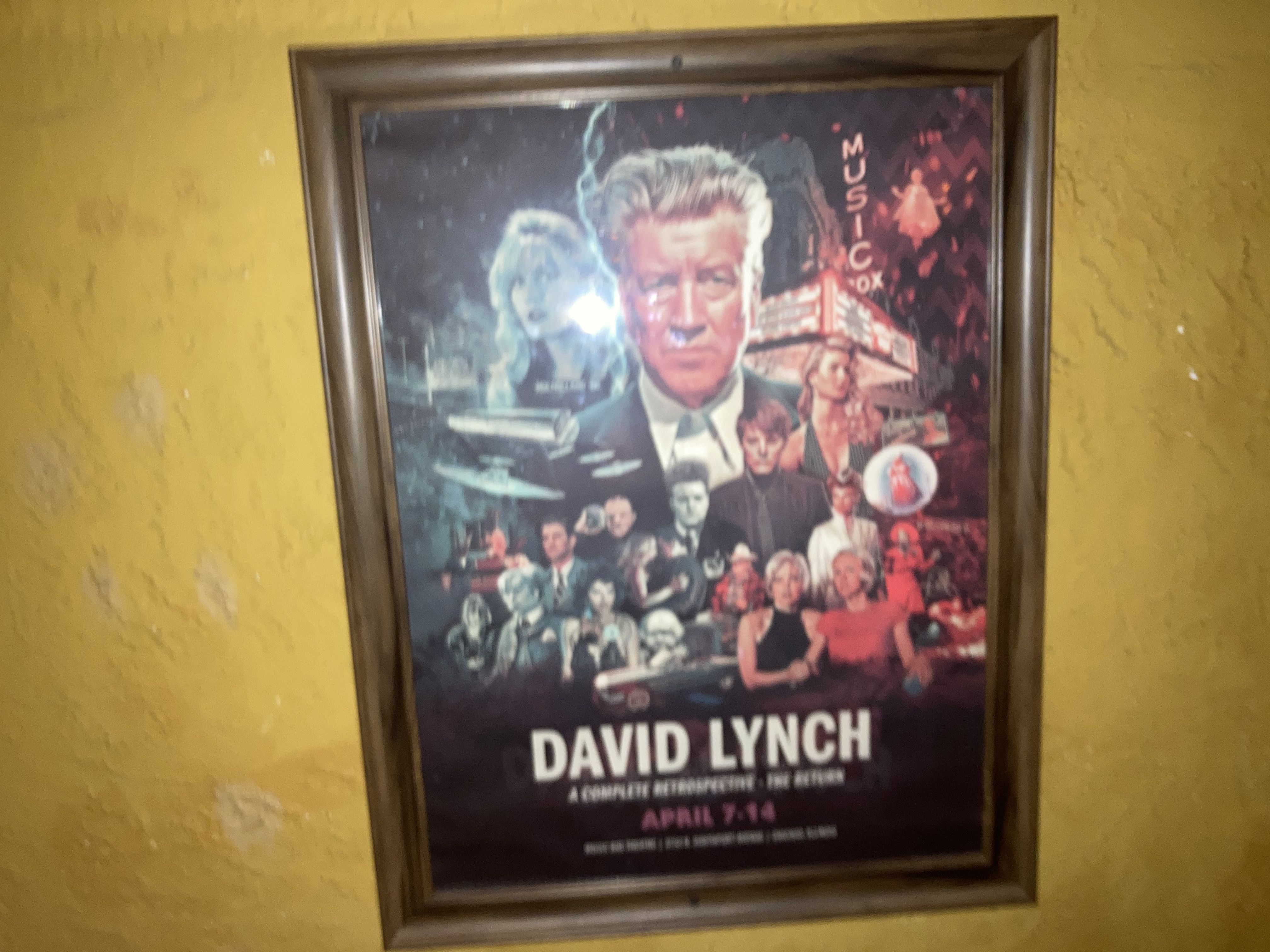
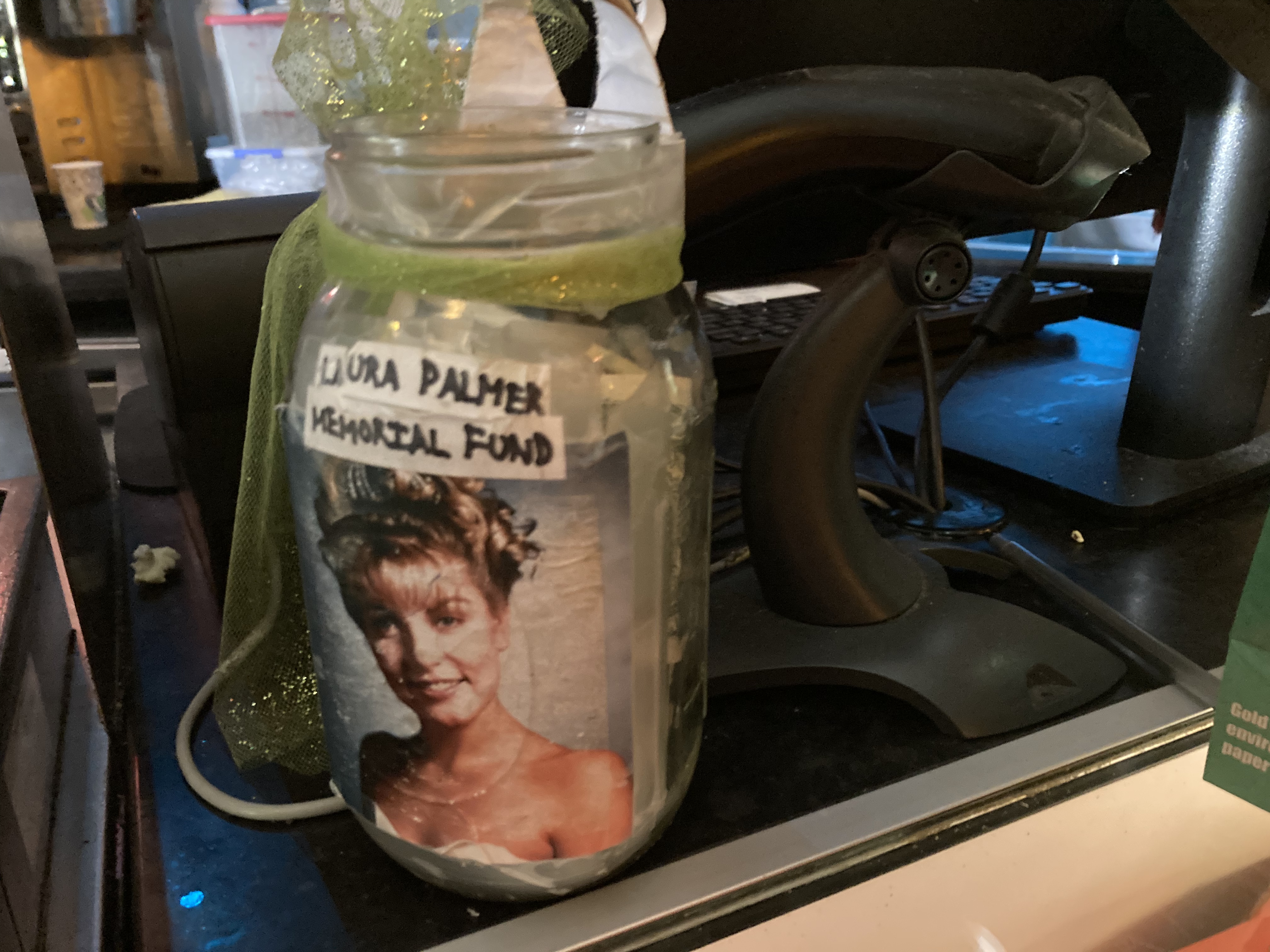



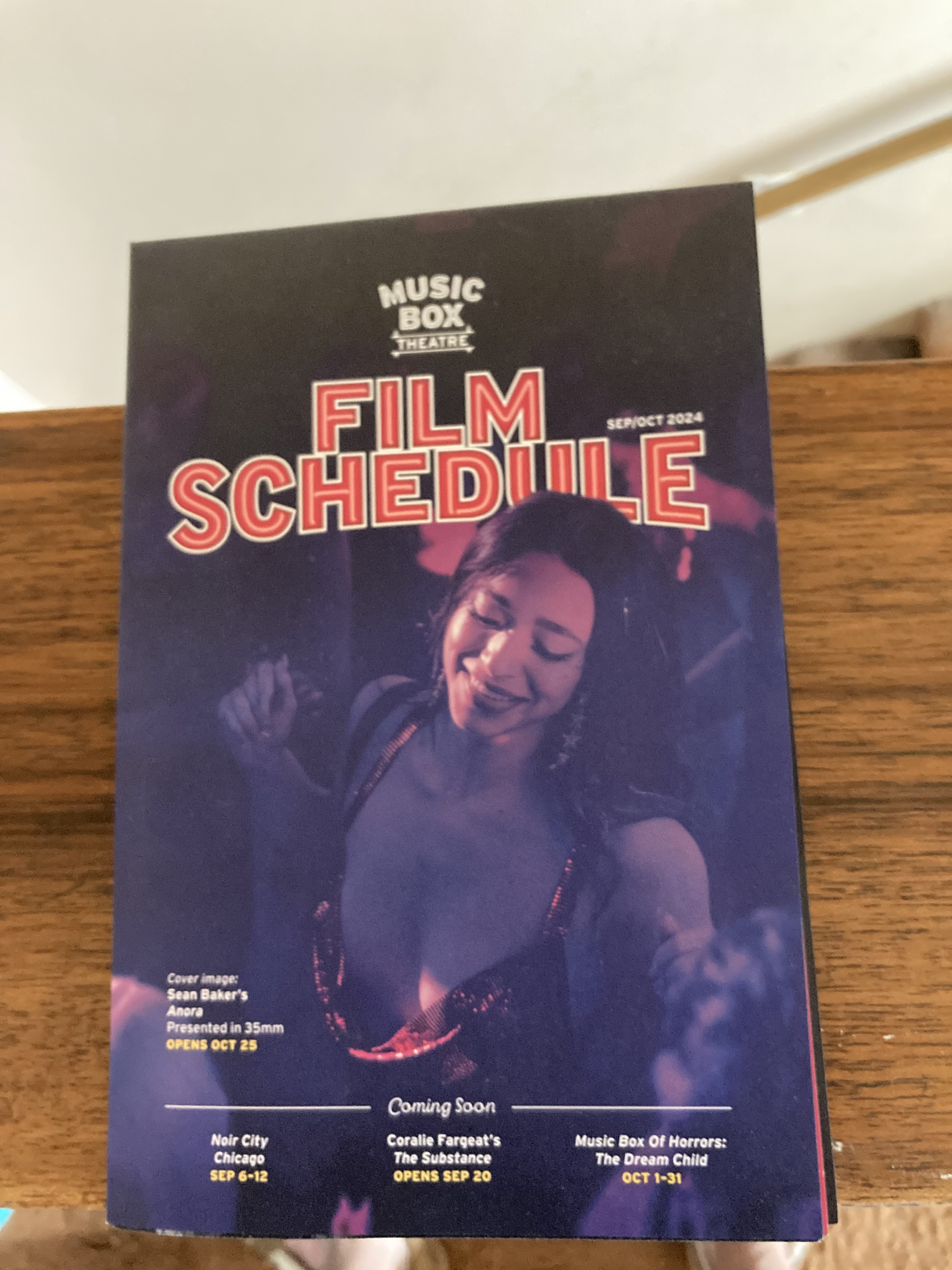
 cinematiccoffee